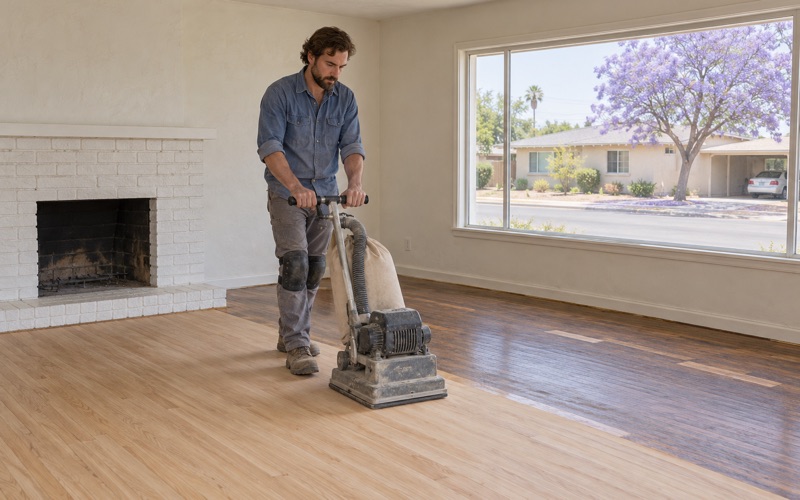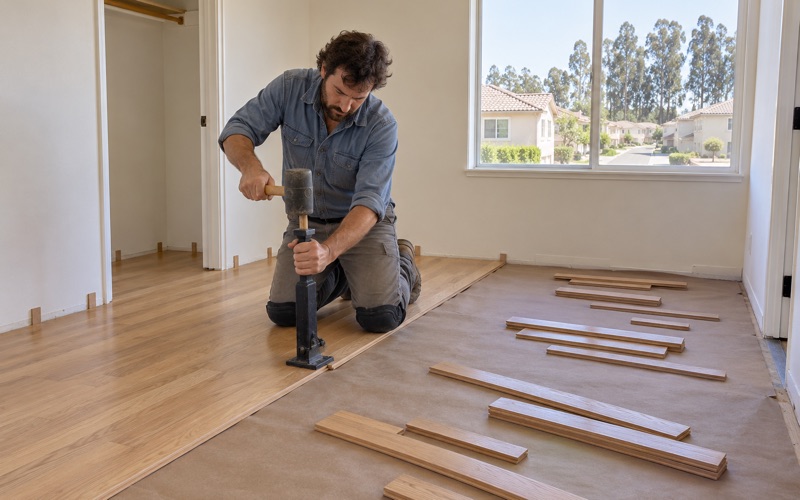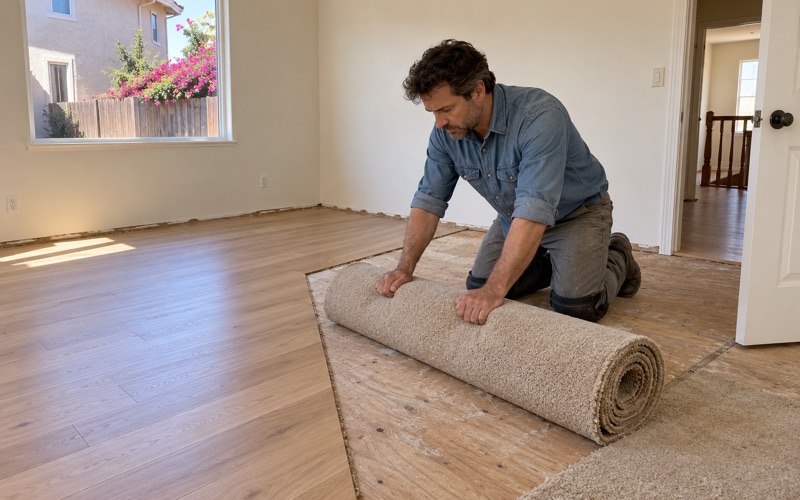
Chino Wood Flooring has handled wood-flooring in Anaheim for more than 20 years, and most of that work starts the same way: with a floor that was put down decades ago and has been lived on hard ever since. We refinish original hardwood, repair boards that took on water, and install new solid and engineered floors in houses, townhomes and apartments across the city.
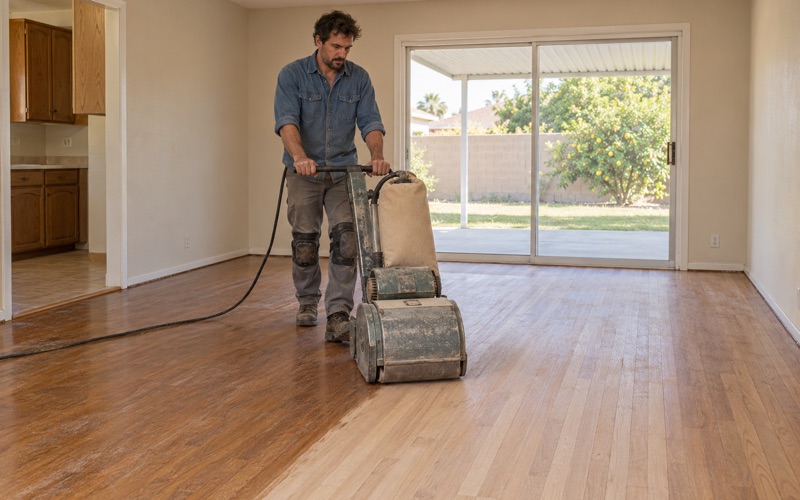
Our first question on any job is how old the building is. Sanding a floor in a home built before 1978 can disturb old paint on baseboards, door casings and stair parts, and the EPA lead-safe rule governs that work, so we confirm the build year before a drum sander is ever unloaded. The second question is what the floor has been through, because water, pets and years of furniture traffic each leave a different kind of damage.
From there we write a plan you can schedule around. That means a dust containment setup, a finish chosen from products that meet the South Coast AQMD wood coatings limits, and a written cure schedule telling you when socks, furniture and rugs can go back on the floor.
Wood Floors in Anaheim’s Postwar Houses
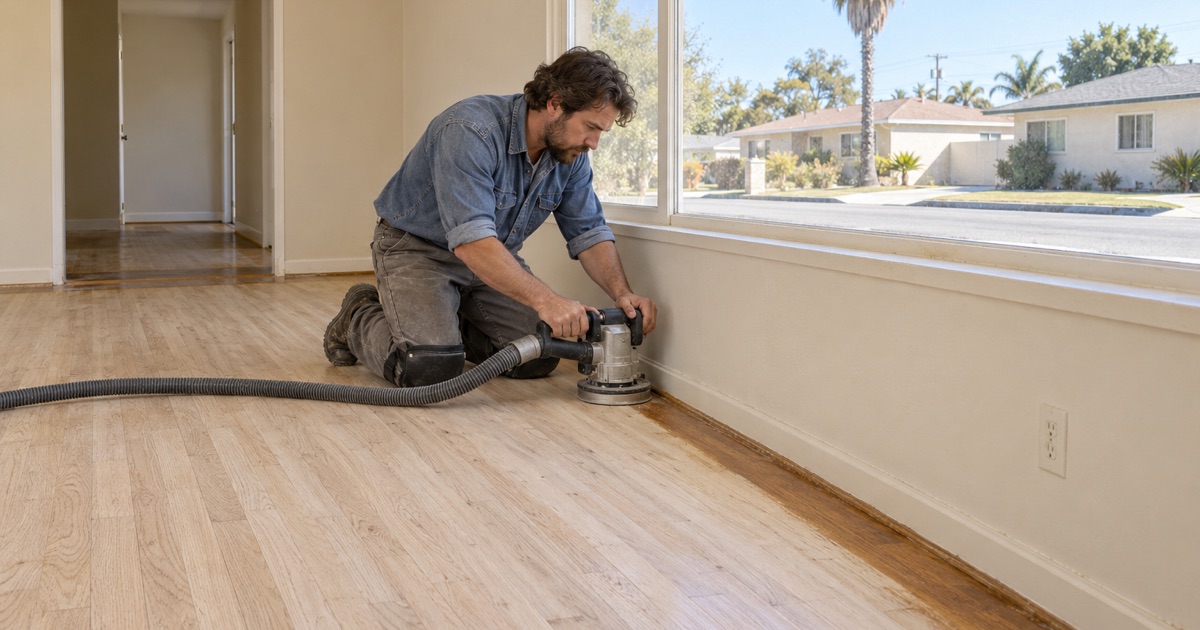
Anaheim’s housing stock skews older than many people expect. Census figures from the 2024 five-year American Community Survey put 65.1 percent of the city’s homes before 1980, and the two biggest building decades were the 1950s, at 22.3 percent, and the 1970s, at 23.1 percent. Those two eras produced very different floors, and we treat them differently.
What a 1950s floor usually looks like
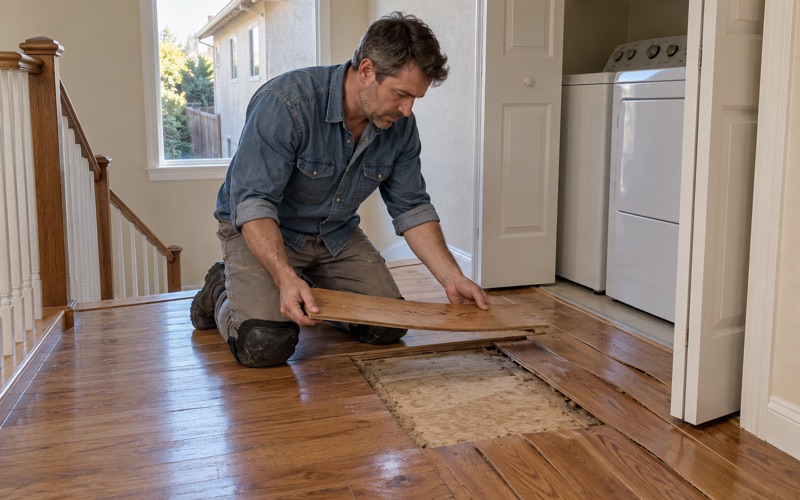
Houses from the 1950s often have solid hardwood, frequently red oak or white oak in narrow strips, either exposed or hidden under carpet that went down a generation later. When we pull that carpet we look for tack strip holes along the walls, staple rows, pet urine stains that have soaked into the grain, and patches where a previous owner swapped boards without matching the species.
These floors are usually worth saving. Solid tongue and groove oak can take several sandings over its life, and we check how much wood sits above the tongue before we commit to a full sand so the refinish does not break through into the groove.
What a 1970s floor usually looks like
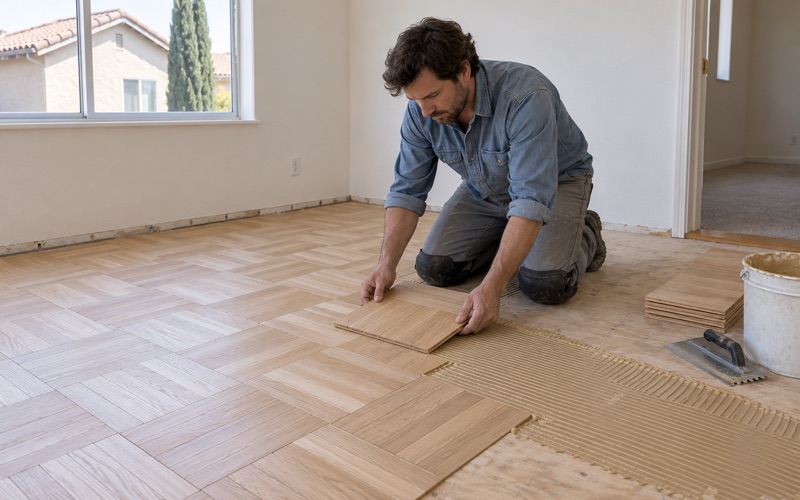
By the 1970s, wall-to-wall carpet and sheet vinyl covered many floors, and the hardwood underneath, if there is any, may be thinner or pieced together. Some homes from that decade have parquet in entries and dens, and parquet needs a gentler grit sequence because the small blocks run in alternating directions.
We also look for black mastic under old vinyl and tile before we recommend removing it. Adhesives from that period are handled with care, and we would rather identify what is on the floor than grind into it and find out later.
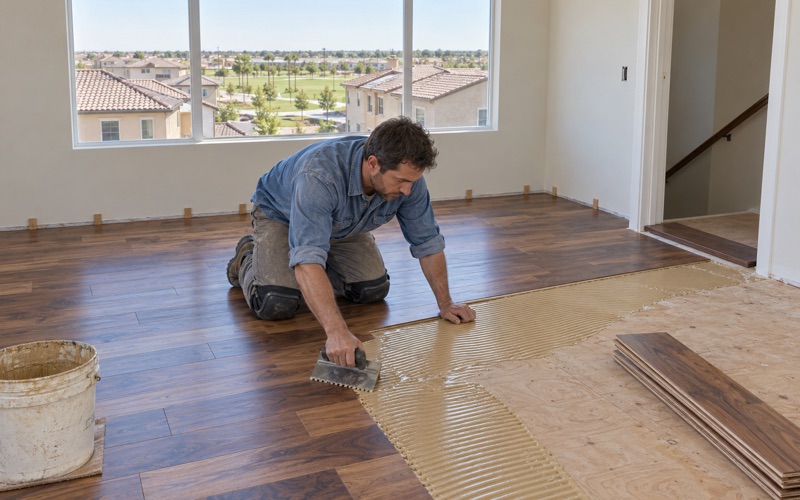
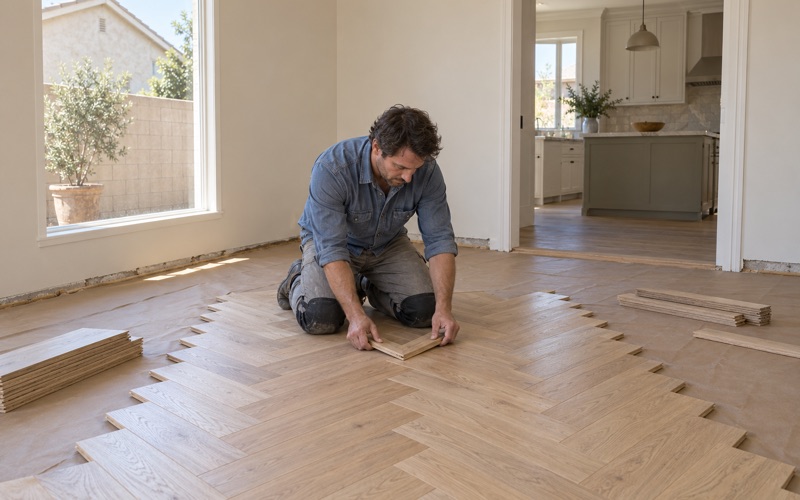
When there is no hardwood worth saving, many owners of 1970s houses choose to replace old carpet or vinyl with new wood. If the choice is engineered flooring, we explain how thick the engineered wear layer is, because a thin one cannot take a full refinish years from now, and we help you pick between a plywood core and an HDF core for the room.
Why the build year comes before the sander
Almost every house in both of those decades predates 1978, which is why we confirm the build year on every older Anaheim job. Once we know it, we set containment around the work area, protect trim and door casings, and plan the sanding so dust stays where it can be collected.
The same care carries through the rest of the job. We use dustless sanding equipment wherever the floor allows it, vacuum between each grit, and leave a written cure schedule behind, so a family living in the house knows which rooms are off limits and for how long.
Looking for wood-flooring closer to Claremont? See Wood-Flooring in Claremont.
The Santa Ana River, Flood Rules and Your Floors
Water is the thing most likely to ruin a wood floor, and Anaheim has a documented history with it. According to OC Public Works, the Santa Ana River flooded parts of Anaheim, Santa Ana and Garden Grove in 1938. The river is owned by the U.S. Army Corps of Engineers and operated by the Corps’ Los Angeles District together with the Orange County Flood Control District.
Prado Dam sits upstream on that river, and press coverage in May 2019 reported that the Corps had reclassified it as a high-urgency risk. We mention that report only as context for why flood exposure keeps coming up in Anaheim conversations, not as a prediction about any street or house.
How the city handles flood areas
The City of Anaheim regulates building in flood areas through its own code: Anaheim Municipal Code Section 17.28, Flood Hazard Reduction, and Section 18.28, the Floodplain “FP” Overlay Zone. Those sections deal with development and construction in mapped flood hazard areas, and questions about whether a particular property sits in one go to the city’s Planning Services at 714-765-5139.
We do not treat the flood code as a flooring rulebook, and we will not tell you it dictates what goes on your floor. What it does tell a homeowner is that the city takes flood exposure seriously enough to write it into the zoning map, which is a good reason to know where your own property stands before you invest in new wood.
What the city says about insurance
The city also states plainly that homeowner’s insurance does not cover damage from floods, and that a mortgage lender may require separate flood insurance for a property in a flood hazard area. We are not insurance advisers, and we cannot tell you what any policy will pay for a floor.
What we can do is document. When a floor has been damaged by water from any source, we record each room’s condition, the moisture readings and the extent of cupping, crowning or buckling, so you have a clear record to hand to whoever is handling the claim.
When Water Reaches the Floor
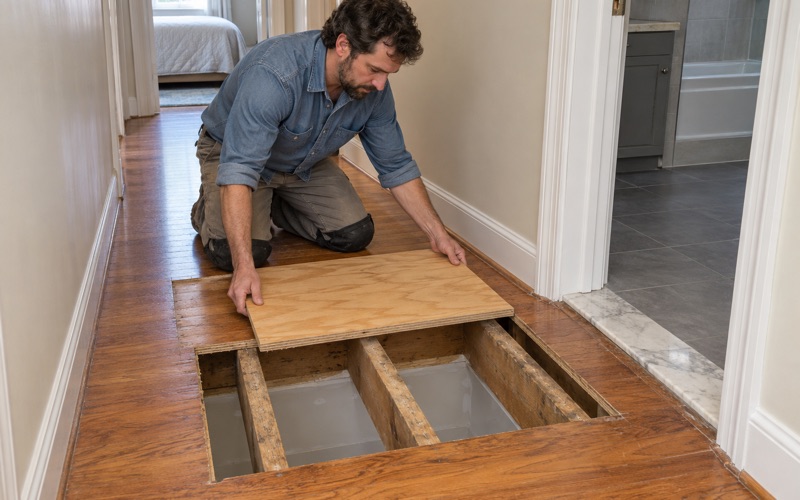
Most water damage we see does not come from a river. It comes from a supply line under a sink, a dishwasher, a water heater, a slab leak, or a roof that let go during a storm. The repair process is the same either way, and it starts well before any board comes out.
Finding the source and reading the moisture
We confirm the leak has been found and fixed before we replace a single damaged board. Replacing wood over an active leak just means paying for the same repair twice. After that, we take moisture meter readings across the affected area and into the dry rooms next to it, so we know where wet wood ends and sound wood begins.
Boards that cupped from moisture below sometimes flatten as the floor dries, and sanding them too early leaves a crowned surface once they settle. We would rather wait for readings to stabilize than rush a sand that fails a month later.
Repair, patch or replace
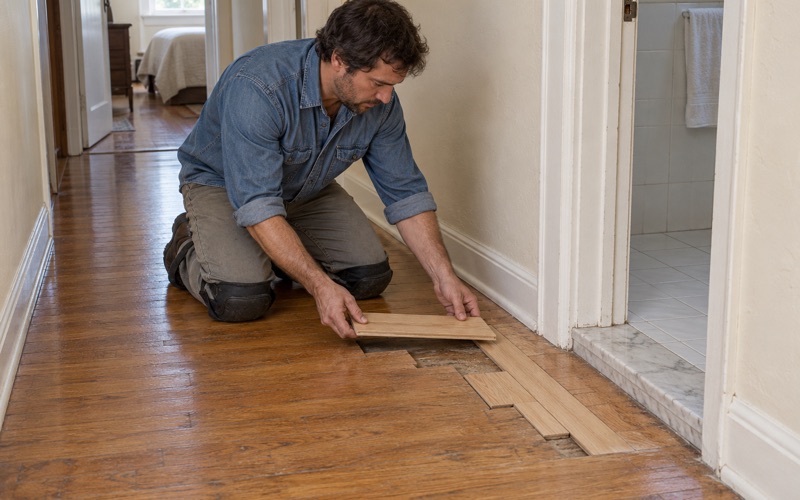
If the damage is limited, we weave new boards into the existing floor, matching species, width and grain so the repair reads as part of the original. On an older oak floor that often means sourcing plain sawn red or white oak and then sanding and finishing the whole room so the color blends.
When damage is widespread, or when an engineered floor has started to show delamination and hollow spots, replacement makes more sense. For a floor going over concrete, we test the slab for moisture before any engineered product is glued down and write the reading against the NWFA guideline, so the new floor is not set on a slab that is still giving off water.
Floors in Anaheim Apartments, Rentals and Condos
Anaheim is a renter-majority city: the same Census survey counts 53.8 percent of occupied homes as renter-occupied. A large share of those renters live in big buildings, with 29.4 percent of renter households in buildings of fifty or more units. That mix shapes a lot of our work here, from quick turnovers between tenants to full replacements in owner-occupied condos.
Turnovers and refinishing for rental owners
For landlords and property managers, the most useful service is often a screen and recoat rather than a full sand. When the finish is worn but the wood underneath is not, we abrade the top coat with a buffer and apply fresh waterborne polyurethane, which gets a unit back on the market faster than a full refinish.
When a floor has deep scratches, board gapping or pet stains that go into the wood, a full sand is the honest answer. We lay out both options with the tradeoffs so the owner can choose based on the unit, not on a sales pitch.
Condos, townhomes and association rules
Owners in condos and townhomes often answer to an association before they can change a floor. Many associations set rules about underlayment, work hours or approvals, so we check those requirements before any flooring is ordered rather than after it arrives.
In multi-story buildings we talk through acoustic underlayment and installation method early, since a floating floor and a glue-down floor behave differently over concrete and carry different preparation steps. Settling that choice before ordering keeps the underlayment and adhesive matched to the slab.
New wood also needs time to adjust before it goes down. We deliver the flooring early enough for acclimation, check its moisture content against the subfloor, and leave a proper expansion gap at the walls, hidden later under baseboard or quarter round, so the floor has room to move with the seasons.
Refinishing choices for 1950s and 1970s hardwood
Whether the owner lives in the home or rents it out, the finish choice matters. Waterborne polyurethane dries clear and cures with less odor, oil-modified polyurethane gives a warmer amber tone that suits older red oak, and hardwax oil offers a matte look that is easy to spot repair. Every product we use has to meet SCAQMD Rule 1113, so the options are the ones legal in this air basin.
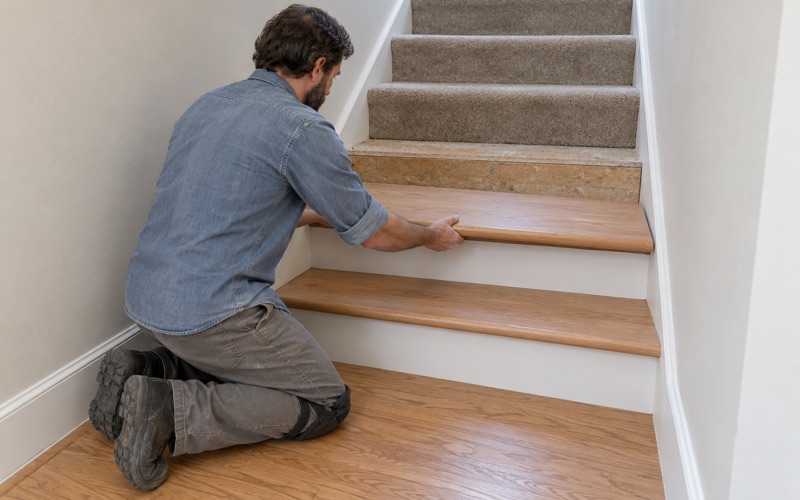
For stairs, which older Anaheim houses and townhomes often have, we quote by the tread and riser instead of folding them into a square-foot price. Stair nosing, risers and treads each take different handling, and pricing them separately keeps the quote honest.
- 20+ Years of Wood Flooring
- Slab Moisture Tested First
- Free Written Estimates