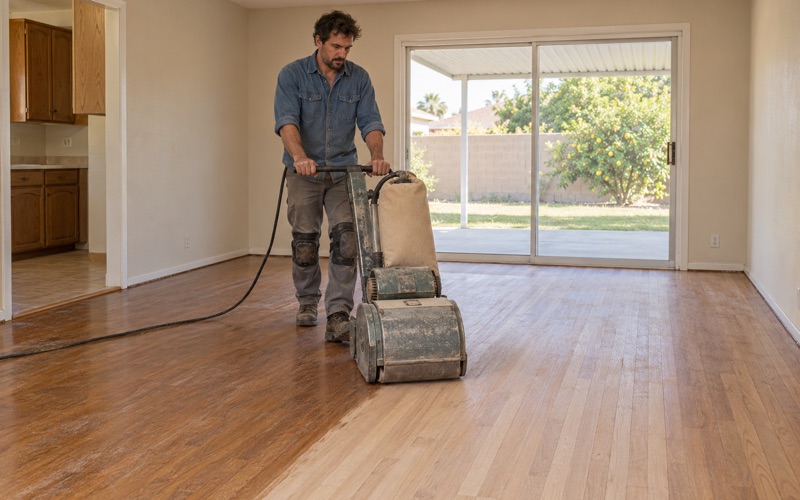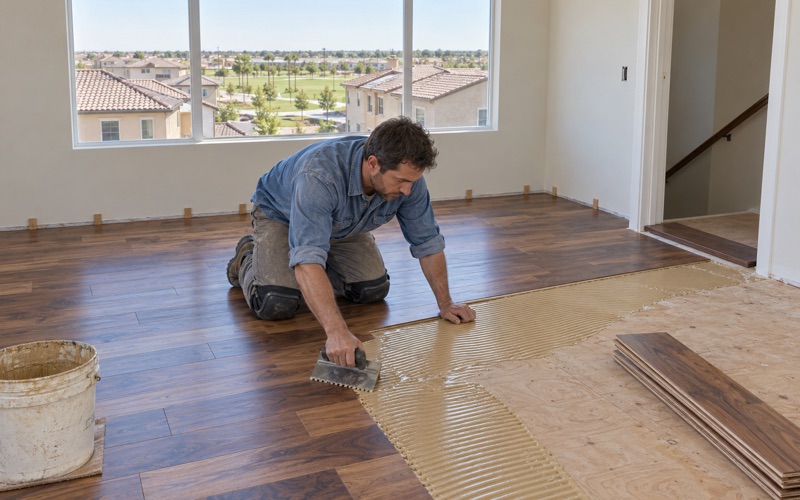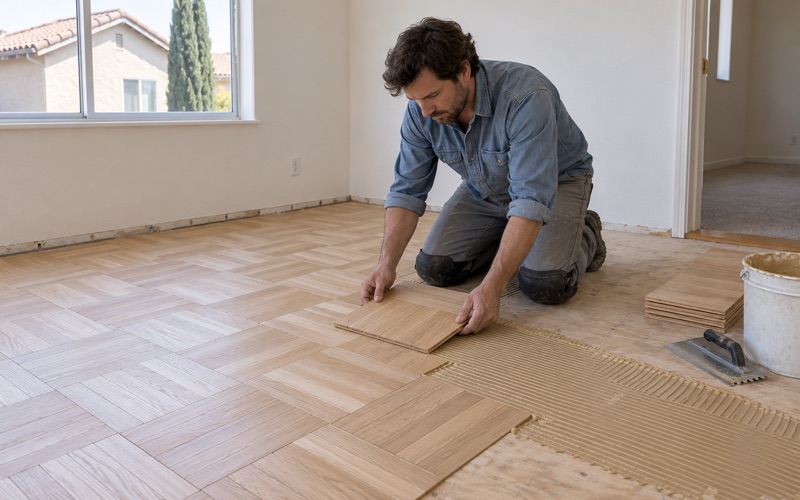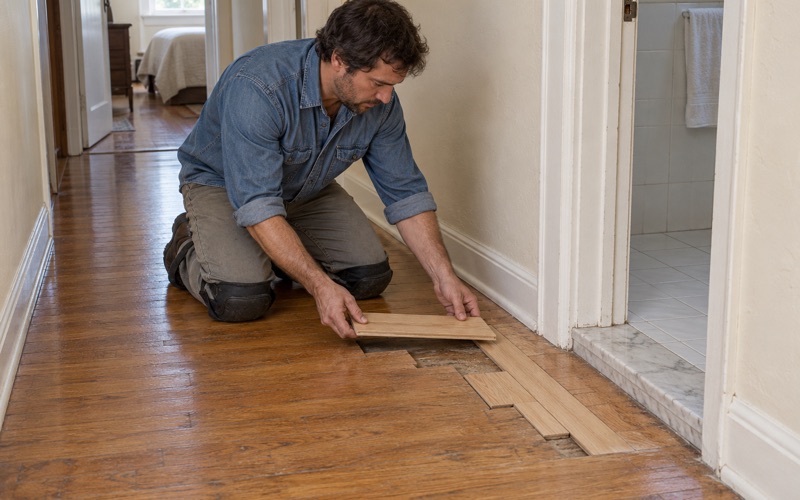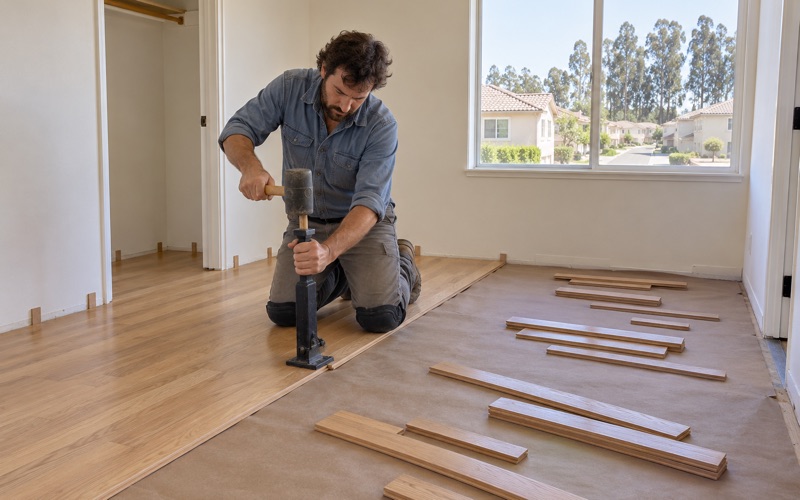
Chino Wood Flooring has spent more than 20 years on wood flooring in Artesia and across this part of Los Angeles County, refinishing worn oak, replacing water-damaged boards and installing new floors in owner-occupied houses and rentals alike. Most of that work is ordinary: a household wants a floor sanded, a stain color changed or a room of carpet swapped for solid hardwood. A smaller share follows a flood, a fire or an earthquake, and that is where this city has a pricing rule most homeowners have never read.
In March 2020, the city added a price-gouging chapter to its municipal code. It applies only while a local emergency is declared, and during that window it limits how far repair prices and rents can rise above where they stood before. This page explains what that chapter says, how it reaches floor repair after a disaster, and why it has nothing to say about a routine refinish booked in an ordinary week.
We are floor people, not lawyers, so we describe the rule as it was written and adopted rather than predict how any dispute would come out. What we can do is keep our own pricing and paperwork in a shape that makes the rule easy to check, whether the job is a single buckled hallway or every room in the house.
Artesia’s Emergency Price Rule, As Adopted in 2020
The Ordinance and Where It Sits
The city adopted Urgency Ordinance No. 20-895U on March 30, 2020, according to the posted copy, and it added Chapter 22, titled Prohibition of Price Gouging, to Title 5 of the Artesia Municipal Code. The findings cite the state Penal Code section on price gouging, the Governor’s March 4, 2020 proclamation and the city’s own emergency resolution and ordinance from the week before. As an urgency measure, it took effect immediately upon adoption by four-fifths of the City Council.
Artesia, incorporated on May 29, 1959, is one of Los Angeles County’s Gateway Cities and covers just 1.62 square miles in the southeastern part of the county. Chapter 22 is city law, so its reach follows that city boundary. We have read the posted ordinance, but we could not confirm whether the chapter remains codified in its present form, and we make no claim that a local emergency is declared at any given moment.
The 10 Percent Line for Repair Work
Section 5.22.020(B) is the part that touches our trade. During a period of declared emergency, it is unlawful for a contractor to sell or offer repair or reconstruction services, or emergency cleanup services, for more than 10 percent above what that same business charged for those services immediately before the declaration. The comparison is to the contractor’s own earlier price, not to a market average or a competitor’s rate.
There is an exception for added costs directly attributable to the disaster. If the cost of material or labor genuinely rises, a contractor can reflect that, but the ordinance caps the result at 10 percent over cost plus the business’s customary markup. Violations fall under the administrative penalty provisions in Title 1, Chapter 7 of the city code.
What Counts as a Declared Emergency
The chapter defines a state of emergency broadly enough to cover an earthquake, flood, fire or other disaster declared locally. It also reaches building materials, which the ordinance describes as including lumber and anything else used in building or rebuilding, so replacement boards and underlayment sit inside its frame. Without a declaration, though, none of these provisions switches on.
Looking for wood-flooring closer to Laguna Woods? See Laguna Woods Wood-Flooring.
Floor Repair After a Flood, Fire or Earthquake
Repair or Reconstruction, Defined
Section 5.22.040 defines repair or reconstruction services as work by anyone who is required to hold a license under the Contractors’ State License Law, for repairs to residential or commercial property of any type damaged as a result of a disaster. Wood floor repair and replacement after a covered event fits that wording when the person doing it is someone the state requires to carry a license for the work.
The definition turns on two things: who performs the work and why the property needs it. Sanding a floor that is simply worn is not repair of disaster damage, even if the job happens during a declaration. Tearing out boards that soaked through when floodwater came in under a door during a declared flood is a different matter.
Flood and Water Damage
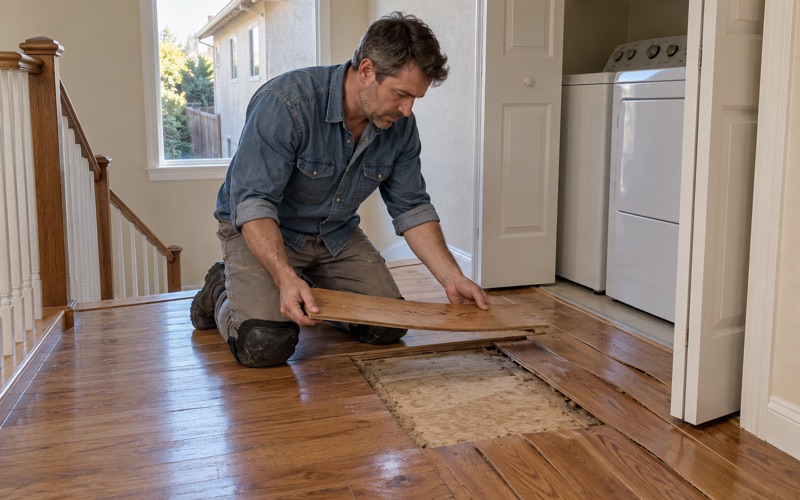
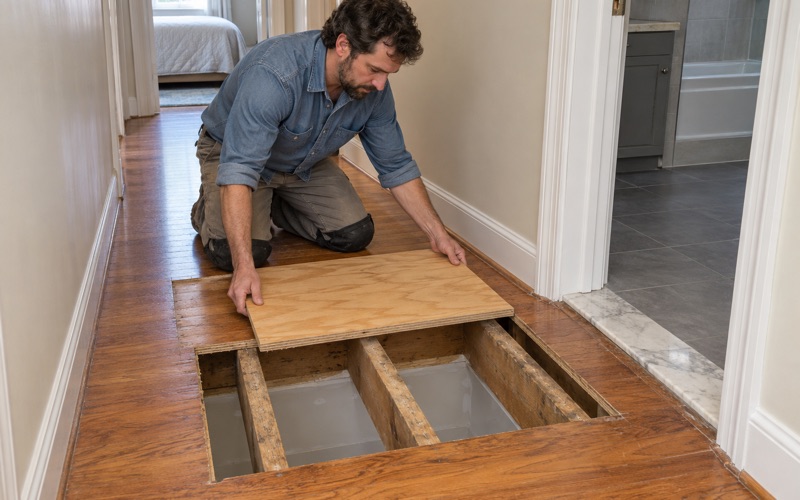
Water is the disaster we see most often on floors. Solid hardwood that takes on water shows cupping within days, and if it dries unevenly it can crown or buckle off the subfloor, while engineered planks can suffer delamination between the wear layer and the plywood core or HDF core. Before any board comes out, we confirm the water source has stopped and take moisture meter readings across the room and into the subfloor, because new boards laid over a wet base only repeat the damage.
For insurance, we document the damage room by room, with photos, readings and a board count, so the adjuster sees what was wet and what was not. That same record serves the price rule. It shows what the job is, what it would have cost at our rates before the declaration, and which costs, if any, rose because of the disaster itself.
Fire, Smoke and Earthquake Damage
Fire damage to a wood floor ranges from surface scorching that a drum sander and a fresh grit sequence can remove to charred tongue and groove that has to be cut back to the floor joists. Water from firefighting often adds a second layer of damage, so we treat many fire jobs as water jobs as well. Earthquake damage tends to show up as board gapping, lifted thresholds, loose stair nosing and hollow spots where a glue-down floor has released from its base.
Each of these can fall under the chapter when a local emergency has been declared for the event. We price the scope line by line, the same way we would have before the declaration, so an owner can see the comparison rather than take it on trust. When a cost has genuinely changed, such as a replacement plank that now costs us more, we show that line separately.
Rented Houses and the 10 Percent Rent Limit
What the Chapter Says About Rent
Section 5.22.020(D) makes it unlawful, during a declared emergency, to raise the rental price of housing by more than 10 percent. The exception covers increases attributable to additional costs for repairs or additions beyond normal maintenance that were amortized over the rental term. The chapter defines housing as any rental housing, including a space rented in a mobile home park or campground, and section 5.22.030 separately restricts evicting a tenant in order to re-rent at a higher price.
The urgency finding explains part of the council’s reasoning: while AB 1482 enacted tenancy protections, the state law does not apply to many types of housing. This emergency limit is a disaster provision, not a standing local rent ordinance, and in ordinary times the statewide Tenant Protection Act is the framework that governs rent increases.
Why It Matters for Floor Work in Rentals
Rented houses are a real part of the local housing stock. According to Census tenure figures, 1,116 renter households, about 49.0 percent of the city’s renters, live in detached houses. When one of those houses needs floor repair after a declared disaster, its owner is working under two limits at once, one on what the repair can cost and one on how far the rent can move afterward.
We do not tell a landlord what an increase may include. What we can do is keep disaster repair and routine upkeep separate on paper, so an owner and a tenant can both see which part of an invoice replaced damaged boards and which part covered something else, such as refinishing a floor that was already due for it.
Working Around an Occupied House
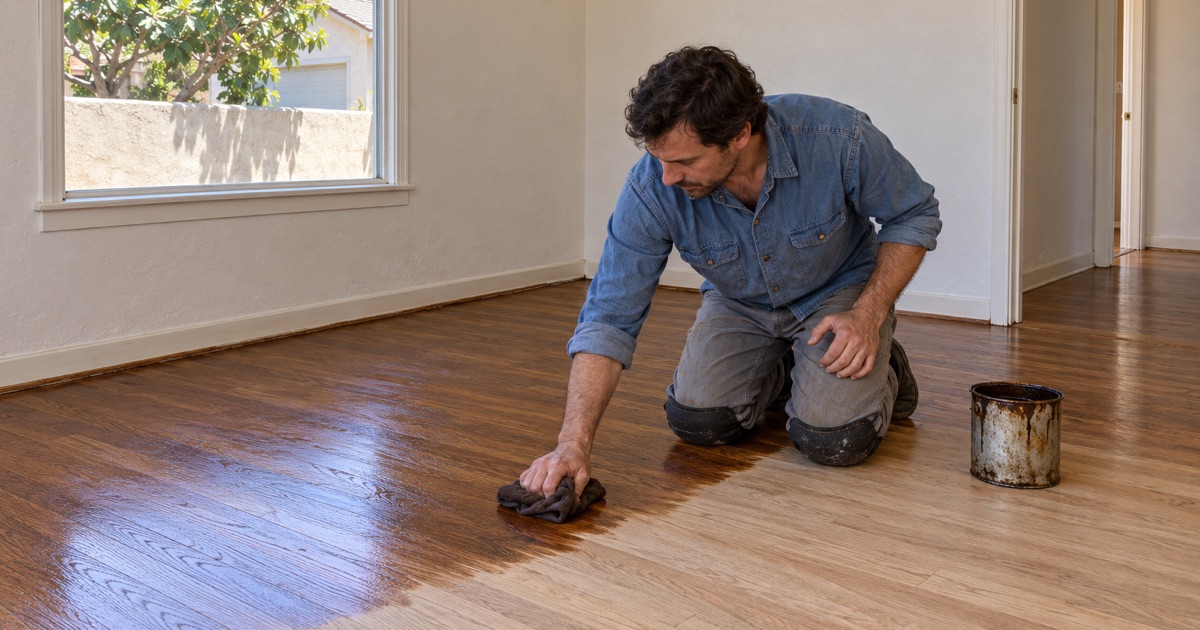
Disaster repair in a rented or owner-occupied home usually happens with people still living in it. We set up dust containment around the work area, use dustless sanding where the floor allows it, and hand the household a written cure schedule. That way they know when the room can take foot traffic, when furniture can return and when rugs can go back down.
Ordinary Floor Work Outside an Emergency
No Price Rule for Routine Jobs
Outside a declared emergency, the chapter sets no price rule for floor work at all. A refinish, a stain change, a screen and recoat or a new installation booked in an ordinary month is priced the way any other job is, by scope, material and condition. The emergency chapter is a disaster measure, not a limit on the everyday flooring trade.
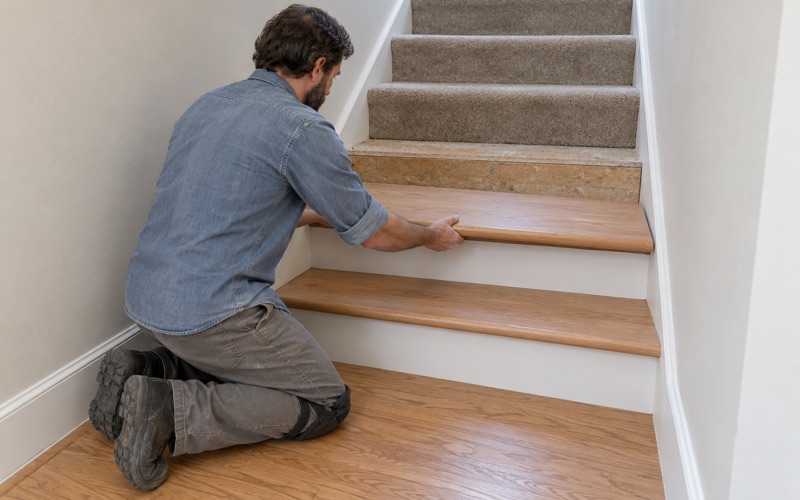
That is also why our standing rates matter. The ordinance measures emergency prices against what a business charged immediately before a declaration, so we keep a written record of our prices over time. Stairs are part of that record, quoted by the tread and riser rather than folded into a square-foot figure.
Older Houses and Finish Choices
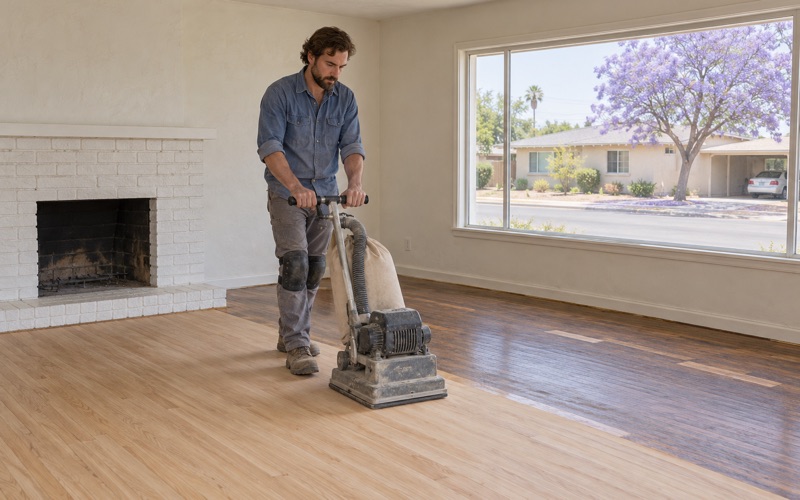
About 76.2 percent of Artesia’s homes predate 1980, so we confirm a house’s build year before any sanding begins. The EPA RRP rule reaches painted surfaces disturbed in homes built before 1978, including baseboard, quarter round and painted stair risers. Many older floors we uncover under carpet are red oak or white oak, and a sound solid floor with enough thickness left can usually take a full sanding.
For finishes, we choose waterborne polyurethane, oil-modified polyurethane or hardwax oil products that fall within the wood coatings limits of SCAQMD Rule 1113, the South Coast AQMD rule that decides which coatings are legal in this air basin. We talk through sheen level and floor stain color on a sample board before a whole room is coated, since a stain reads differently on each species.
Engineered Floors and Concrete
When an engineered floor comes in for refinishing, we measure the engineered wear layer before we promise a sanding, because a thin veneer cannot survive a full pass with the drum sander. A light screen and recoat is sometimes the honest answer instead. On a glue-down installation over concrete, we test the slab for moisture first and record the reading against the NWFA Installation Guidelines before any urethane flooring adhesive goes down.
For a household replacing carpet or vinyl plank, we walk through species, Janka hardness and plank width before anything is ordered, then allow time for acclimation once the boards arrive. Whether the job is a disaster repair under the chapter or a planned upgrade in a quiet month, the paperwork, the moisture readings and the schedule are written down the same way.
- 20+ Years of Wood Flooring
- Slab Moisture Tested First
- Free Written Estimates