Chino Wood Flooring handles wood-flooring in Commerce for owners who rent out a house or a few units and need the floors kept in shape between tenants, or with a tenant still at home. We have spent more than 20 years sanding, refinishing and installing hardwood across the region, and in this city the work often sits inside a set of rules most other markets never deal with. A floor here is rarely just a floor question.
Commerce is one of the few cities in Los Angeles County with its own rent-increase law, and that changes how an owner thinks about upkeep. When rent can only move so far in a year, a refinish is a maintenance expense rather than a lever, and we price and plan it that way. We quote the job as it stands, with stairs counted by the tread and riser instead of hidden in a square-foot figure.
Before any sanding starts, we confirm the year the building went up, because the EPA lead-safe rule reaches paint disturbed in homes built before 1978. We also contain dust and put the cure schedule in writing, so a landlord and a tenant both know which rooms are out of use and for how long.
Commerce’s Own Rent Law and Where It Reaches
Chapter 9.95 on the State’s Chart
The California Attorney General publishes a consumer alert charting the local rent-stabilization laws it knows of, and the version last updated August 1, 2025 lists Commerce Municipal Code chapter 9.95. The chart describes the limit as a total increase of 5 percent plus CPI, up to a maximum of 10 percent, in a 12-month period. It adds that the increase may be taken in two increments.
The same chart does not give a current figure for Commerce. For the period running July 1, 2025 through June 30, 2026, it tells readers to contact Commerce for the current allowable increase, and we point any owner there too. Commerce shares the Los Angeles County rows of that chart with Los Angeles, Baldwin Park, Bell Gardens, Cudahy and Maywood.
Where Local Rent Laws Generally Stop
The Attorney General’s alert is careful about coverage. It says local rent laws generally do not apply to buildings with a certificate of occupancy issued after February 1, 1995, or to units that can be sold separately from any other dwelling unit. That, the alert notes, leaves most single-family homes and condominiums outside local rent stabilization.
That distinction matters to how an owner budgets a floor job, but deciding which side of the line a particular property falls on is a question for the city or an attorney, not a flooring crew. What we can do is plan the work so it fits either situation: done cleanly, on a schedule the household can live with, and without turning maintenance into something larger.
Who Rents in Commerce
The Census Bureau’s American Community Survey for 2024, five-year estimates, counts 1,488 renter households in Commerce, 572 of them in detached houses. The rest live in attached homes, duplexes and apartment buildings of every size, including 147 units in buildings of fifty or more, all of them renter-occupied.
That mix means our Commerce jobs range from a whole detached house between leases to a single bedroom in an occupied apartment. The floor underneath varies just as much, from original solid hardwood in an older house to glued-down engineered plank laid over concrete in a later building.
Commerce is a compact city in southeast Los Angeles County, with the Los Angeles River along part of its southwestern edge and the Rio Hondo separating it from Downey. The Long Beach and Santa Ana freeways both cross it, which keeps a crew’s drive short and a rental’s schedule predictable.
Looking for wood-flooring closer to Eastvale? See Wood-Flooring in Eastvale.
Floor Upkeep Inside a Capped Rent
Maintenance, Not a Lever
Under a rent limit, the case for floor work is simple: a sound, clean floor keeps a unit rentable and keeps small damage from becoming large damage. Worn finish in a hallway, pet urine stains near a door or board gapping by a heater vent are all cheaper to deal with early than after another year of traffic.
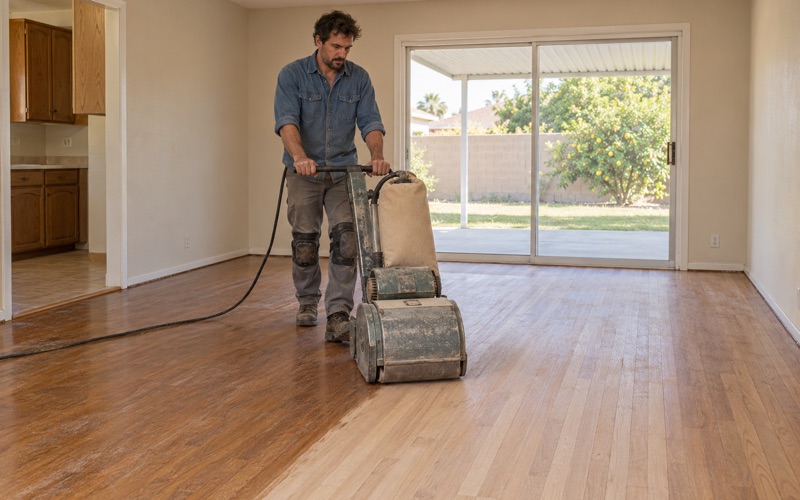
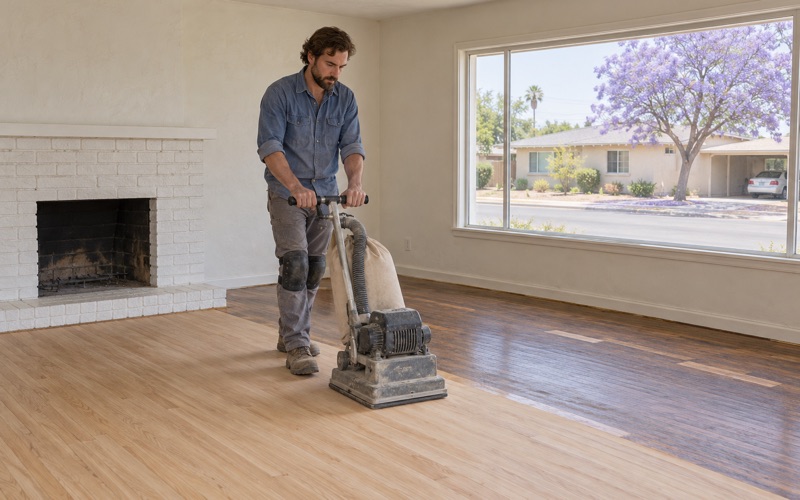
We treat these jobs as upkeep and quote them that way. When a floor only needs its finish renewed, a screen and recoat with a buffer can restore the surface without sanding to bare wood. When the finish is worn through, a full sand is the honest answer, and we say which one the floor needs before any work is booked.
Between leases is the easiest window. An empty unit can be sanded, stained and finished in one continuous pass, with no furniture to shift and no one working around wet finish. The crew can then hand it back ready for a move-in walkthrough.
Checking What the Floor Can Take
Much of the city’s housing is older: the American Community Survey counts 52.2 percent of Commerce housing units as built in the 1940s and 1950s. Solid red oak and white oak laid as tongue and groove in that era can usually be sanded more than once, but decades of prior refinishing thin the wood above the tongue. We look at a floor register or threshold edge to see what is left before we promise another sanding.
Engineered floors need a different check. We measure the engineered wear layer before a sanding is quoted, since a thin one cannot take a full refinish, and a floor with delamination or hollow spots may need boards replaced instead. On a rental, finding that out before the tenant’s furniture moves saves everyone a second disruption.
Durable Choices for Rental Floors
For units that turn over, we lean toward species and finishes that hide wear. Red oak and hickory carry grain that masks small scratches, and a lower sheen level shows less scuffing than a high gloss. Janka hardness helps compare species, though finish choice often matters more to how a rental floor ages.
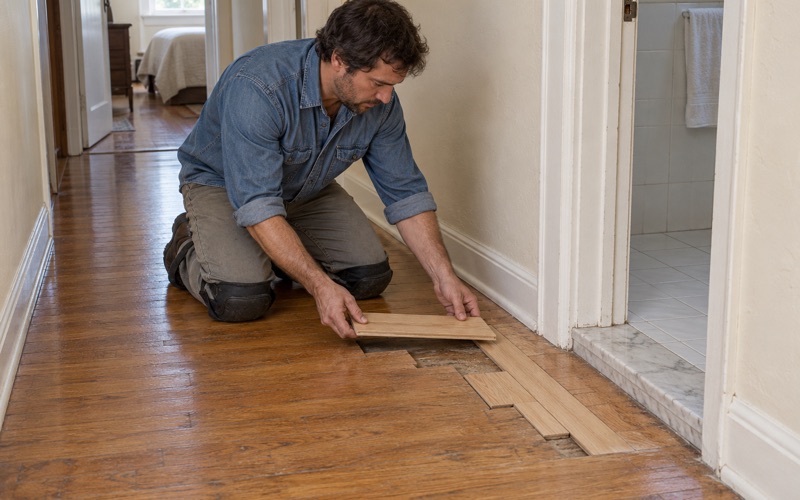
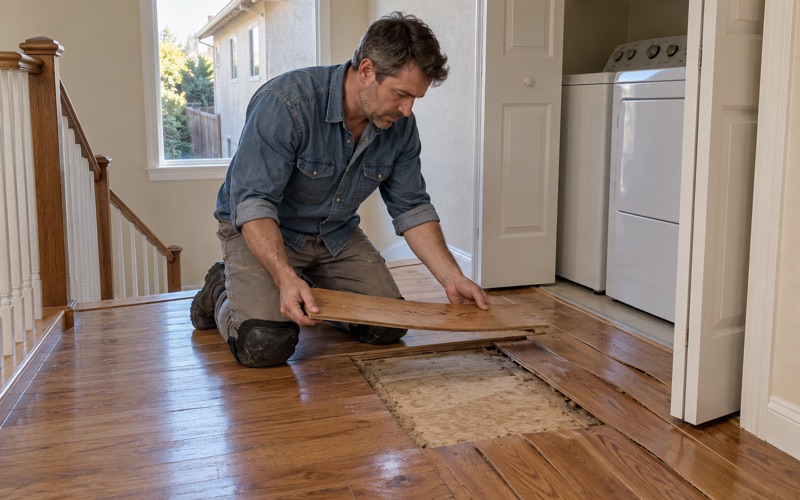
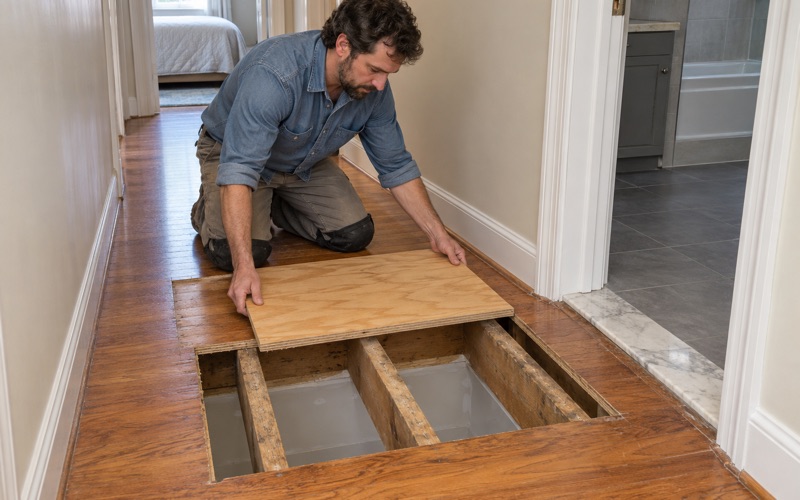
When a damaged section has to come out, we confirm the leak source and take a moisture meter reading before replacing boards, so new wood does not go down over an ongoing problem. Cupping, crowning and buckling usually trace back to water, and patching over them without that step just schedules the next repair.
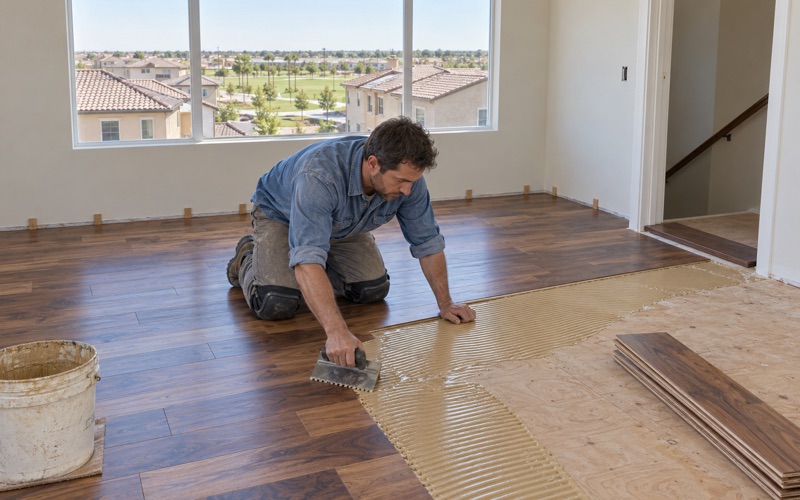
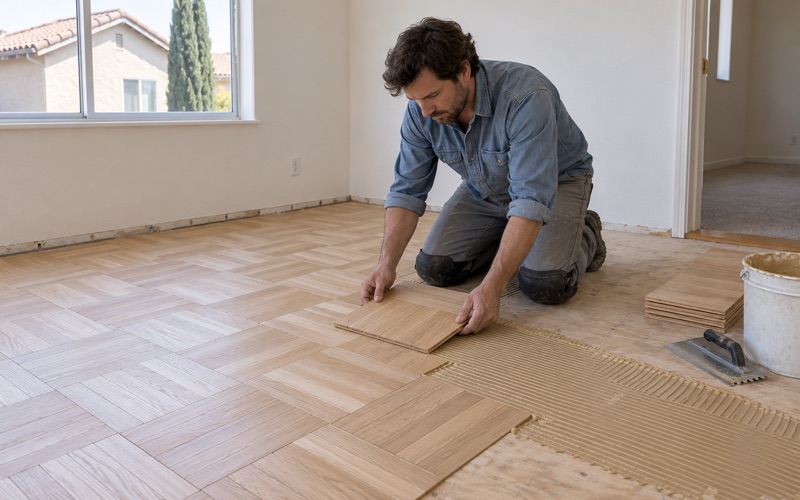
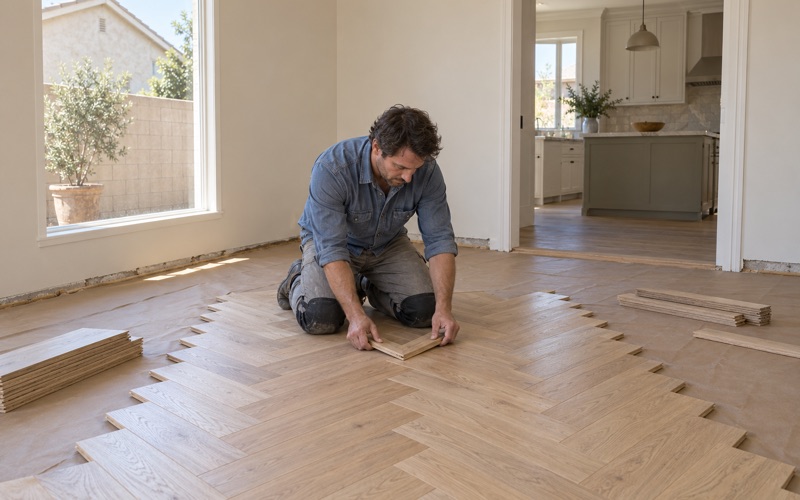
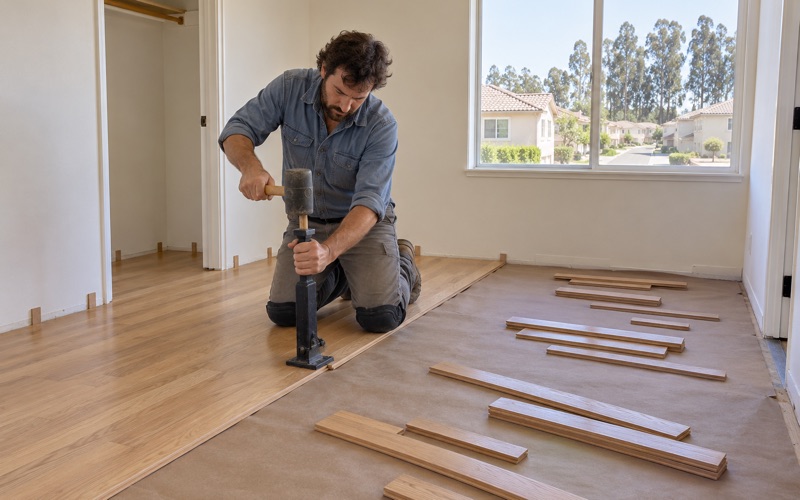
In units on a concrete slab, a glue-down engineered floor is the usual replacement for worn carpet or vinyl plank. We test the slab for moisture first and write the reading down against the NWFA guideline, since adhesive over a damp slab is how a new floor starts to lift.
Refinishing Is Not a Remodel Under State Law
What Civil Code 1946.2 Says
California’s statewide tenant protection law, Civil Code 1946.2, defines what it means to substantially remodel a rental. The definition includes a specific exclusion: cosmetic improvements alone, including painting, decorating and minor repairs, or other work that can be performed safely without having the property vacated, do not qualify as a substantial remodel.
Sanding and refinishing a wood floor, replacing a few damaged boards or recoating a worn finish are jobs we plan to finish with the household still living there. We schedule them as ordinary maintenance, room by room, and never describe floor work to a client as a reason for anyone to move out.
What a Substantial Remodel Actually Involves
The same section describes a substantial remodel as work that cannot reasonably be done safely with the tenant in place and that requires the tenant to vacate for at least 30 consecutive days. It names two kinds: replacing or substantially modifying a structural, electrical, plumbing or mechanical system in work that needs a permit from a government agency, and abating hazardous materials such as lead-based paint, mold or asbestos.
A wood floor refinish sits well outside that description. The section was amended by AB 1529 effective January 1, 2026, and repeals itself on January 1, 2030, so an owner weighing a bigger project should check the current text with someone qualified to read it.
Keeping the Scope Cosmetic
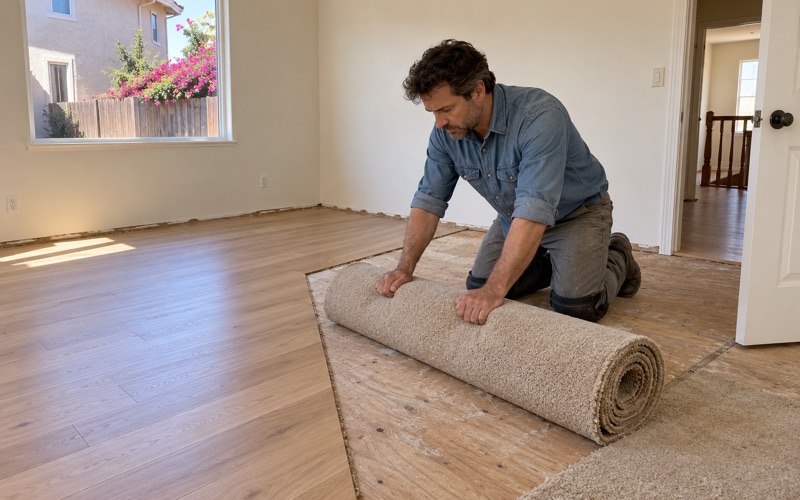
Some Commerce floors hide older layers. Carpet over hardwood often leaves tack strip holes along the walls, and vinyl or tile sometimes sits on black mastic that may contain asbestos. When we find a layer like that, we stop and tell the owner before disturbing it, because what happens next is no longer a flooring decision alone.
Most rental floor work never reaches that point. Pulling tired carpet, filling tack strip holes with wood filler and refinishing the oak underneath is the kind of job that finishes in days, not weeks, and leaves a unit in better shape for whoever lives there now.
Doing Floor Work With the Tenant in Place
Sequencing an Occupied Home
In an occupied rental, we work in zones. Furniture moves from one set of rooms into another, we sand and finish the empty side, and the household keeps a bedroom, the kitchen and a bathroom in use throughout. The owner and the tenant both get the plan in writing before the first day.
We ask the owner to handle notice to the tenant as the lease and state law require, and we keep to the hours we give. A crew that shows up at 8:00 a.m. when it said 8:00 a.m., and leaves the unit swept each evening, makes the difference between a tolerable week and a complaint.
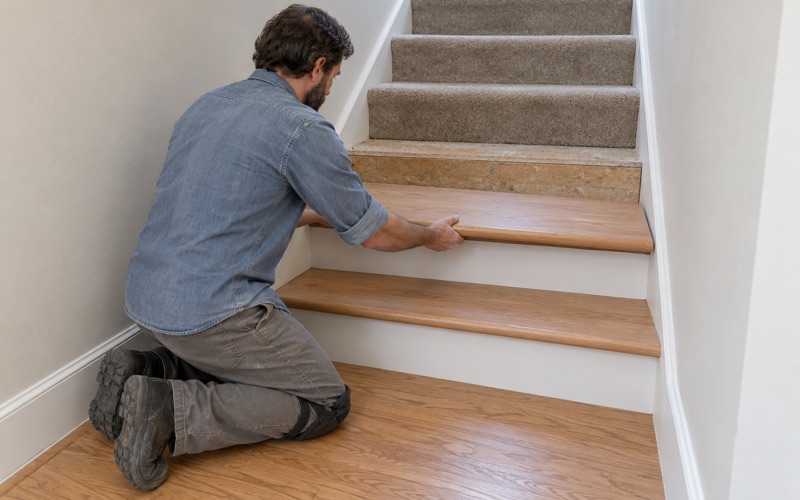
Stairs get their own line on the quote, priced by the tread and riser. In a two-story rental, the stair treads and stair nosing are often the most worn wood in the house, so we finish alternate treads on separate days and the upper floor stays reachable while the finish cures.
Dust and Cure Time
Dustless sanding with a drum sander and an orbital sander tied to vacuum extraction keeps most dust out of the air, and we seal doorways and return vents in the rooms we are working. The rooms that are not being sanded stay usable, and the tenant is not living inside a cloud of wood dust for a week.
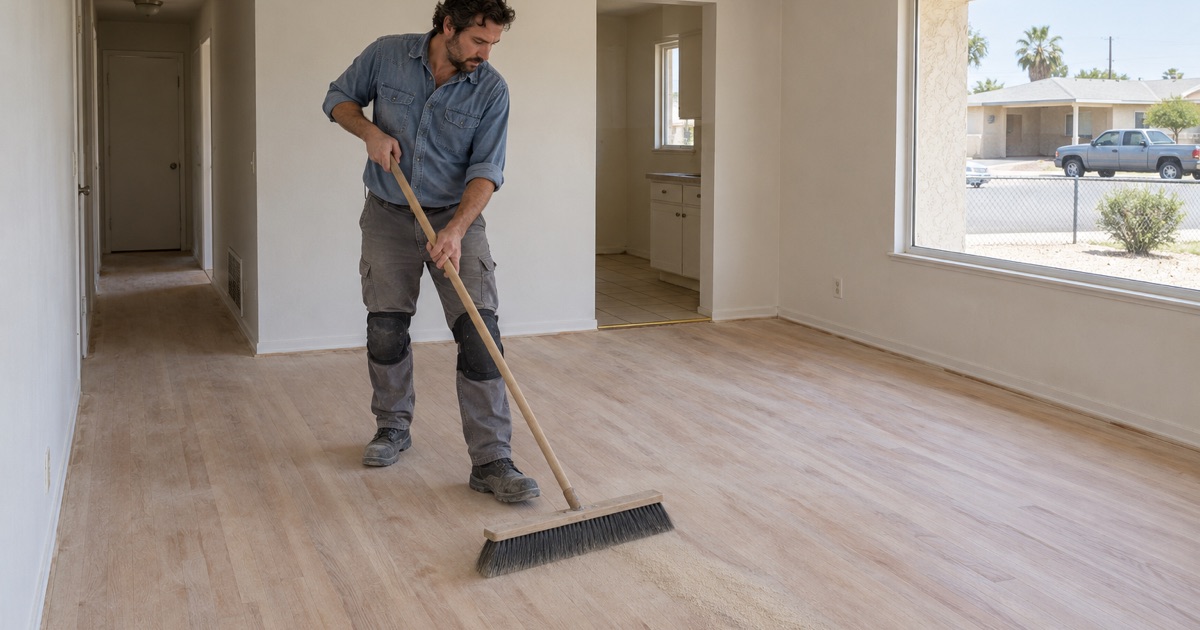
Every job comes with a written cure schedule. It shows when each room can take socks, when shoes are fine, when furniture can go back and when rugs can go down, so the household can plan meals, work and sleep around it instead of guessing.
Finishes That Fit the Air Basin
Commerce sits in the South Coast Air Quality Management District, where SCAQMD Rule 1113 sets the limits that decide which wood coatings are legal to use. We choose finishes to fit that rule, which usually means a waterborne polyurethane for an occupied unit because it dries fast, carries less odor and lets a room come back into use sooner.
Where an owner wants a different look, hardwax oil and oil-modified polyurethane are options we discuss with the tradeoffs laid out, including longer cure times with people in the home. Either way, the product, sheen level and schedule are settled before the first board is sanded.
- 20+ Years of Wood Flooring
- Slab Moisture Tested First
- Free Written Estimates