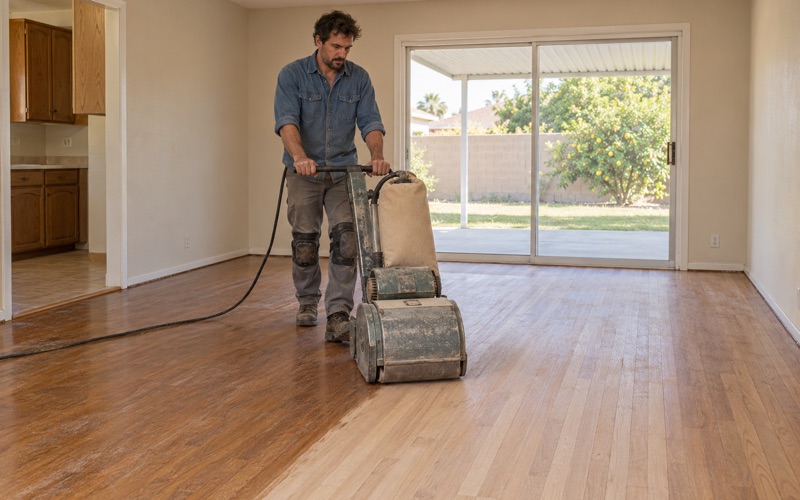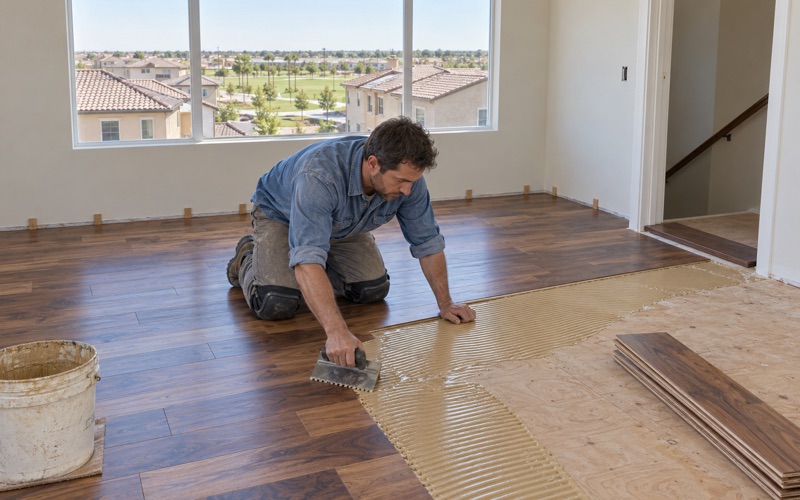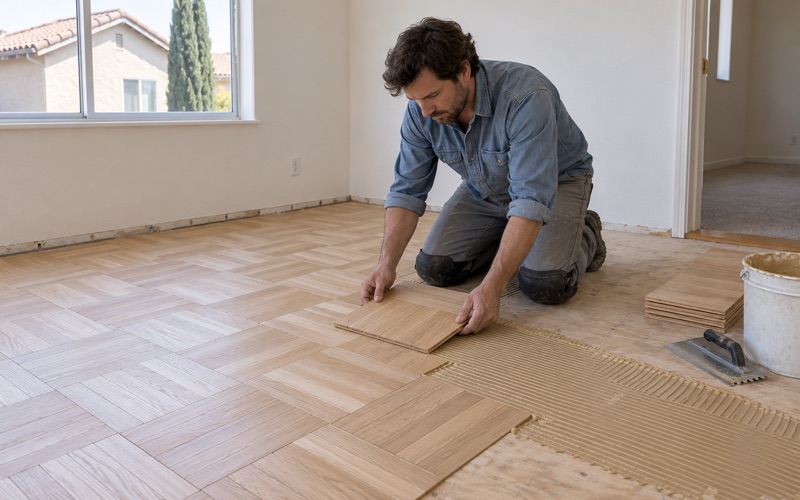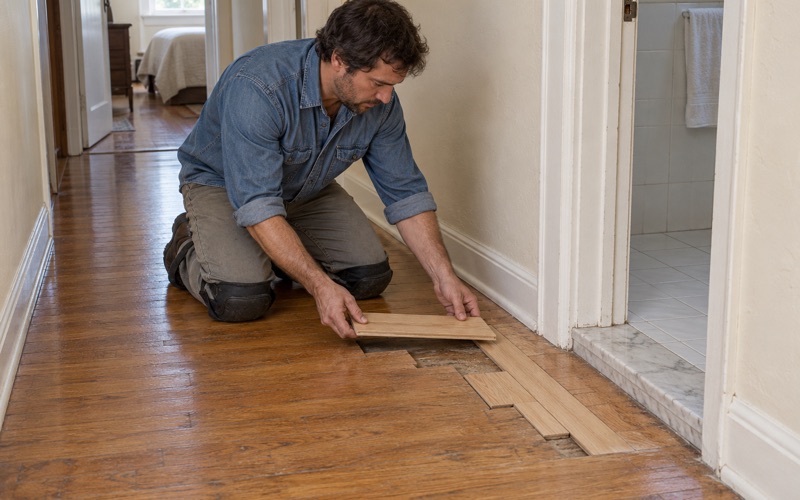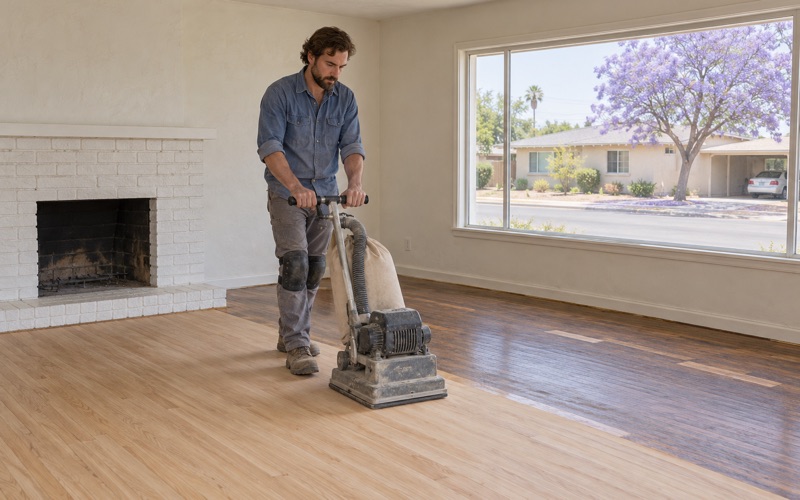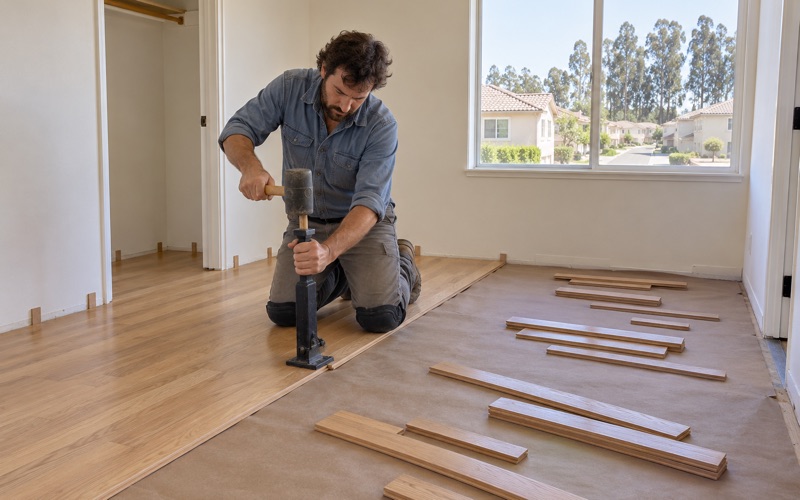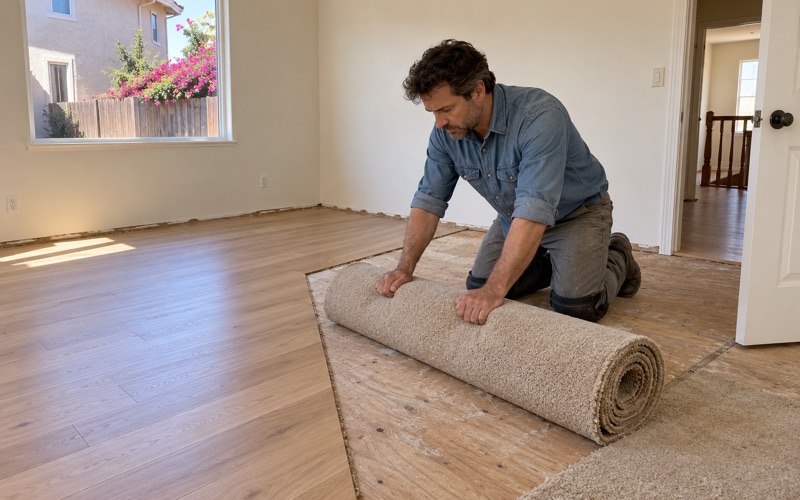
Chino Wood Flooring has handled wood-flooring in Corona for more than 20 years, and most of the jobs we take on here share one starting point: a detached house that has already lived through three or four decades of family traffic. We sand and refinish tired hardwood, replace boards that have cupped or buckled, and install new solid and engineered floors where carpet or tile is coming out.
Every estimate begins with the same few questions. When was the house built, what is under the existing floor, and how much life is left in the wood that is already down? The answers decide whether a room needs a screen and recoat, a full sanding, or a new floor, and we would rather know them before we quote than discover them with a drum sander running.
We also plan around the people living in the house. Sanding is done with dust containment, finishes are chosen from products that are legal to use in this air basin, and you get a written cure schedule so you know which rooms are off limits and for how long.
Floors in Corona’s 1980s and 1990s Houses
Corona is, above all, a city of homes built in the last two decades of the twentieth century. Census figures from the American Community Survey 2024 five-year estimates show 25,564 of the city’s 50,799 housing units, or 50.3 percent, were built from 1980 to 1999. That single fact shapes almost every floor conversation we have here.
The 1990s, the biggest decade
The 1990s were Corona’s largest building decade, accounting for 13,414 units, or 26.4 percent of everything standing in the city. A house from those years is now roughly thirty years old, which is old enough for a site-finished floor to have been sanded once already, and for a prefinished floor to show worn traffic lanes through the aluminum oxide finish.
Those thirty years also mean the house has been through several owners’ worth of furniture, pets and remodels. We often find a hardwood floor in the main living areas that has been patched at a kitchen remodel line, with boards from a different species or a different sawn cut. Red oak and white oak take stain differently, so a mismatch that looked fine under old finish can show once the floor is sanded bare.
The 1980s build-out
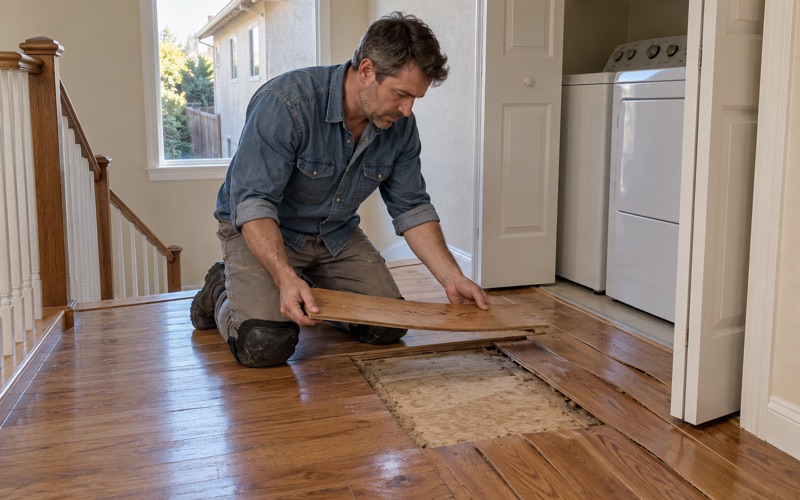
Another 12,150 units went up in the 1980s, so a large share of Corona’s houses are now close to forty years old. Floors of that age usually carry the evidence of every earlier repair: nail heads that have worked loose, hollow spots where the floor no longer sits tight, and board gapping that opens a little wider every dry season.
Because these houses were built after 1978, the federal lead paint rule for older homes generally does not reach them, but we still confirm the build year before any sanding rather than assume it. About 24.6 percent of Corona’s housing was built before 1980, so a house’s age cannot be guessed from the city’s profile, and the year on the record is what we go by.
What a thirty- to forty-year-old floor usually needs
Most floors from these decades fall into one of three conditions. Some only need a buffer and a fresh coat of finish, because the wear stops at the finish layer and has not reached the wood. Others have gray, worn traffic paths, pet urine stains or deep scratches that call for a full sanding through the grit sequence.
The third group has problems below the surface. Cupping, crowning or delamination in an engineered floor points to moisture or to a product that has reached the end of its life, and no amount of sanding fixes that. We tell you which group your floor is in before we talk about price.
Looking for wood-flooring closer to Anaheim? See Anaheim Wood-Flooring.
Refinishing or Replacing a Floor From Those Decades
The biggest decision on an older floor is whether to refinish it or replace it. Solid hardwood with a thick tongue and groove can usually take several sandings over its life. Engineered flooring is different, because only the top veneer is real wood, and that layer can be thin.
Measuring before promising a sanding
Before we promise a refinish on engineered flooring, we measure the engineered wear layer, usually at a vent opening or a threshold where the edge of a board is visible. A thick veneer over a plywood core can take a full sanding; a thin one over an HDF core may only tolerate a screen and recoat, or nothing at all.
On a solid floor that has already been sanded once or twice, we check how much wood remains above the tongue. If a previous sander took too much, a full refinish risks exposing the tongue and nails, and replacement becomes the honest answer even when the surface looks salvageable.
Finishes we use in this air basin
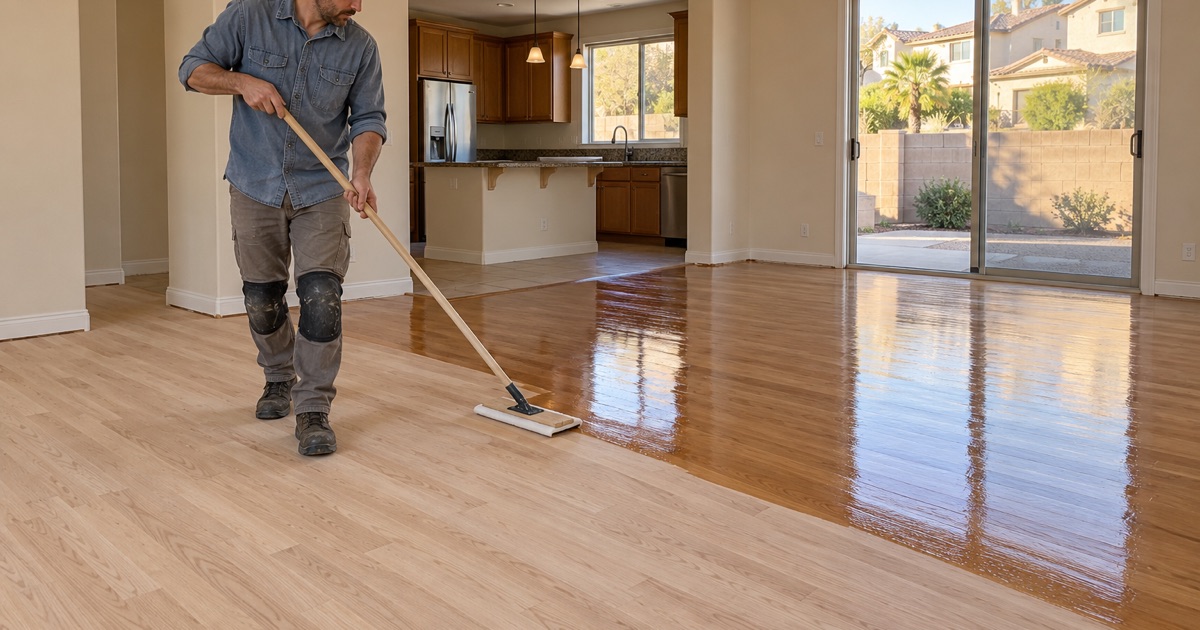
Corona sits within the South Coast Air Quality Management District, and SCAQMD Rule 1113 sets the limits on wood coatings sold and used here. We pick finishes that fit that rule, which in practice means waterborne polyurethane for most refinishing jobs, with hardwax oil for owners who want a matte look and easier spot repairs.
Waterborne finishes dry clear, so they keep maple and white oak light instead of ambering them the way an oil-modified polyurethane can. We walk you through sheen level and color on a sanded sample section, and if you want a darker floor stain, we water pop the surface first so the color takes evenly.
When the answer is a new floor
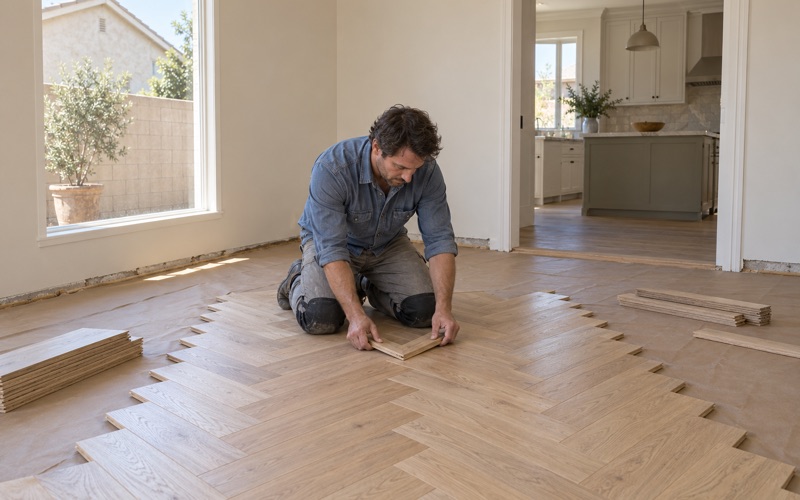
If replacement makes more sense, we look at how the house is built before choosing a product. Where a room sits on concrete, we test the slab for moisture before any engineered floor is glued down and write the reading against the NWFA Installation Guidelines, then choose between a glue-down installation with urethane flooring adhesive and a floating installation over a moisture membrane.
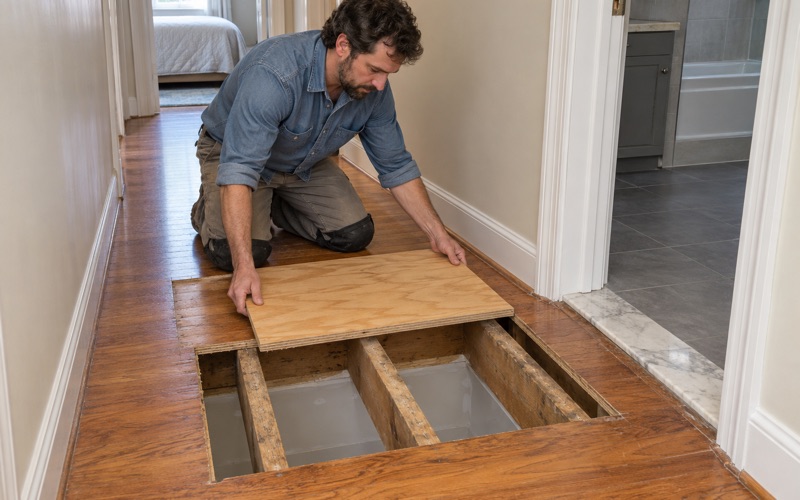
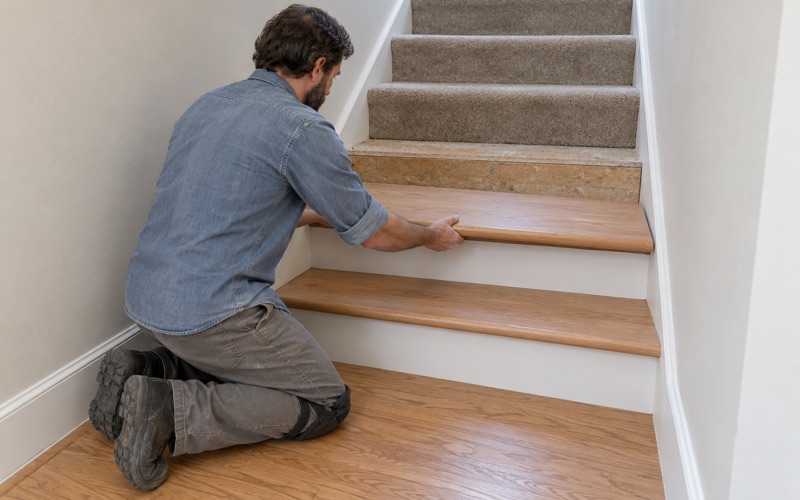
Where the floor is framed over joists, we check the subfloor for soft spots and squeaks before a nail-down installation with flooring cleats. Stairs get quoted separately by the tread and riser, including new stair nosing, because a staircase takes far more labor per square foot than an open room.
Owner-Held Detached Houses, and the Rented Ones Among Them
Corona is mostly a city of owners living in detached houses. Of the 49,247 occupied homes in the city, 31,431, or 63.8 percent, are owner-occupied, according to the same census survey. Among those owner households, 87.7 percent live in a detached house.
Why ownership changes the job
An owner who plans to stay usually asks a different question than a seller or a landlord. They want to know which wood will hold up to the next twenty years of kids and dogs, so we talk about Janka hardness, plain sawn versus quartersawn or rift sawn boards, and whether hickory or white oak suits the household better than a softer species.
Owners also tend to tackle a floor in stages, one level or one wing at a time. We plan transitions, reducers and T-molding so the second phase meets the first cleanly, and we keep notes on the stain and finish we used so the later rooms match.
Rented houses on owner-held streets
Not every detached house in Corona is owner-occupied. The census counts 5,141 renter households living in detached houses, which is 28.9 percent of the city’s renters. Those homes sit on the same streets as their owner-held neighbors, and their floors often see a harder life between tenants.
For landlords, we focus on durable, repairable choices. A site-finished solid floor can be screened and recoated between tenants for far less than replacement, and we can replace a handful of damaged boards and blend them in without refinishing the whole house.
Water damage in an occupied house
In houses this age, water is a common reason a floor fails. When boards are cupped near a kitchen, a bathroom or an exterior door, we confirm the leak source and take moisture meter readings before any boards come out. Replacing wood over a leak that is still running only buys a second failure.
If an insurance claim is involved, we document the damage room by room for the adjuster, with readings, photos and the extent of affected flooring. That record helps the claim reflect what actually happened in each room rather than a single guess for the whole house.
Planning Floor Work With the City of Corona
The City of Corona has been incorporated since July 13, 1896, and today covers roughly 40 square miles in northwestern Riverside County. Its departments, not the county, are the ones to contact for questions about a specific address inside the city limits.
Questions for the city before a remodel
We do not give permit answers for floor refinishing or replacement, because those decisions belong to the city’s building staff, and scopes that include structural or subfloor work change the picture. Ask the City of Corona directly about your project, and we will provide the scope and product details they need.
If you are planning a larger remodel and want to know whether your lot sits in a mapped flood zone, the city’s Public Works Customer Service Counter at (951) 736-2259 answers flood-zone questions for a specific property. That is the right source for elevation certificate questions, too, and a fee may apply.
Scheduling around the household
Most refinishing jobs in a detached Corona house run over several days, from sanding through the final coat. We set up dust containment at doorways and returns, and you get a written schedule showing when each room can take foot traffic, when furniture can go back and when rugs can go down.
We also check the forecast before a finish coat. Corona falls in the National Weather Service’s San Bernardino and Riverside County Valleys forecast zone, and humid or unusually warm spells change how long a finish takes to cure, so the schedule allows for that.
Getting an estimate
The estimate visit is where we confirm the build year, measure any engineered wear layer, and take moisture readings where they matter. From there you get a written scope that says whether the floor needs a recoat, a full refinish, repairs or a new installation, and why.
If part of the house is fine and part is not, we will say so. On floors that have been in service for thirty or forty years, the most useful thing we can offer is a clear account of what is under the finish before any money is spent.
- 20+ Years of Wood Flooring
- Slab Moisture Tested First
- Free Written Estimates