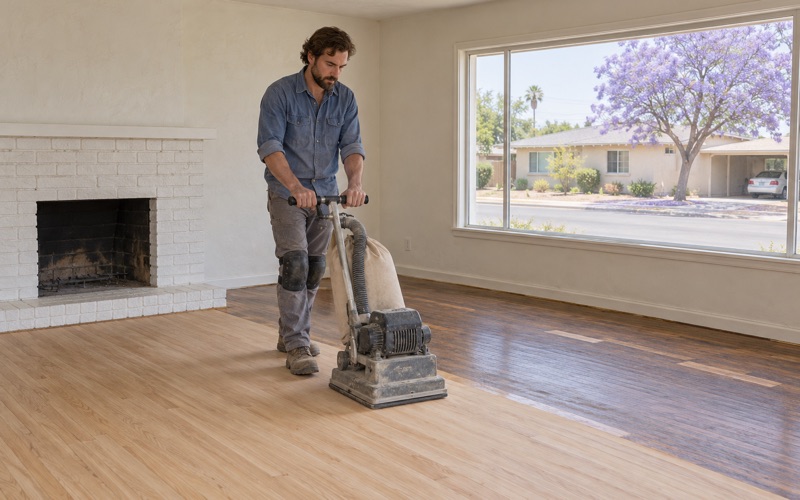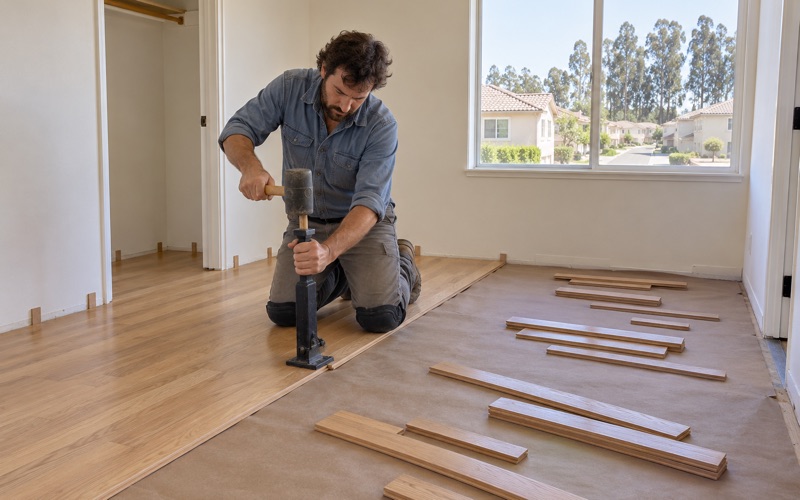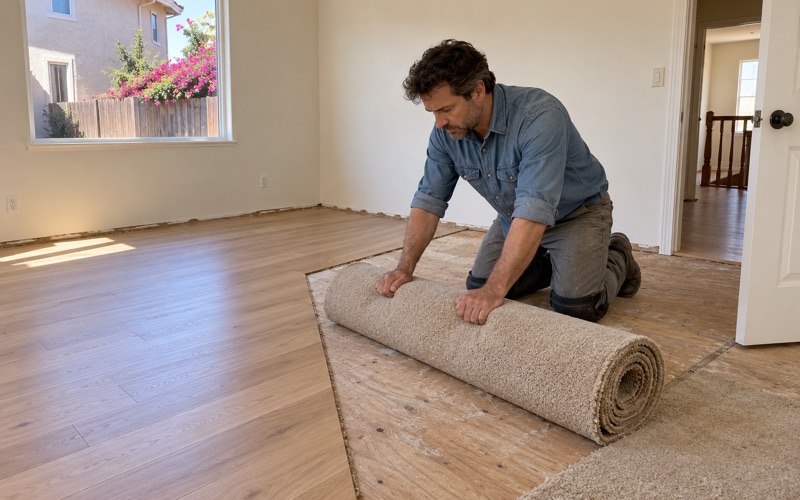
Chino Wood Flooring has handled wood-flooring in Eastvale for more than 20 years, and most of the houses we walk into here are younger than our company. That changes the conversation. Instead of rescuing a century-old floor, we are usually replacing a first floor covering, refinishing a floor laid in the last two decades, or repairing boards after a leak.
Our work covers the full range: solid hardwood and engineered plank installed by glue-down, nail-down or floating methods, sanding and refinishing, screen and recoat maintenance, stair treads and risers, and water-damage repair. Every job starts with measurements taken before a price is written, because a quote built on guesses tends to change halfway through the work, and nobody wants that surprise.
This page explains how we approach floors in Eastvale specifically: how the city’s houses came to be, what that history means for the surface under your feet, how we plan a whole-house change, what changes when the house is a rental, and which offices matter once the work begins.
Floors in Eastvale’s County-Planned Tracts
Eastvale’s neighborhoods were largely laid out before there was a City of Eastvale to approve them. That history is worth a few minutes, because it explains why the floors here tend to share age, layout and construction method across whole streets, and why our first visit to a house looks the way it does.
From Dairy Land to Specific-Plan Subdivisions
Riverside County’s Eastvale Area Plan describes a place where dairies were the predominant agricultural use, and it records the rapid conversion of much of that dairy land to urban uses. The county wrote that subdivision approvals had determined the ultimate shape of the landscape, well before the tracts themselves were finished.
The same plan lists four adopted community development specific plans: Interstate 15 Corridor, Eastvale, Enclave and The Ranch at Eastvale. In 1998 the county also adopted Design and Landscape Guidelines for development in its Second Supervisorial District. Those documents shaped lots, streets and landscaping. They say nothing about interior floors, so the choice of wood, finish and installation method is entirely yours.
A City That Took Over Finished Subdivisions
Eastvale incorporated on October 1, 2010, becoming Riverside County’s 27th city, and adopted its own General Plan in 2012. By then most of the housing was already standing. According to the Census Bureau’s 2024 five-year survey, 17,129 of Eastvale’s 18,484 housing units, or 92.7 percent, were built in 2000 or later.
For a flooring contractor, that figure matters more than any street name. It means most homes here were planned and approved under county rules and share a recent construction era, so the questions we ask are about subfloor type, moisture and existing coverings rather than century-old joists or layers of old linoleum. Only 16 acres of the county plan area remain unincorporated today.
Why the Build Year Still Gets Checked
Even in a city this young, we confirm a house’s build year before any sanding starts. The EPA RRP rule applies to painted surfaces disturbed in homes built before 1978, and baseboards, stair skirts and door casings are exactly what a floor job disturbs. In Eastvale that check almost always clears quickly, but we never skip it.
Looking for wood-flooring closer to Chino Hills? See Wood-Flooring Services in Chino Hills.
Planning a Floor Change Across a Whole Tract House
Most Eastvale projects are whole-floor or whole-house jobs rather than a single room. Owners who have lived with the same surface for fifteen or twenty years often want one continuous floor running from the entry through the living spaces, and that plan raises questions of substrate, transitions and stairs that deserve answers before anything is ordered.
Finding Out What Is Under the Current Floor
We do not assume anything about an Eastvale foundation. Before quoting, we lift a corner or inspect a vent or floor register to learn whether we are working over concrete or a wood subfloor. Whatever the existing covering is, carpet with tack strip, tile or vinyl plank, we note it and plan its removal as part of the price.
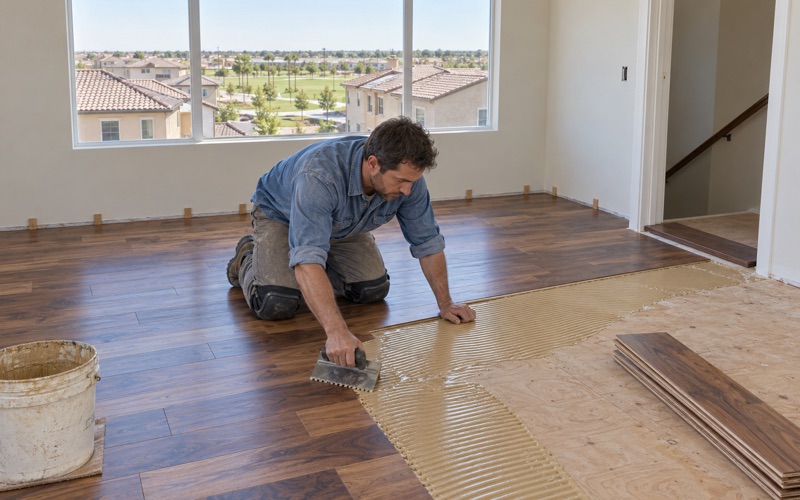
Where the base is concrete, we test for moisture before any engineered floor is glued down. Depending on the job that means in-situ relative humidity testing or a calcium chloride test, and the reading is written down and compared against the NWFA Installation Guidelines. A high reading changes the plan to include a moisture membrane or a urethane flooring adhesive rated for it.
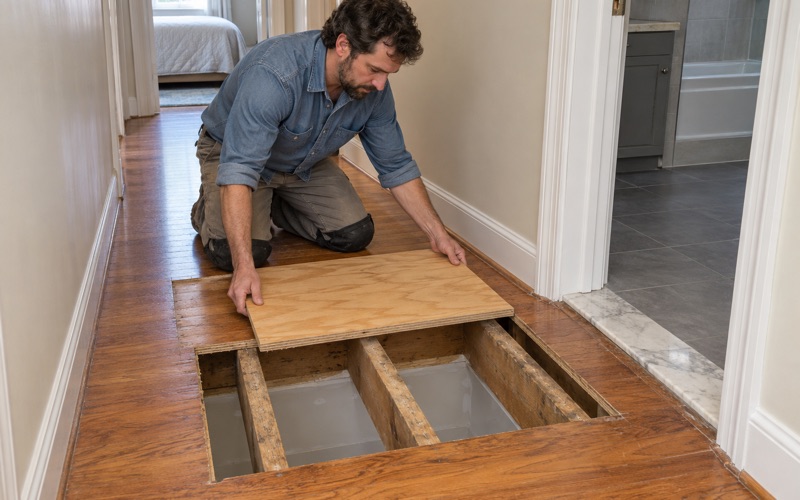
Where there is a plywood or OSB subfloor, we check it for flatness and fastening and look for squeaks over the floor joists. A solid hardwood floor nailed with flooring cleats or flooring staples needs a sound subfloor, and correcting a soft spot now costs far less than chasing hollow spots or board gapping after the job is finished.
Choosing Species, Construction and Finish
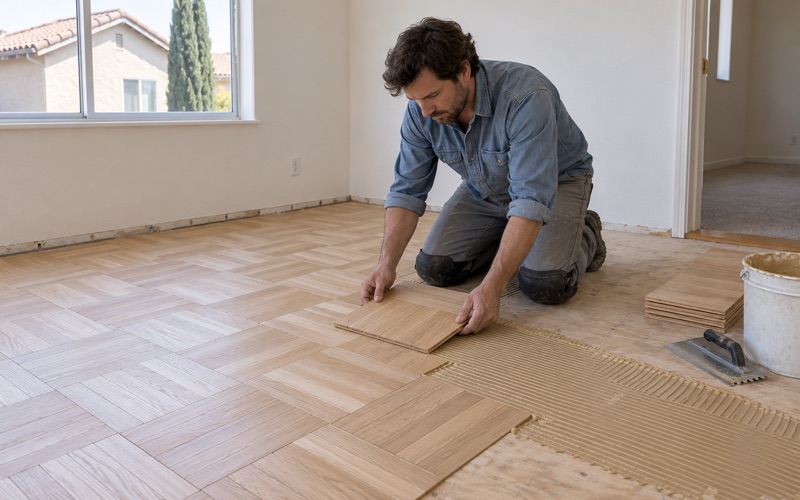
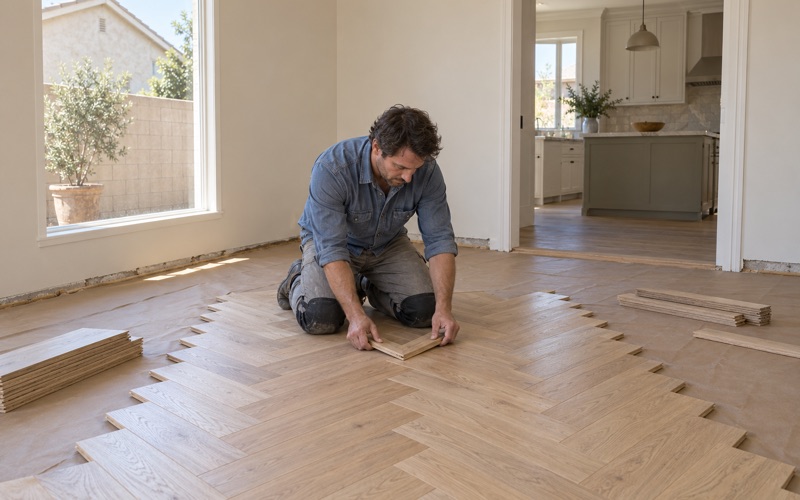
White oak and red oak remain the most requested species, with hickory and maple for owners who want more hardness or a lighter tone. We walk through Janka hardness, the look of plain sawn against rift sawn and quartersawn boards, and whether a wide plank suits the room sizes. Engineered plank with a plywood core usually suits concrete installation well.
For finishes, we choose products that fit SCAQMD Rule 1113’s limit for wood coatings, the rule that decides which coatings can be legally applied in this air basin. That usually means a waterborne polyurethane or a hardwax oil on site-finished floors, while prefinished plank arrives with a factory aluminum oxide finish. We also discuss sheen level, since a satin floor hides everyday wear better than gloss.
Stairs, Transitions and Cure Time
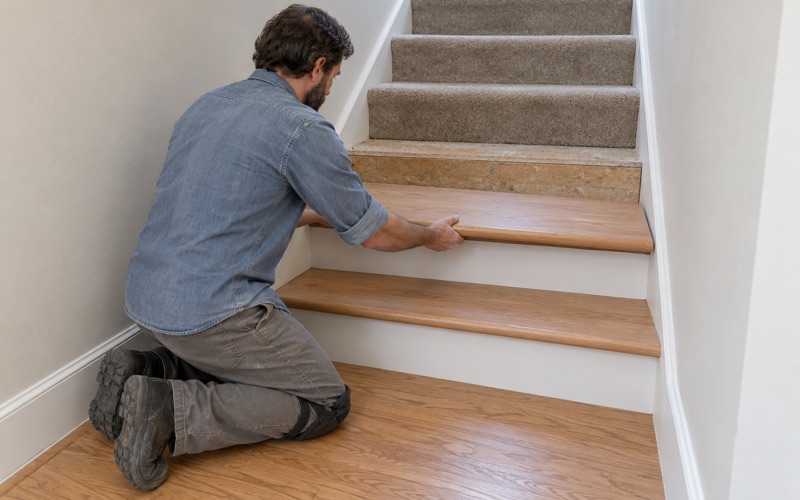
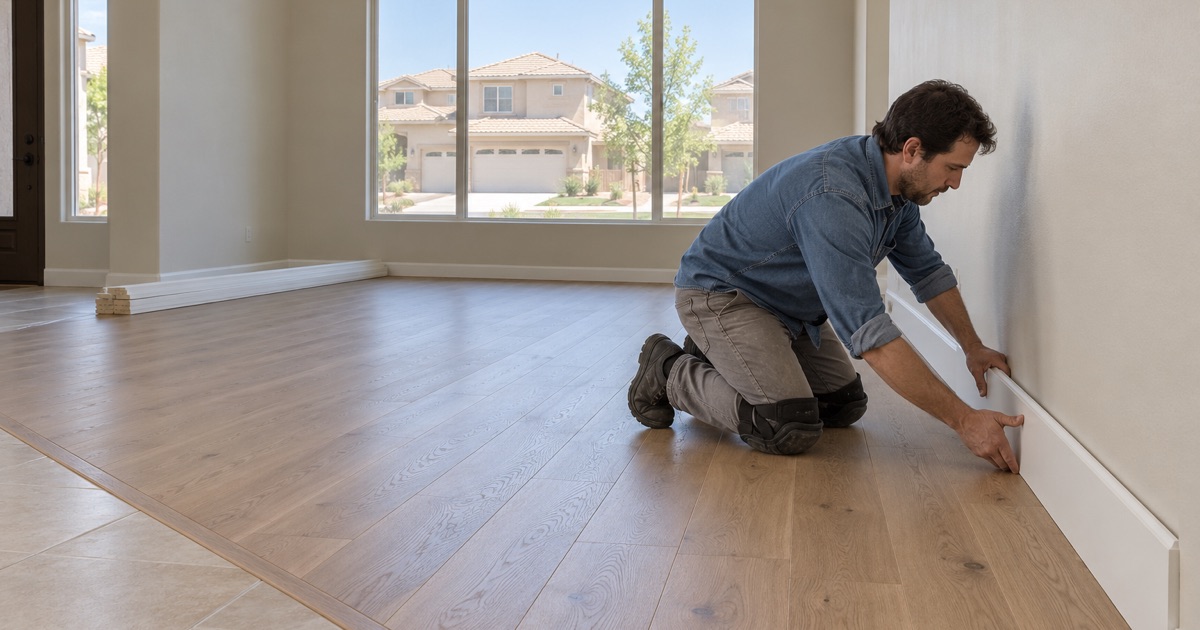
Two-story houses bring stairs into many whole-house plans. We quote stair treads and risers by the piece rather than folding them into a square-foot price, and each stair nosing is fitted to meet the landing cleanly. Doorways get a reducer or T-molding where the new floor meets tile, and the baseboard or quarter round is reset at the end.
Because families usually stay home during the work, we set up dust containment and hand over a written cure schedule. That schedule tells you when the floor can take socks, when furniture can return and when rugs can go back down, so the household can plan meals, pets and school mornings around it.
Rented Eastvale Houses Between Tenants
About 22 percent of Eastvale’s occupied homes are rented, and most of those rentals are houses rather than apartments: 66.8 percent of renter households rent a detached house. That creates a steady demand for floor work timed to the gap between one lease ending and the next beginning, often with just a few days to spare.
Refinishing on a Turnover Deadline
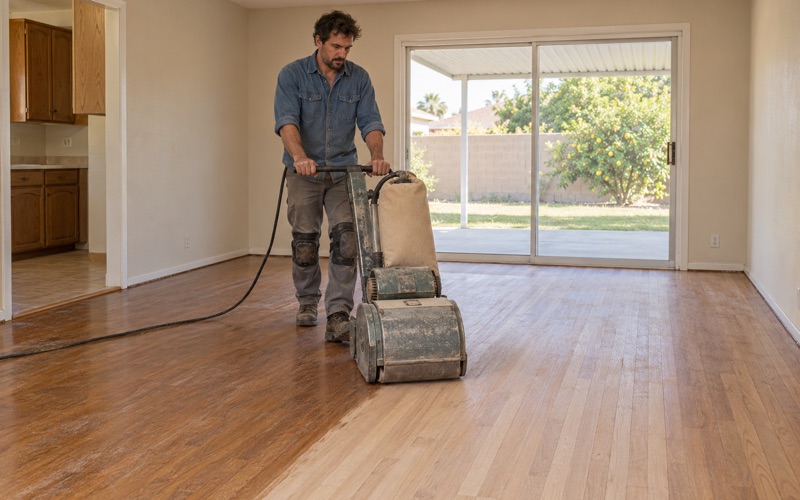
When a tenant moves out, the question is usually whether the floor needs a full sanding or only a screen and recoat. A light abrasion with a buffer and a fresh coat can restore a dull but intact finish in a day or two. Deep scratches, gray traffic lanes or stain changes call for a full sanding with a drum sander and an orbital sander through a proper grit sequence.
On engineered floors, we measure the engineered wear layer before promising a refinish. A thin wear layer cannot take a full sanding, and if we cannot confirm enough thickness, we say so and price a recoat or board replacement instead. That honesty protects the owner from paying for a sanding that exposes the core and ruins the plank.
Pet Stains, Water Marks and Damaged Boards
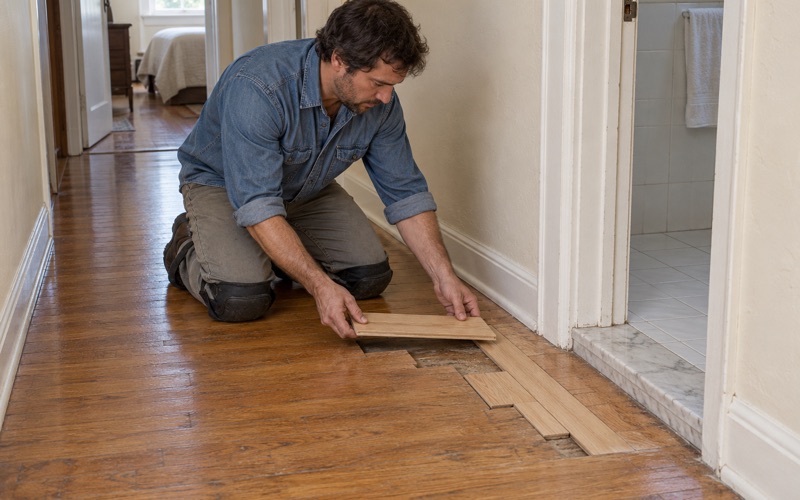
Pet urine stains are one of the most common turnover problems. Surface marks often sand out, but dark stains that reach deep into the wood usually mean cutting out those boards and weaving new tongue and groove pieces into the field. We match species, width and floor stain so the repair blends with the room after finishing.
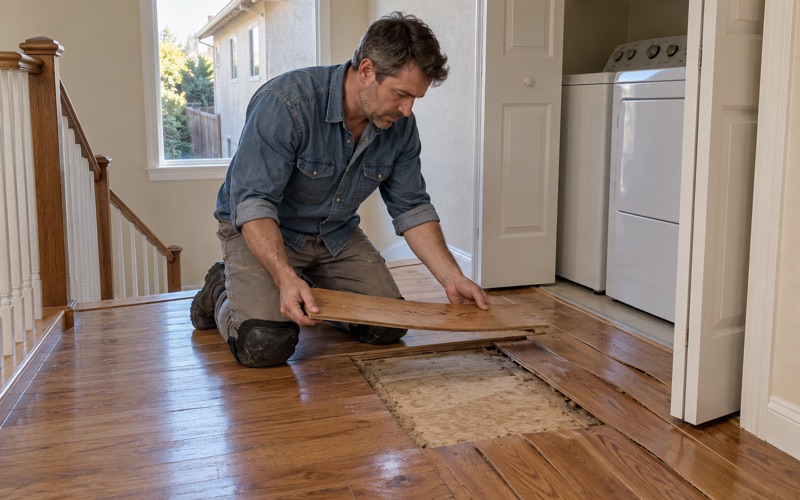
Water damage calls for a different order of work. Before we replace any cupping, crowning or buckling boards, we confirm the leak source has been fixed and take moisture meter readings across the affected area. If a slab leak or plumbing failure is behind the damage, we document it room by room with photos and readings that an owner can hand to the insurance adjuster.
Floor Work Under the City of Eastvale Today
The county plans explain how Eastvale’s houses came to be, but the city is the authority now. The City of Eastvale Community Development Department runs a Building Safety Division that handles plan review, permit issuance and inspections, and it has brought building inspector positions in-house that were previously contracted out.
Where Owners Take Their Questions
The Building Safety Division is at 12363 Limonite Avenue, Suite 910, and can be reached at (951) 703-4450. City Hall is open Monday through Thursday from 7:30 a.m. to 5:30 p.m. and closed Fridays. Whether a particular floor project involves the city is a question for that office, and we encourage owners to ask it directly before work begins.
Air quality is a separate authority. Eastvale sits within the South Coast Air Quality Management District, which is why SCAQMD rules govern the coatings we bring to the job. When an older floor covering involves black mastic or other adhesives of uncertain age, we stop and review how SCAQMD Rule 1403 might apply before any scraping or grinding begins.
What a First Visit Looks Like
A first visit in Eastvale usually takes under an hour. We measure each room and the stairs, check the substrate and any existing damage, take moisture readings where they are needed, and talk through species, finish and schedule. The written quote follows, listing floor area, stair count, removal, moisture mitigation and transitions as separate lines.
From there, we set an installation or refinishing date, allow time for acclimation of the new wood, and plan containment around the rooms you still need to use. Whether the house is your own or a rental between tenants, the aim is the same: a floor suited to Eastvale’s recent construction, installed to published guidelines, finished to last.
- 20+ Years of Wood Flooring
- Slab Moisture Tested First
- Free Written Estimates