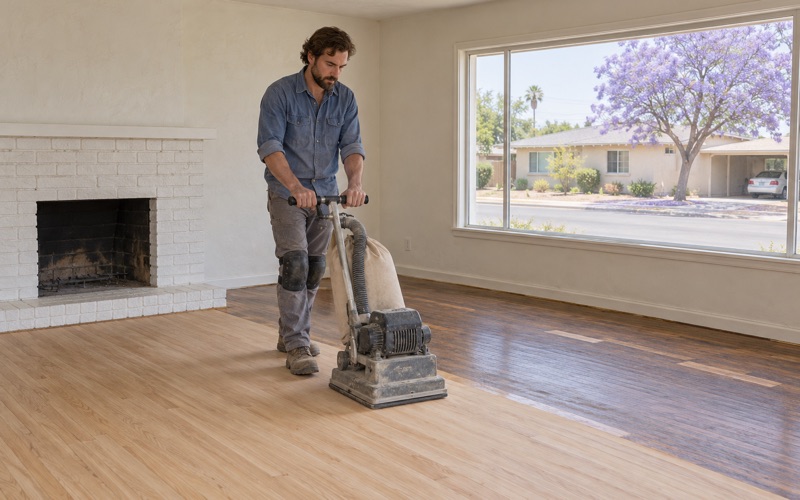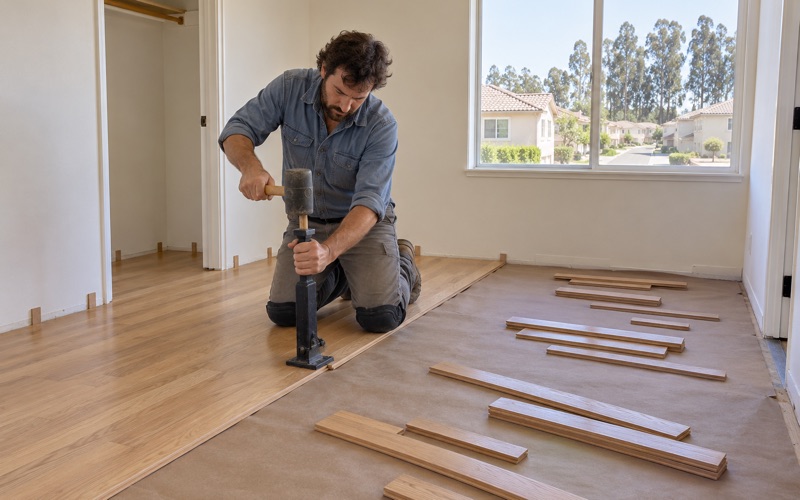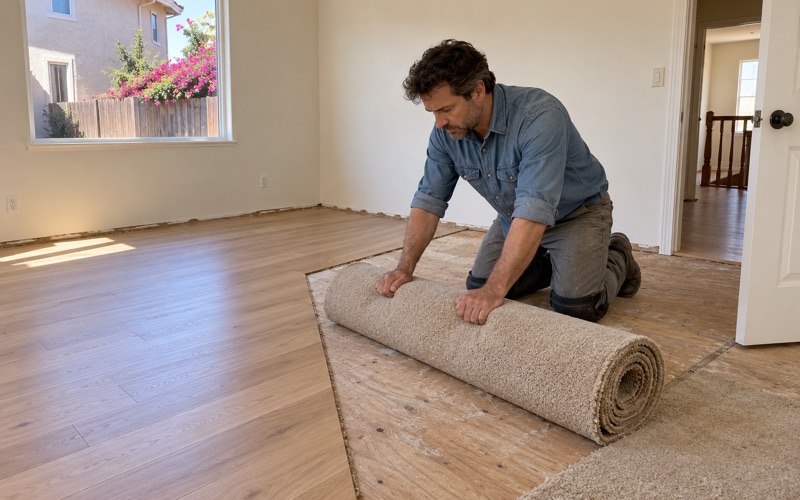
Chino Wood Flooring has handled wood-flooring in La Palma and the surrounding region for more than 20 years, and a lot of our work here begins with one question from the owner: how long do you plan to stay in this house? The answer decides whether we sand and refinish, patch a damaged section, or put down a new floor. It also decides when the work should happen if the household is weighing a financing decision at the same time.
Some owners call us while they are looking into a reverse mortgage. We do not arrange loans, give financial advice, or work on behalf of any lender or counseling agency. What we can do is inspect the floor, describe its condition in plain language, and hand over a written scope and price that the owner can bring to a counselor or lender.
Everything we put in writing is specific to the floor in front of us. We confirm the build year before any sanding starts, take moisture readings before replacing water-damaged boards, and leave a written cure schedule so the household knows which rooms are off limits and for how long.
What La Palma’s Reverse Mortgage Program Does
The City of La Palma adopted its 2021-2029 Housing Element on October 5, 2021, through Resolution No. 2021-31. Among its housing programs is Program 5, a Reverse Mortgage Program.
It is not a loan the city makes. It is a referral and information program that points a specific group of homeowners toward counseling.
A Program Written for Owners With Equity
The housing element describes the program as one that targets elderly homeowners who are cash poor but have substantial equity in their homes. The idea is that an owner can draw needed income from the equity that has built up over decades instead of selling. For a longtime owner who wants to stay put, that can be a way to cover living costs and household repairs from the value already sitting in the house.
The city lists Program 5 alongside other housing programs, including Section 202 housing for elderly households where the head of household is at least 62. That placement matters because it shows how the city frames the reverse mortgage: as one option among several for older residents, not a product it sells or recommends to everyone.
Counseling Through NeighborWorks Orange County
Under the program, NeighborWorks Orange County provides information to seniors seeking this type of loan. The housing element says its role includes counseling seniors who are interested in applying, working with private lending institutions, and helping seniors complete applications. The city’s stated objective is to refer every eligible party who contacts it with an interest in the program to NeighborWorks Orange County.
We are not part of that process, and a floor contractor should never be the one explaining loan terms. Our role starts only if a counselor, an appraiser or a lender raises a question about the condition of the house, or if the owner simply wants to know what the floors will need over the next several years.
Looking for wood-flooring closer to Artesia? See Wood-Flooring Services in Artesia.
When a Reverse Mortgage Comes With a Repair List
A federally insured reverse mortgage is known as a Home Equity Conversion Mortgage, and its rules sit in federal regulations. One section, 24 CFR 206.47, deals directly with repairs. Reading it helps an owner understand why the condition of a floor can come up during a loan that has nothing to do with flooring on its face.
HUD’s Property Requirements
Under 24 CFR 206.47(a), a property must meet the property requirements of the HUD Commissioner to be eligible. A property that does not meet them must be repaired so that the repaired house will serve as adequate security for the insured mortgage. In short, the house backs the loan, and a house with problems that fall short of those requirements has to be fixed.
That rule does not say anything about wood floors in particular, and it does not call for hardwood over any other material. Whether a given floor ends up on a repair list depends on what the appraisal finds in that specific house. Our job, if it comes to that, is to describe the problem accurately and price the fix.
What a Floor Problem Looks Like
Most floor issues we see in older houses are cosmetic: dull finish, gray traffic lanes, pet urine stains near a back door. Some are not. Cupping or buckling from a past leak, boards with hollow spots, delamination on an engineered floor, or drywood termite frass along a baseboard all point to something beneath the surface worth documenting.
When we inspect for an owner in this position, we separate the two groups in writing. Cosmetic wear goes in one list, and anything that suggests moisture, pests or a failing subfloor goes in another, with readings from a moisture meter where they apply. That gives the owner a clear document rather than a vague sense that the floor needs work.
The Houses Behind the Numbers
The reason this matters in La Palma is the age of its housing. According to the Census Bureau’s 2024 five-year American Community Survey, 75.6 percent of the city’s housing units were built from 1960 to 1979. The same survey shows 90.1 percent of owner households live in detached houses.
Floors that old may have been refinished, covered with carpet, or partly replaced over the years. An owner who bought decades ago may not know what sits under the carpet in a back bedroom, or whether an earlier refinish left enough wood for another one. We find out before recommending anything.
Floor Repairs Before or After Closing
Timing is where a reverse mortgage and floor work actually meet. The regulation allows two paths, and which one applies depends on how large the remaining repair work is. That decision belongs to the lender and HUD, not to us, but knowing the rule helps an owner plan the order of events.
The 15 Percent Threshold
Under 24 CFR 206.47(b), the mortgage may close before the repair work is finished only if the Commissioner estimates that the cost of the remaining repairs will not exceed 15 percent of the maximum claim amount. The mortgage must also contain approved provisions for paying for those repairs. Above that threshold, the repairs come first.
For an owner, this means a clear, itemized floor estimate can be useful early. If a lender needs to know what remaining work will cost, a room-by-room scope with material, labor and any stair treads priced separately is easier to evaluate than a single lump figure.
Your Own Labor Is Not Reimbursed
The same section, in paragraph (d), states that the mortgagee shall not reimburse the borrower for any labor the borrower performed. An owner who plans to refinish a floor personally to save money should know that time and effort will not be paid back through the loan. Materials and hired work are a separate question for the lender.
We mention this because it changes the math for some households. A weekend with a rented drum sander can look inexpensive until the owner realizes the effort is unpaid and a gouged board may add to the repair list rather than take away from it.
Scheduling Around a Closing
When floor work has to be finished before closing, we plan the sequence so that the rooms an appraiser or inspector will look at are done and cured first. When it can wait until after closing, we can schedule around the owner’s routine instead. In both cases the owner gets a written timeline with sanding days, finish coats and cure time spelled out.
Planning Floor Work for the Years You Plan to Stay
Setting the loan aside, an owner who expects to stay in a 1960s or 1970s house for many more years has a different set of priorities than one preparing to sell. Durability and low maintenance count for more than following trends. The right answer depends on what the floor is made of and what it has already been through.
Refinish, Repair or Replace
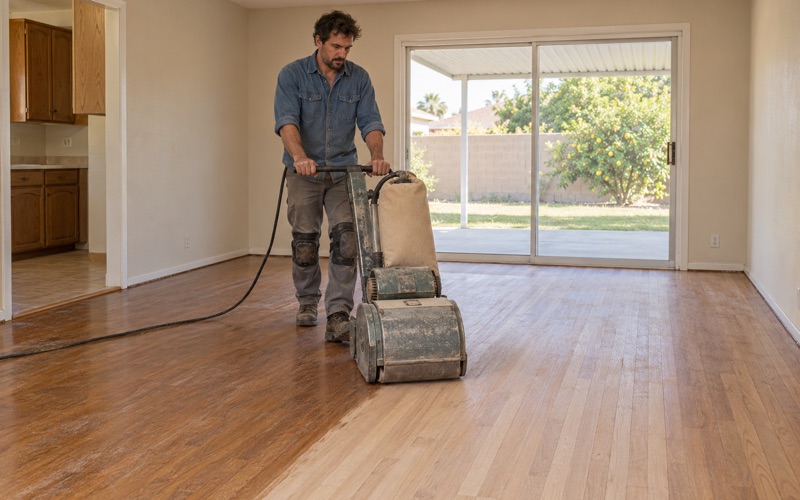
A solid hardwood floor in red oak or white oak that has been sanded once or twice usually has room for another full refinish. We check by looking at a floor vent or threshold edge and confirming the tongue and groove is not exposed. A screen and recoat can freshen a floor with sound finish at a fraction of the disruption of a full sanding.
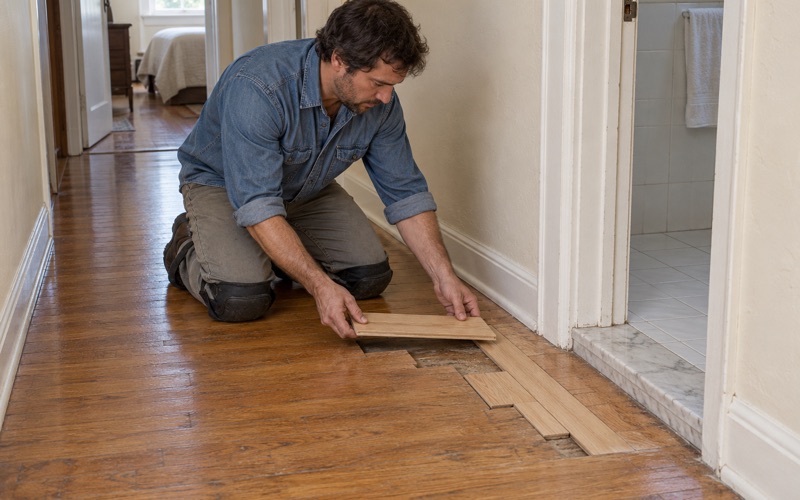
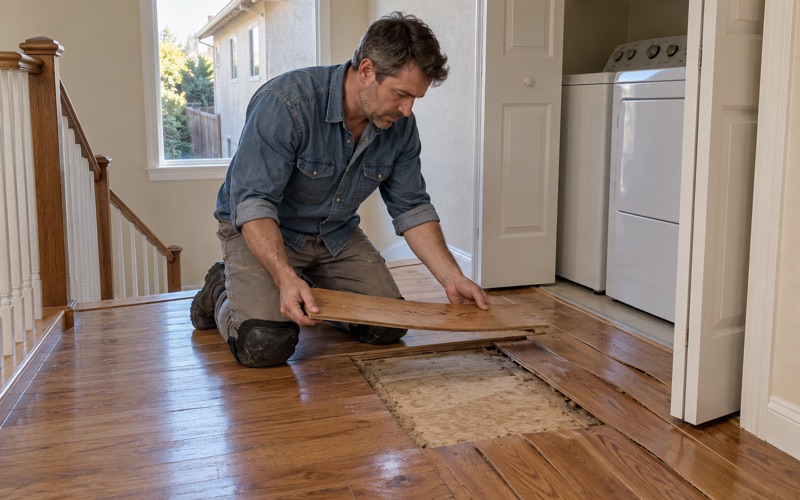
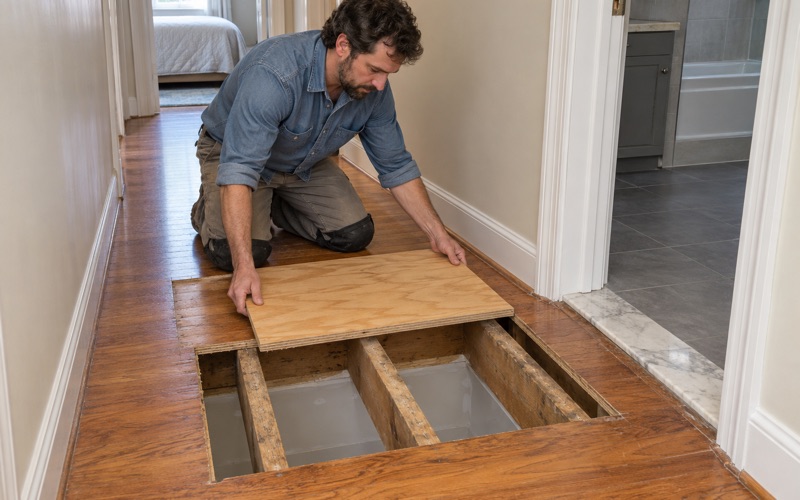
Engineered floors are different. We measure the engineered wear layer before promising any sanding, because a thin one cannot take a full refinish. Where boards are cupped from an old leak, we confirm the leak source is fixed and take moisture readings before replacing anything, so new boards are not laid over the same problem.
Finishes and Lead Checks in an Older House
A house built in the 1960s or early to mid 1970s predates 1978, which puts painted baseboards, door casings and trim within reach of the EPA lead-safe rule when sanding or removal disturbs them. We confirm the build year first and plan the work around it, including how baseboard and quarter round are handled.
Finishes also have to be legal to use here. La Palma is inside the South Coast Air Quality Management District, and we choose products that fit SCAQMD Rule 1113’s limits for wood coatings. For an owner who wants low upkeep, that often means a waterborne polyurethane or a hardwax oil in a sheen level that hides everyday wear.
Living in the House During the Work
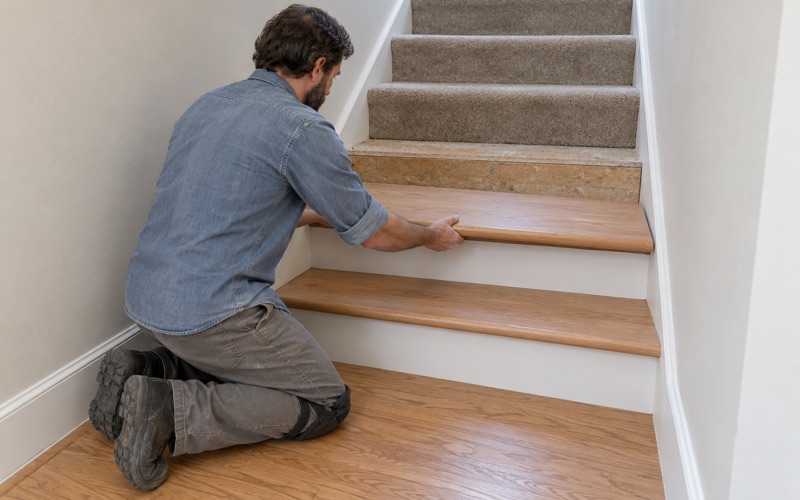
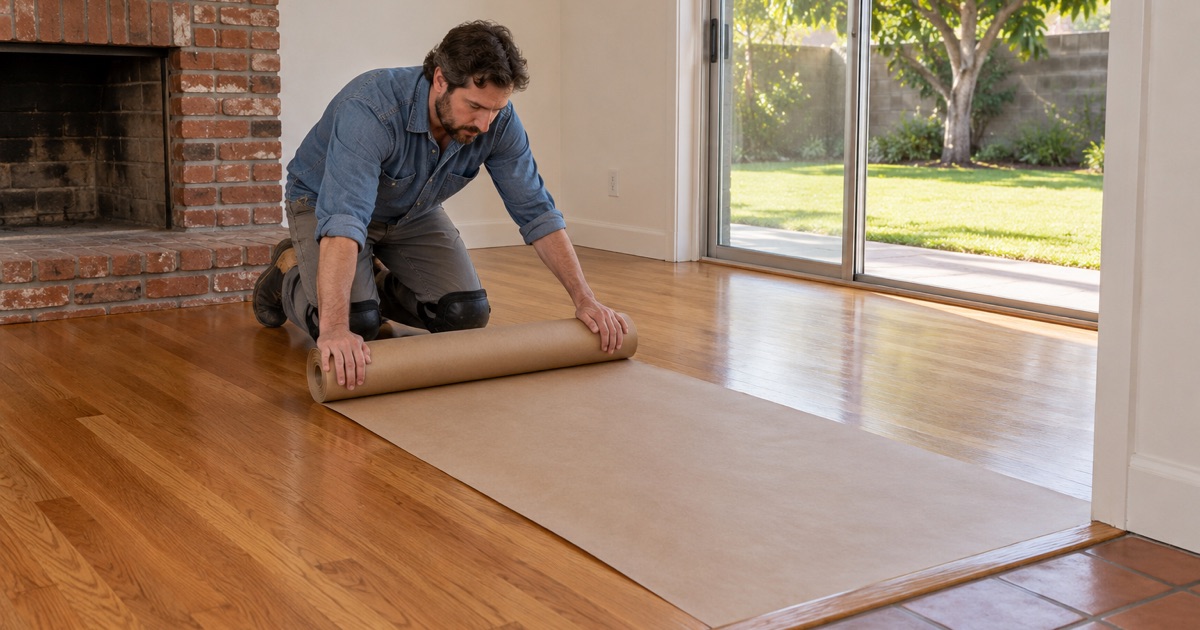
Owners who stay put usually live in the house while we work. We set up dust containment, move through the house in stages where the layout allows, and leave a written cure schedule so furniture, rugs and pets come back on a known date. Stairs are quoted by the tread and riser rather than folded into a square-foot price, so the cost of a staircase is visible on its own line.
If a later leak does damage, we document it room by room for the adjuster before replacing boards. For a household planning to stay another decade or more, that record, along with the original scope, becomes part of the house’s maintenance history and makes the next decision easier.
- 20+ Years of Wood Flooring
- Slab Moisture Tested First
- Free Written Estimates