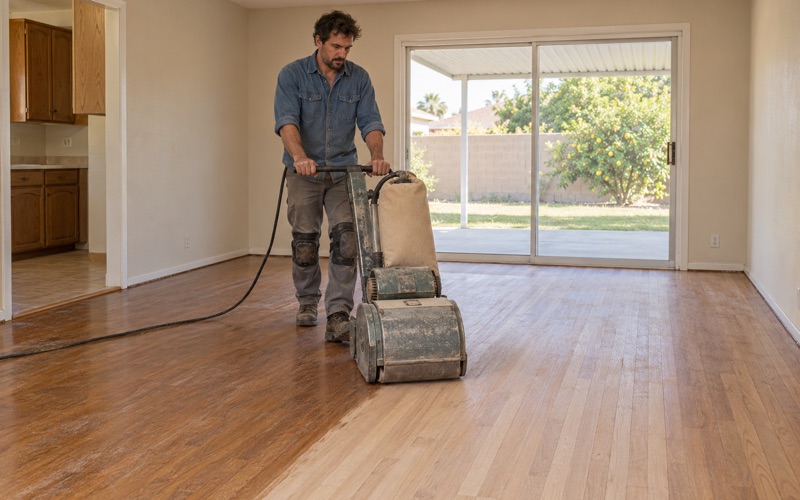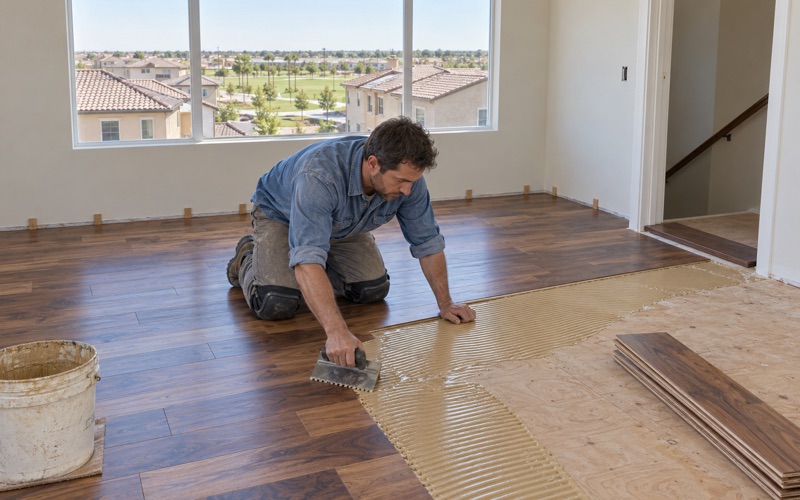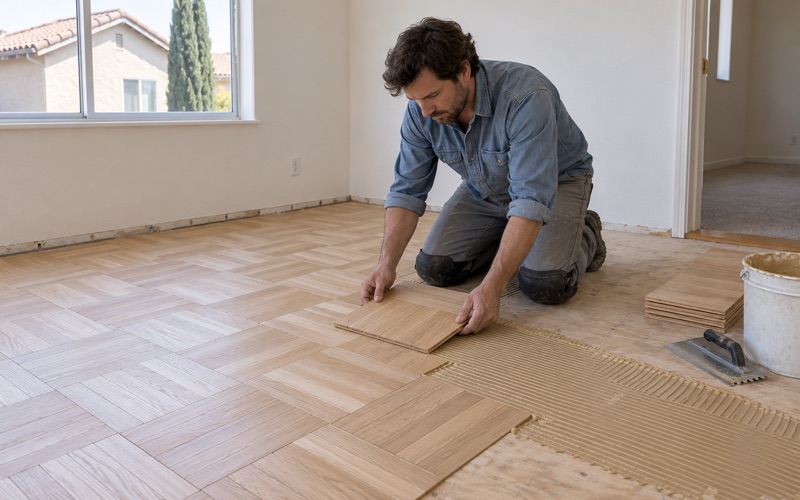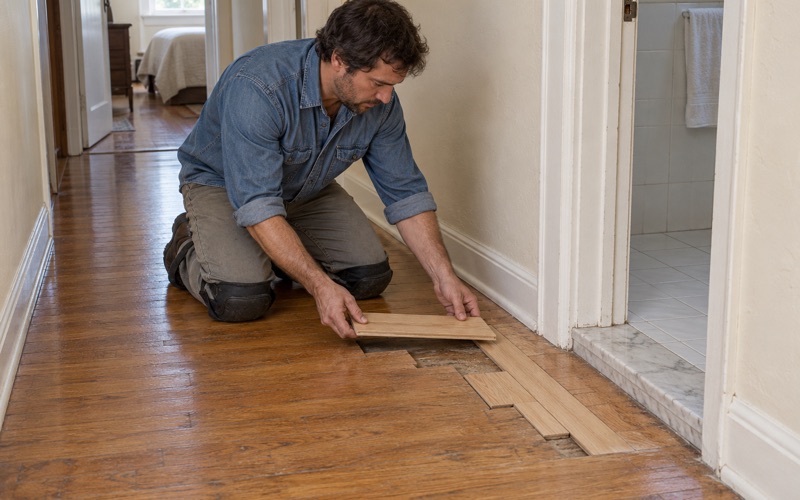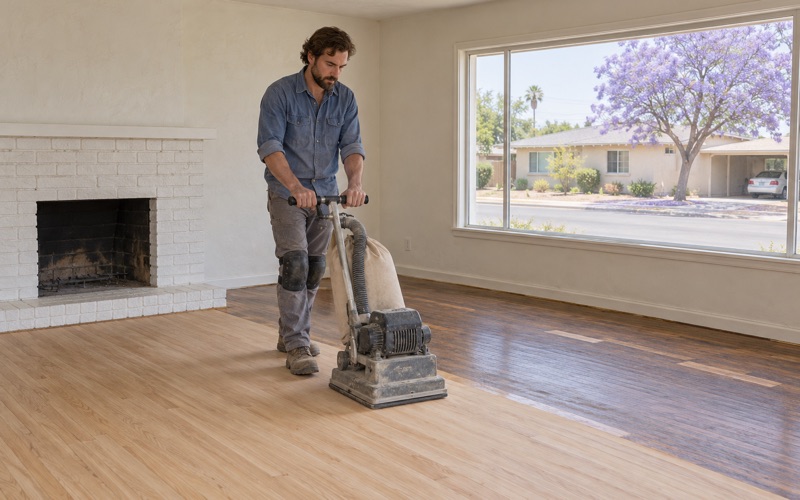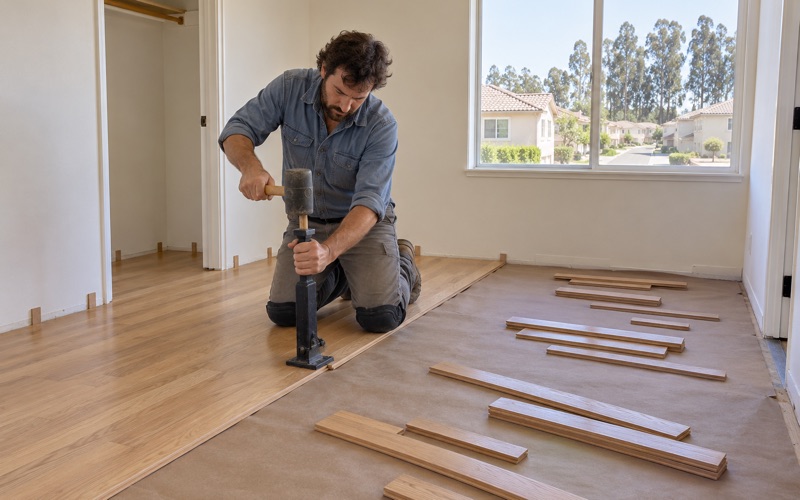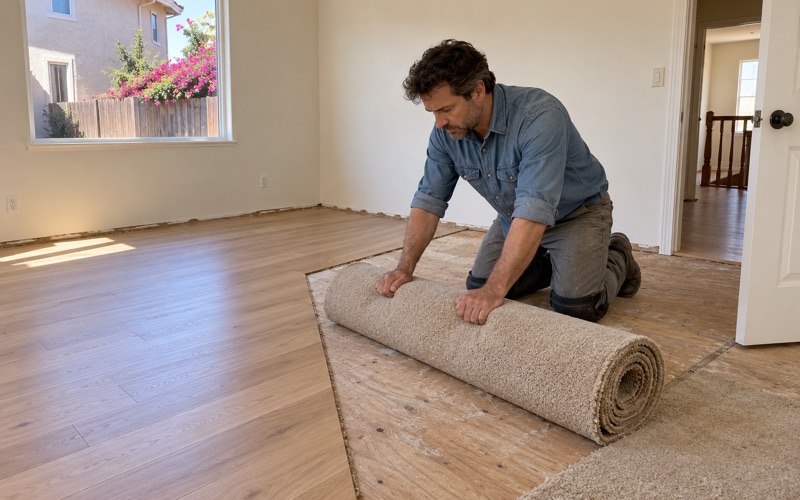
Chino Wood Flooring brings more than 20 years of experience to wood-flooring in Los Alamitos, and much of our work here happens between one tenant and the next. A unit empties, the owner walks the rooms, and the floor becomes a question: is this damage a deposit can cover, or the normal result of people living on wood? We repair, refinish and replace the boards, and we document what we did.
That documentation matters more than it used to. California changed what a landlord has to show before keeping part of a security deposit, and a floor repair is one of the charges most likely to be questioned. Our part is the flooring itself, done carefully, with photos and an invoice that say plainly what was wrong and how we fixed it.
Owners call us for turnover work in small rental buildings, and tenants sometimes ask us to look at a floor before they hand back the keys. Either way, we describe condition in flooring terms, such as cupping, pet urine stains, gouges through the finish or a worn traffic lane. The question of who pays belongs to the parties and the agencies that help them sort it out.
A Renter-Majority City and the Line Between Damage and Wear
Who Lives on These Floors
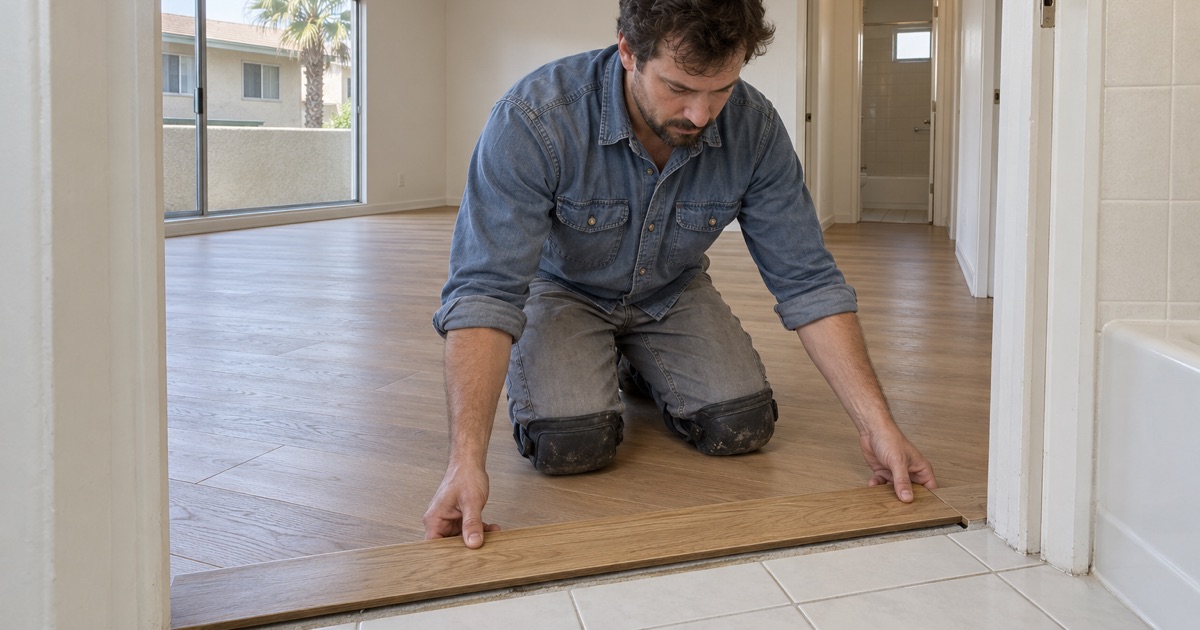
Los Alamitos is a renting city more than an owning one. The 2024 five-year American Community Survey puts 57.6 percent of occupied households in rented homes, and 1,418 renter households live in buildings with three to nine units. That is fourplex and small-apartment territory, where the same hallway and living room floors can carry several tenancies in a decade.
Housing age adds to the picture. About 70.5 percent of the city’s homes were built before 1980, so many rental floors have already been sanded more than once, covered with carpet over tack strip, or patched board by board. When we assess a turnover floor, we check how much wood is left to work with before we talk about any repair.
Age also shapes how we prepare a job. The EPA lead-safe rule reaches paint disturbed in homes built before 1978, so we confirm a building’s construction year before sanding along painted baseboard and trim. Dust containment keeps the work inside the unit, which matters in a fourplex where neighbors share walls, stairs and walkways.
What California’s Deposit Law Allows
California Civil Code 1950.5 lets a landlord deduct from a deposit for the repair of damage to the premises, exclusive of ordinary wear and tear, caused by the tenant or a guest. The statute draws that line in words rather than in a table of floor conditions. It sets no timeline for how long a finish or a floor should last, and we do not pretend one exists.
From the flooring side, we can say what a mark is and how it likely formed. A dull path from the front door to the kitchen reads very differently from a deep gouge left by a dragged appliance, a gray stain where a pet soaked the same corner for months, or cupped boards around a leaking refrigerator line. We record those differences accurately and leave the wear-or-damage call to the people whose call it is.
Matching the Repair to the Problem
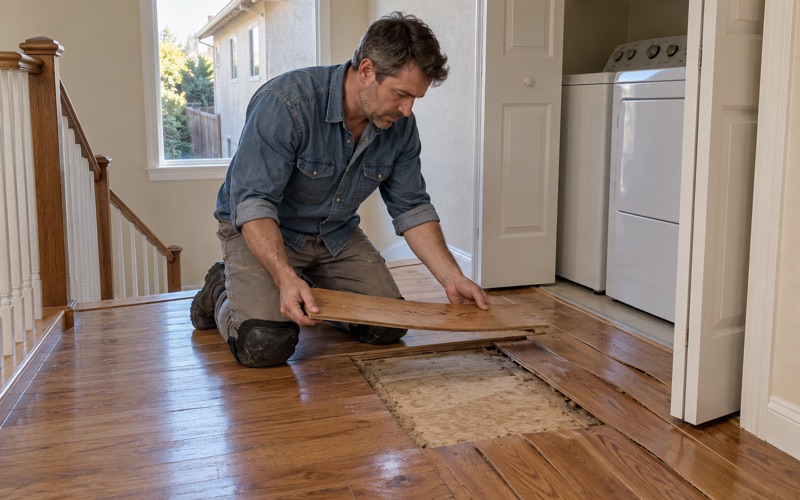
A fair deduction starts with a proportionate repair. Light surface wear across a room often calls for a screen and recoat, where we abrade the existing finish with a buffer and apply fresh waterborne polyurethane without sanding to bare wood. A localized gouge in solid hardwood may be solved by replacing a few tongue and groove boards and blending the finish, rather than resurfacing the whole unit.
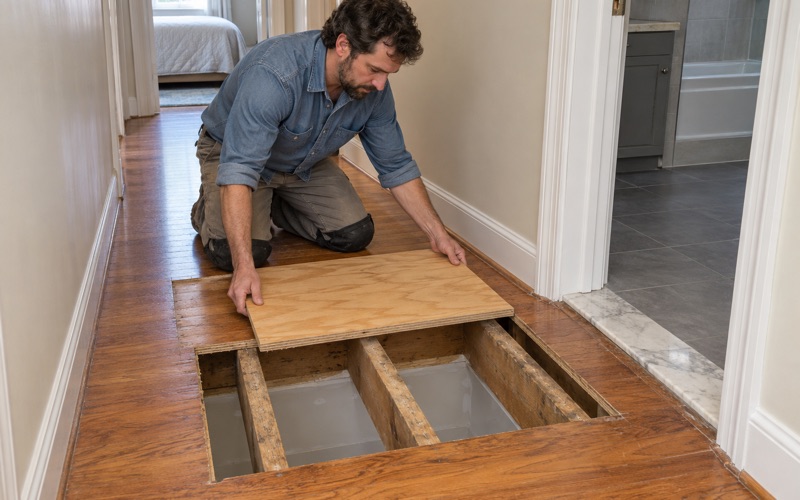
Deeper problems need deeper work. Pet urine that has soaked into the fibers usually means cutting out the stained boards, and water damage means we confirm the leak source and take a moisture meter reading before any replacement. On engineered floors, we measure the engineered wear layer before promising a sanding, because a thin one cannot survive a full refinish.
Looking for wood-flooring closer to San Marino? See Wood-Flooring in San Marino.
Photos Before and After a Floor Repair
What the Statute Now Requires
Beginning April 1, 2025, Civil Code 1950.5 requires a landlord to photograph a unit within a reasonable time after it is returned, before any repair or cleaning that will be deducted from the deposit. The landlord must photograph it again within a reasonable time after that work is completed. For tenancies beginning on or after July 1, 2025, the landlord also photographs the unit at or immediately before move-in.
For floors, that sequence puts the condition of the wood on record at three points: when the tenant arrived, when they left and after the repair. The section’s most recent amendment came through AB 414, effective January 1, 2026. Taking the photographs is the landlord’s duty, but the way a flooring contractor schedules the work can make them easier or harder to get right.
How We Fit the Work Around the Photos
We do not start sanding or pulling boards until the owner confirms the before-repair photographs are done. If we are the first ones inside the empty unit, we say that we are waiting on those photos, and we keep our own condition notes and images for the scope of work. Once the finish has cured, the room is ready for the after-repair set.
Useful floor photos share a few habits. We suggest shooting low along the boards so cupping, crowning and board gapping show up, laying a tape measure beside a gouge or stain for scale, and repeating the same angle after the repair. A freshly coated floor also looks different in its first days, so we hand the owner a written cure schedule and say when the sheen level has settled.
Move-In Condition for the Next Tenant
A turnover repair is also the next tenancy’s starting line. The move-in photographs now required for newer tenancies will show whatever floor we leave behind. We finish the job to a clean, even sheen and note any areas we deliberately left alone, such as an older patch or a board that was sound but discolored, so nobody mistakes them for fresh damage later.
The Invoice That Goes With the Itemized Statement
Twenty-One Days and a Copy of the Bill
Under Civil Code 1950.5, a landlord must send the tenant an itemized statement no later than 21 calendar days after the tenant has vacated. When an outside contractor did the repair, the statement has to include a copy of the bill, invoice or receipt supplied by the person or company that performed the work. For a floor repair we handled, that document is ours.
Timing can get tight on flooring. A full sand and refinish, or a board replacement waiting on matching red oak or white oak stock, may not finish inside the window. In that case the law allows a good-faith estimate with the statement, with the documents due within 14 days of the work being completed. We give the owner a realistic finish date up front so they know which path applies.
What Our Invoice Says
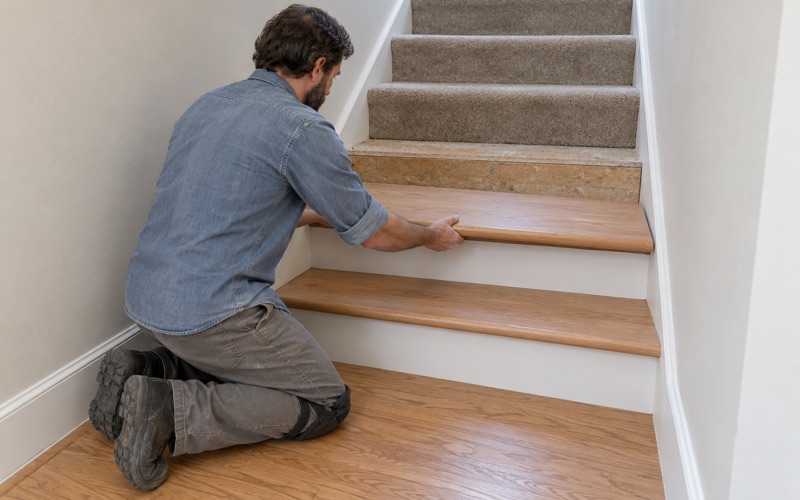
An invoice that lists only a total says little about whether a charge matches the damage. Ours names each room and its area in square feet, the condition we found, and the work we did. Examples include board replacement in a hallway, a screen and recoat in a bedroom, or a stair tread replaced and quoted by the tread and riser rather than folded into a square-foot price.
We also list the materials and the finish. That covers the species and cut of any replacement boards, such as plain sawn red oak, along with the floor stain color and the coating product. Our finishes are chosen to fit South Coast AQMD Rule 1113, which sets the limits for wood coatings in this air basin, and naming the product answers a question owners and tenants sometimes ask.
Separating Turnover Work From Repair
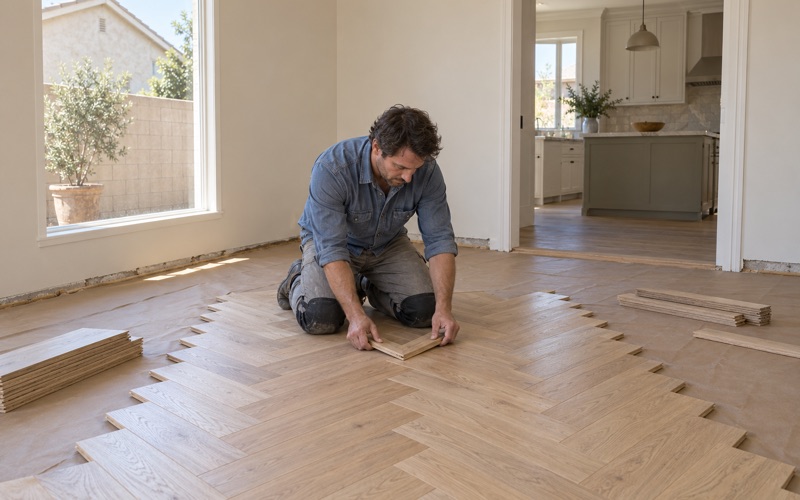
Not every dollar spent between tenancies repairs tenant damage. Owners often use a vacancy to upgrade, replacing worn carpet with real wood or refinishing a whole unit that has simply aged. When a job mixes repair of a specific damaged area with general refreshing, we itemize the two on separate lines, so the owner’s own statement can reflect what each part of the work was for.
When a Floor Charge Becomes a Dispute
Where Los Alamitos Points Tenants and Landlords
Some deposit disagreements do not settle between the two parties. The City of Los Alamitos 2021-2029 Housing Element commits the city to refer residents to the Fair Housing Council of Orange County for fair housing services, including counseling for tenant-landlord disputes. That council, not a flooring contractor, is the sensible starting point when a tenant or owner wants help working through a contested deduction.
Our role stays narrow. We can explain in writing what we observed, what we repaired and why we chose that method, and our invoice and photos show the same thing. We do not argue either side’s case, and we do not tell anyone whether a charge is lawful; we describe floors, which is the work we know.
Building a Record That Holds Up
The simplest way to avoid a dispute is a clear record from the start. Owners of small buildings who plan floor work around turnovers can take their photos before we arrive, book the repair early in the 21-day window and hand the tenant an invoice that plainly matches the pictures. That sequence keeps the floor charge tied to evidence rather than memory.
Tenants can use the same logic in reverse. Someone preparing to move out can ask us to assess the floor and explain, in flooring terms, what we see: finish wear, a water stain, loose boards or hollow spots under an engineered plank. That description is not a verdict on the deposit, but it gives both sides the same vocabulary when they compare notes.
- 20+ Years of Wood Flooring
- Slab Moisture Tested First
- Free Written Estimates