Chino Wood Flooring brings more than 20 years of work to wood-flooring in Montclair, and a large share of that work happens between tenants rather than between owners. When a unit empties, the floor has a short window to be sanded, patched or replaced before the next lease begins. We plan each job around that window and around the age of the building the unit sits in.
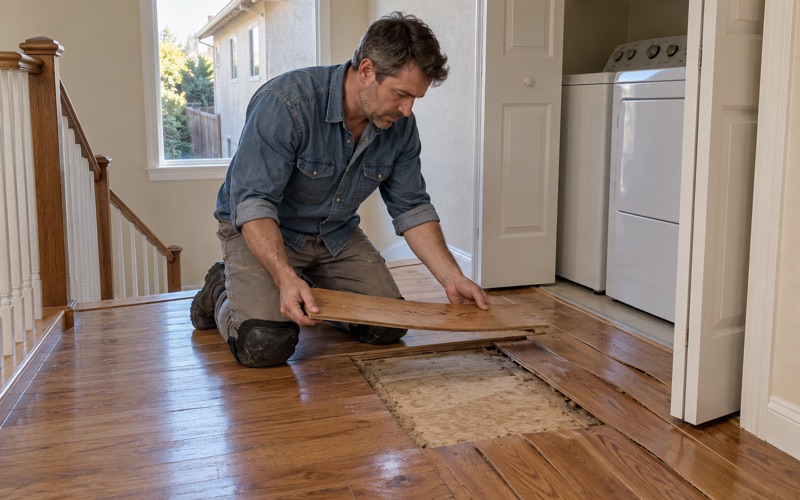
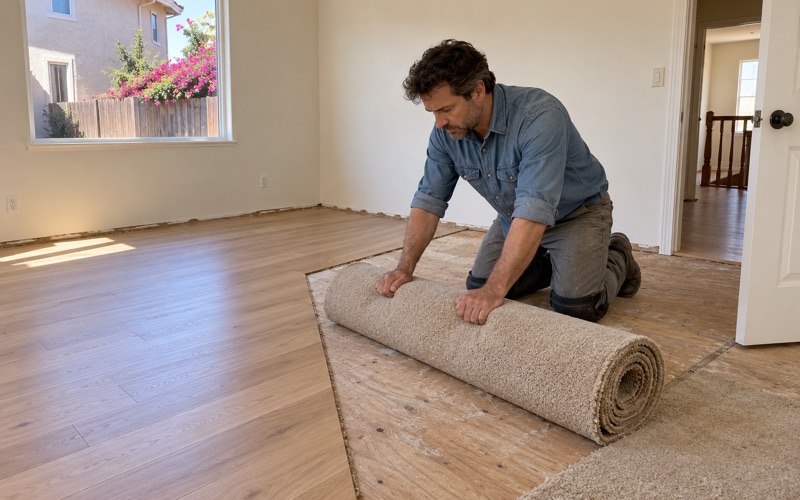
Most of what we see is solid hardwood, old parquet and engineered plank that have been through several decades of occupants. That history shows up as pet urine stains near doorways, board gapping along heater runs, finish worn to bare wood in hallways, and carpet tack strip still nailed around the perimeter. Each of those changes the scope, so we look at the floor before we price it.
Owners of single-family houses get the same approach: the build year confirmed, the slab or subfloor checked, and a written cure schedule so the household knows which rooms are off limits and for how long. The sections below walk through how that plays out in the city’s older rentals and in the houses around them.
Floors in Montclair’s 1960s and 1970s Rentals
The city’s own planning documents describe a rental stock that skews old. Montclair’s 2014 Housing Element, working from 2007-2011 American Community Survey data, reported that 91.8 percent of renter-occupied units were built before 1980. The 1970s were the largest single decade, with 1,138 of 3,723 rented units, or 30.6 percent, followed by the 1960s at 20.8 percent.
Those are the element’s figures for that survey period, not a current count, but the buildings they describe have not gotten any younger. The share of households renting is substantial as well: the 2024 five-year American Community Survey puts 45.2 percent of Montclair’s occupied homes in the renter-occupied column. Nearly half the city’s floors change hands on a lease schedule rather than a sale.
What the Original Floors Tend to Be
When we pull carpet in apartments from this era, we often find old parquet, sheet goods or glued tile rather than site-finished hardwood. Occasionally there is a layer of black mastic left from an earlier installation. Adhesive of that age can contain asbestos, so we stop and have it identified before anyone grinds or scrapes it.
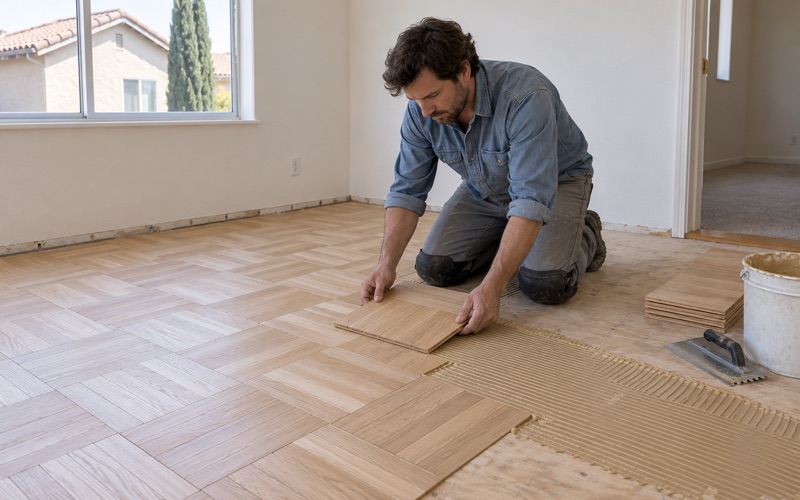
Where wood is already down, it is usually red oak strip or parquet carrying several layers of finish. Before we promise a sanding, we check how much wood remains above the tongue and groove. A floor that has been run under a drum sander between many tenants may not have another full pass left in it, and we would rather say so up front than find out halfway through.
Lead Paint and the Build Year
Every unit in an older building gets its build year confirmed before sanding starts. The EPA RRP rule covers renovation work that disturbs painted surfaces in housing built before 1978, and floor jobs routinely do: baseboard comes off, quarter round is pried loose, and door casings get scuffed by equipment. Knowing the year up front decides how we set up containment and clean-up.
That matters more in a rental than in an owner house, because the next household moves in within days. We run dustless sanding with vacuum-connected equipment, seal off doorways, and hand the property manager a written schedule showing when the finish will be ready for furniture and foot traffic.
Looking for wood-flooring closer to Norco? See Wood-Flooring Services in Norco.
Turning Over an Older Apartment Unit
Turnover work is a matter of sequence. The unit is empty, the painters and cleaners are booked, and the floor sits in the middle of that line. We quote around the owner’s move-in date and state in writing which step depends on which, so nobody is waiting on a coat of finish that was never scheduled.
Screen and Recoat or a Full Sanding
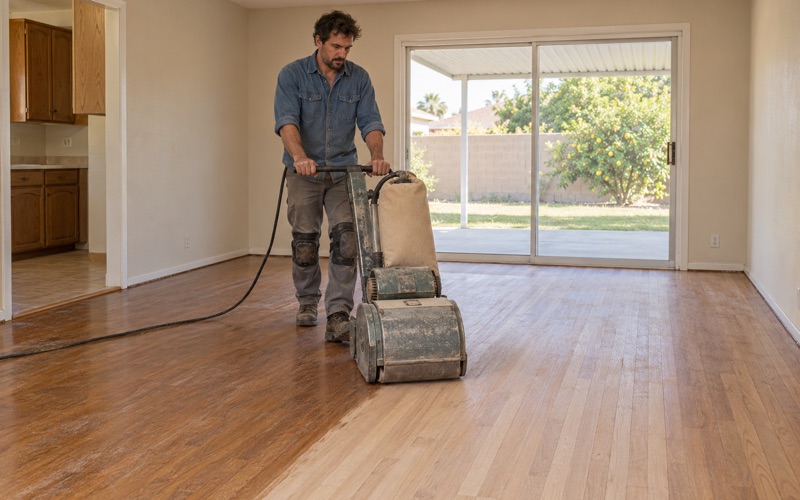
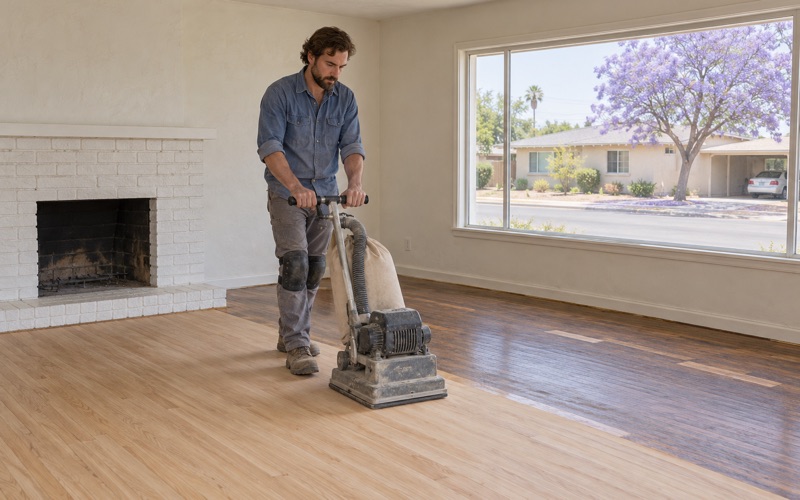
A floor with a sound finish and only surface scratches often needs a screen and recoat rather than a full sanding. We abrade the existing coat with a buffer and apply a fresh one, which takes a fraction of the time and removes almost no wood. Deep gouges, gray water marks and pet stains that have soaked into the boards call for a full grit sequence instead.
When we sand fully, we trowel fill gaps and nail holes with wood filler, then settle on color. Many landlords prefer a natural or light floor stain, because a scratch shows less on a light surface and a matching repair board is easier to blend at the next turnover. We record the stain and finish used so the same match can be made years later.
Finishes That Fit the Air Basin
The finish is chosen to fit SCAQMD Rule 1113, the South Coast Air Quality Management District rule that sets which wood coatings are legal to use in this air basin, Montclair included. In practice that steers most rental work toward waterborne polyurethane, which also dries faster than the older oil-modified polyurethane. For a unit that has to be rented again within days, the quicker cure is a practical advantage as well as a compliance one.
We still write down the cure schedule rather than promising a date from memory. Light foot traffic, furniture and area rugs each have their own waiting period. A tenant who drags a sofa across a floor that has not cured leaves marks that turn up on the next move-out inspection.
When a Floor Is Past Refinishing
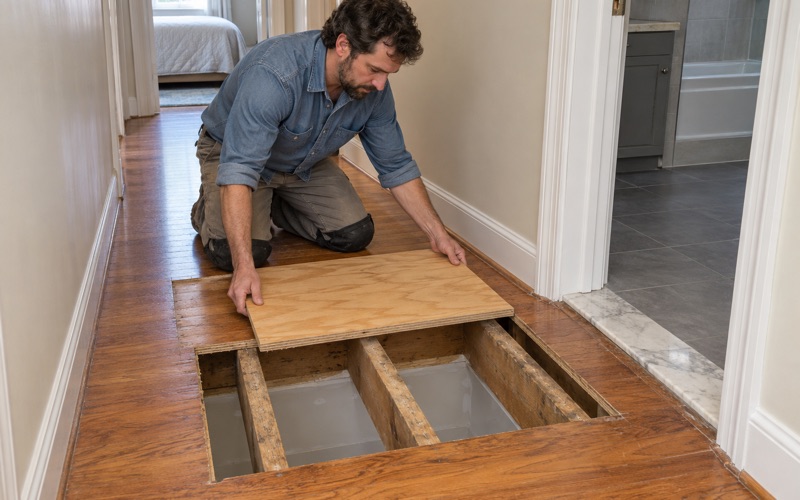
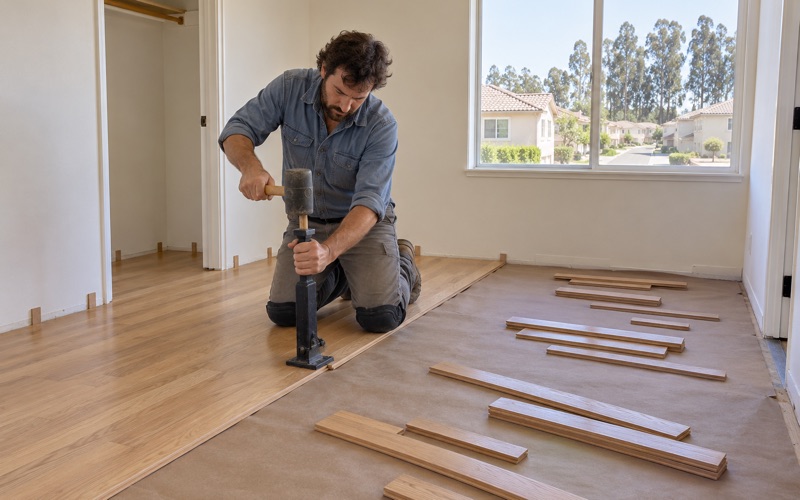
Some units cannot be saved with sanding. Delamination on an old engineered floor, hollow spots under glued plank, and boards cupping or crowning after a water event are all reasons to replace rather than repair. We confirm the leak source and take a moisture meter reading before new boards go down, because installing over wet material only repeats the problem.
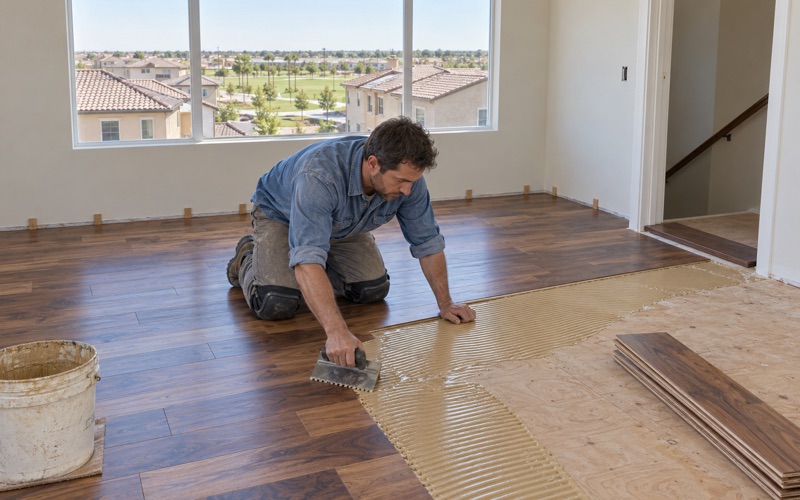
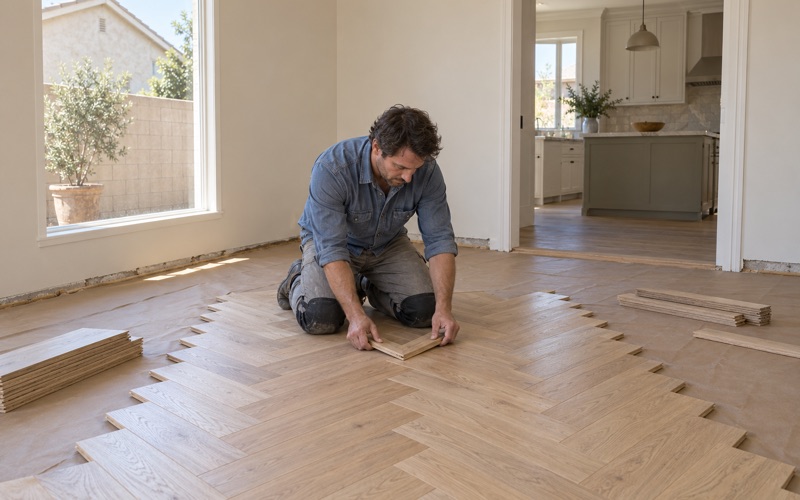
For replacement, prefinished engineered flooring with an aluminum oxide finish holds up well to tenant traffic. Where a unit sits on concrete, we test the slab for moisture and record the reading against the NWFA Installation Guidelines before any glue-down installation. Where water damage is involved, we document it room by room so the owner has something clear to hand the adjuster.
Montclair’s Foundation Area Neighborhoods
Montclair’s approach to its older housing has a history of its own. According to the 2014 Housing Element, the city’s former Redevelopment Agency created the Housing Improvement Task Force in 1986. One of its strategies was the creation of Foundation Areas, specific neighborhoods where the Task Force concentrated rehabilitation efforts and financial resources, and the element counted over 700 units within them.
The same document noted that the Task Force continued its neighborhood revitalization work even after the Redevelopment Agency was dissolved. We describe the program as the 2014 element described it. We have not verified which neighborhoods carry the designation now or what the program does after that date, and we do not guess.
Exterior Work, Not Interiors
The improvements the element lists sit outside the units: ornamental iron fencing, masonry walls, front-yard landscaping, gates at alley entrances and asphalt resurfacing in apartment alleyways. Nothing on that list covers interior finishes or flooring. We never suggest to an owner that a city program will cover the cost of a new floor.
What the list does show is where rehabilitation attention has gone. A building with a new alley gate and a resurfaced drive may still have its original interior finishes, and an owner who has improved the exterior is often ready to bring the units up to the same standard.
What We Find Below the Finish
The 2014 element also recorded a 2013 estimate from the city’s Building and Code Enforcement Unit of approximately 240 substandard housing units throughout Montclair. That is a small share of the city’s stock, but it is a reminder that some older buildings carry deferred problems below the surface layer.
Where a floor is wood-framed, those problems can mean soft spots over a failed OSB subfloor or sheathing darkened by an old plumbing leak. In any building they can mean drywood termite frass collected along a baseboard. We note and photograph each finding room by room, so the owner has a record before any repair decision is made.
Owner Houses from the 1950s and Planning the Work
Montclair’s owners live in a different stock than its renters. The same 2014 element found the 1950s were the peak decade for owner-occupied homes, at 35.0 percent of them, and reported that 38.9 percent of owner-occupied units were built before 1960. Many went up in the years around the city’s incorporation as Monte Vista in 1956, two years before voters renamed it Montclair.
Refinishing an Original Floor
A 1950s house with its original hardwood under carpet is one of the better finds in our work. Red oak and white oak strip from that era is usually solid hardwood with enough thickness left for a full sanding. Water popping before stain can bring out an even, deeper color across the grain.
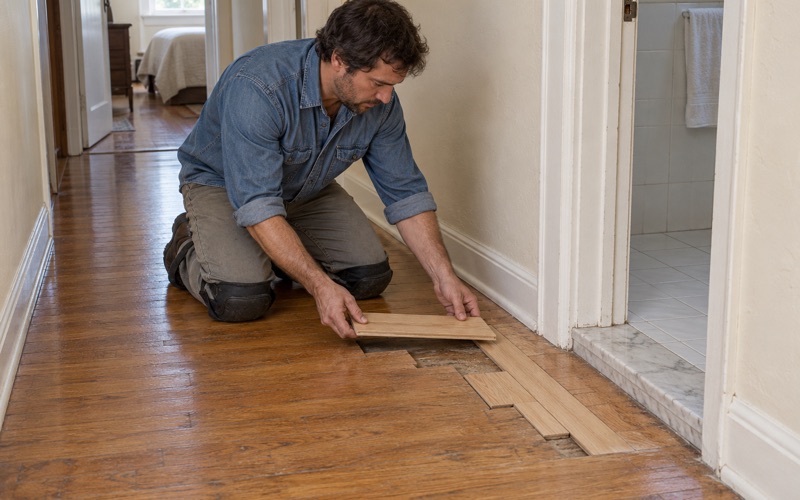
We still confirm the build year before sanding, and the same lead-safe setup applies to an owner house as to a rental. We also check for board gapping, loose boards and patched areas where walls were moved or a floor furnace was removed, then weave in new strips of matching species and width so the refinished floor reads as one surface.
Seasonal Moisture and Acclimation
Montclair falls in the National Weather Service forecast zone CAZ048, San Bernardino and Riverside County Valleys-The Inland Empire. Dry stretches and wetter winter spells move the moisture content of wood up and down through the year. We let new boards acclimate inside the house and leave a proper expansion gap at the walls, which is how we avoid summer gapping and buckling after a wet spell.
On an engineered floor in an owner house, we measure the engineered wear layer before promising any future refinish. A thin wear layer can take a screen and recoat but not a full sanding, and an owner should know that before choosing between keeping the floor and replacing it.
Stairs, Transitions and the Written Scope
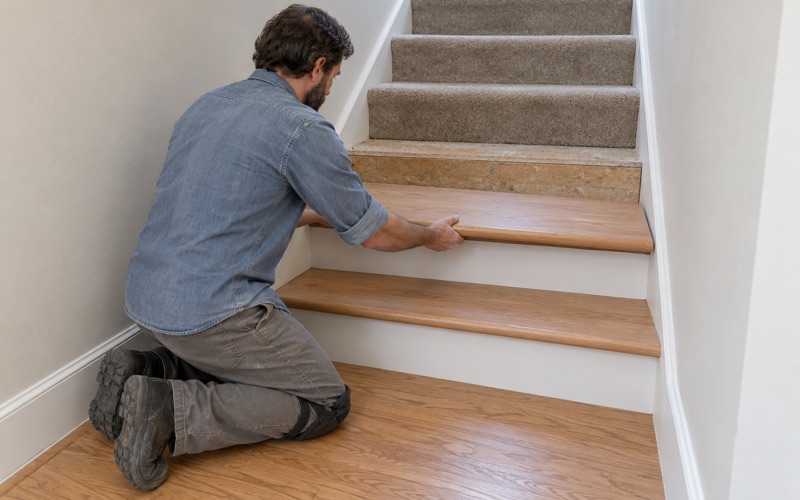
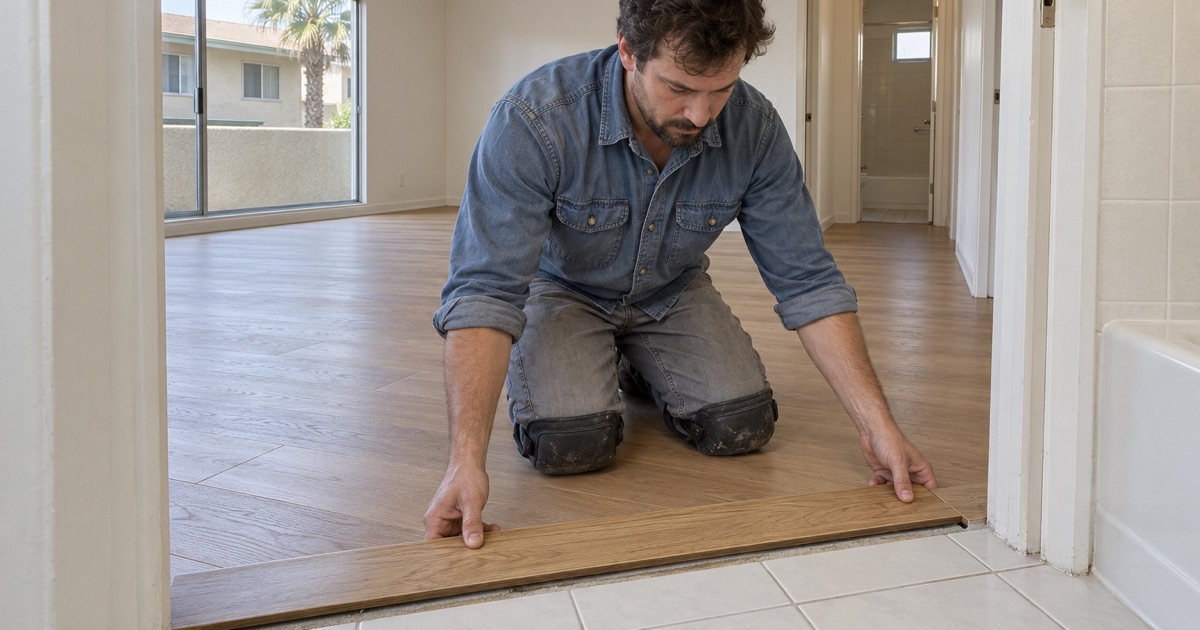
Stair treads and risers are quoted by the piece rather than folded into a square-foot price, because each one is cut, fitted and finished on its own and stair nosing takes separate work. Transitions to tile or carpet get a reducer or T-molding chosen to match the new floor height.
Before we start, the owner receives a written scope covering dust containment, the finish and its cure schedule, and any moisture or wear-layer readings we took. Whether the job is a between-tenant recoat in a 1970s building or a full refinish in a 1950s house, the plan is on paper before the first board is touched.
- 20+ Years of Wood Flooring
- Slab Moisture Tested First
- Free Written Estimates