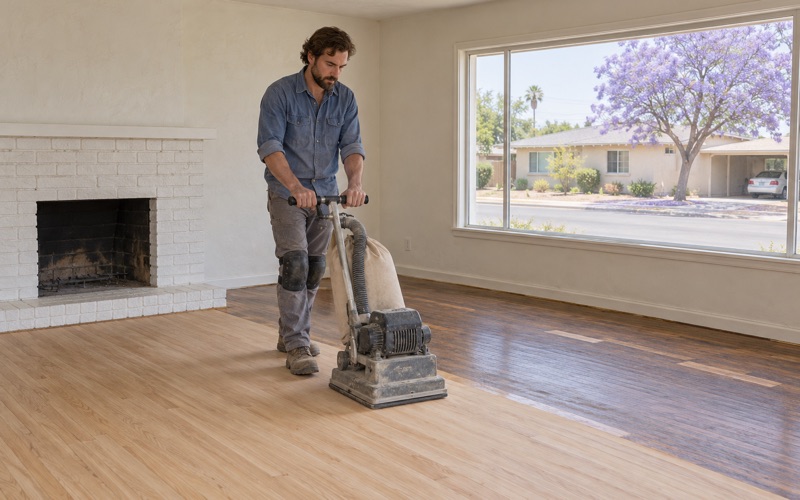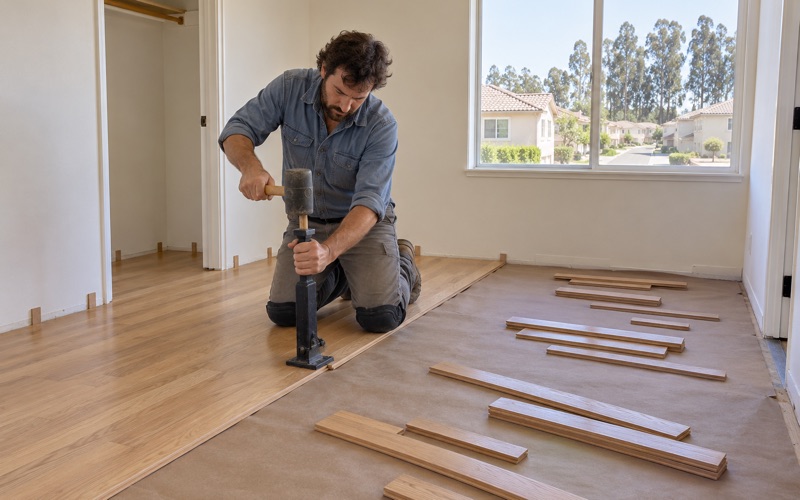
Chino Wood Flooring has handled wood-flooring in Norco for more than 20 years, from sanding tired oak in a living room to replacing a run of cupped boards after a leak. Most jobs here start in a single-family house with a yard around it, so we plan the work around a household that is living in the home while we are in it.
We open every job by pinning down what the floor actually is. That means the species, whether it is solid hardwood or an engineered plank, how it was fastened, and what finish is on it now. The answers decide whether a floor gets a screen and recoat, a full sand to bare wood, or a partial replacement, and we tell you which before any machine comes off the truck.
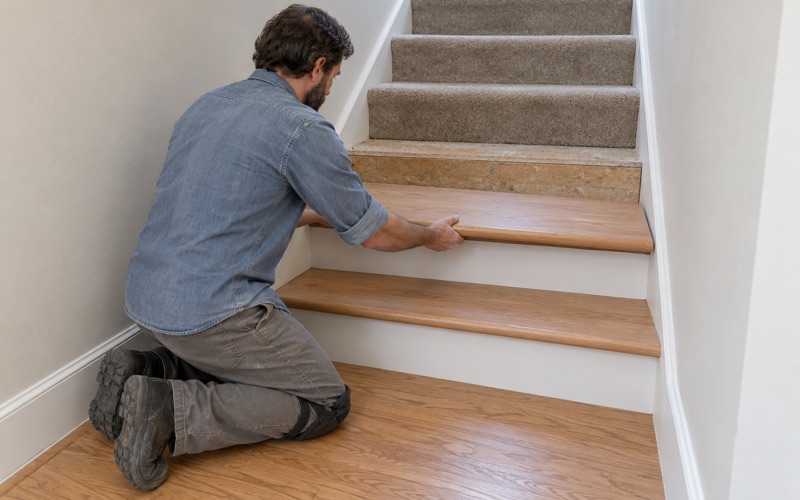
The quote you get from us is written out line by line. Stairs are priced by the tread and the riser rather than folded into a square-foot number, and the cure schedule is spelled out so you know which rooms are off limits and for how long.
Wood Floors in Norco’s Detached Houses
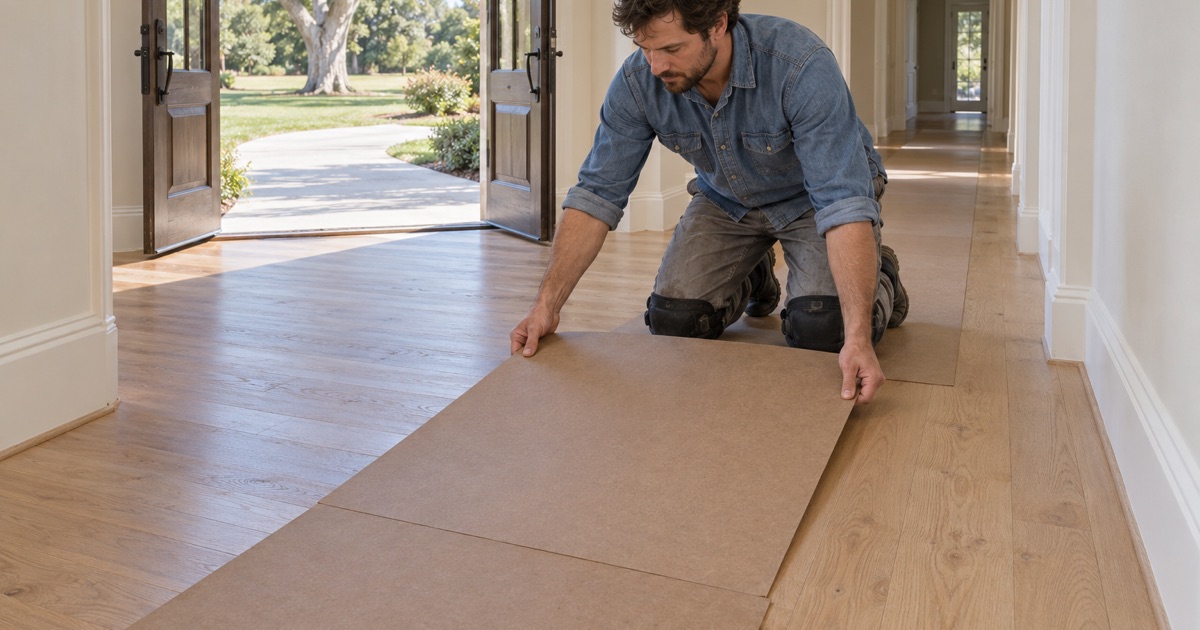
Norco is a city of houses rather than apartment blocks. Census figures from the 2024 five-year survey show 98.4 percent of owner households living in a detached home, and 80.5 percent of renter households do too. For flooring work that matters, because the whole job is usually yours to decide, with no shared wall or building rule standing between you and a new floor.
What a detached house changes about the job
With no association sign-off to wait for, the schedule is set by the floor itself. We can move furniture room by room, run dust containment at the doorways, and keep one bathroom and the kitchen reachable while the living areas are worked. A household with pets gets a plan for where they stay while the finish cures.
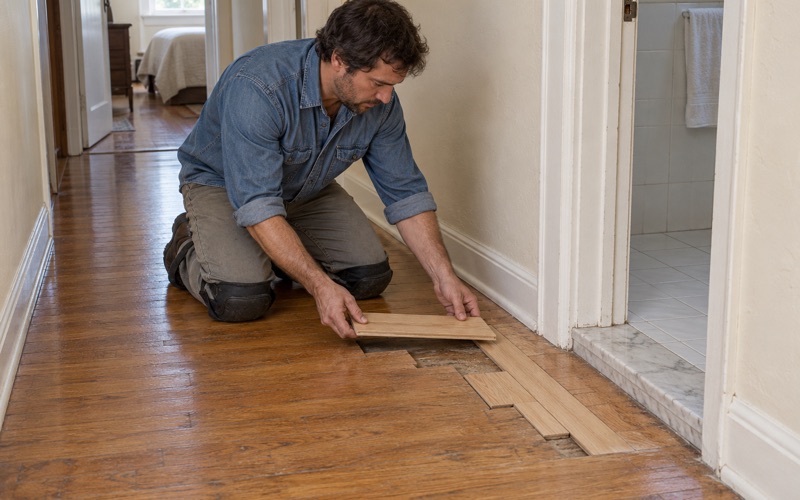
Detached houses also tend to have more rooms in a row, so a floor often runs through a hallway into two or three bedrooms. We check that run for board gapping, hollow spots and any T-molding or reducer that will need to be reset, since a floor sanded in one pass reads as one surface only if every transition is dealt with at the same time.
Larger lots and what comes in on shoes
Much of Norco is zoned for animal keeping on large parcels, and many homes sit on half-acre lots or bigger. That brings more outdoor traffic through a back door than a city lot does. We do not guess at what that does to a floor; we look at the actual wear pattern, the finish that remains at the entries, and whether the boards themselves are marked or only the coating.
Where the wear sits in the finish, a buffer and a fresh coat can bring the surface back without sanding into the wood. Where scratches reach bare fibers, we talk through a harder species such as hickory or white oak, whose Janka hardness ratings run above red oak, and a finish with more build at the doors.
Pulling carpet and putting down wood
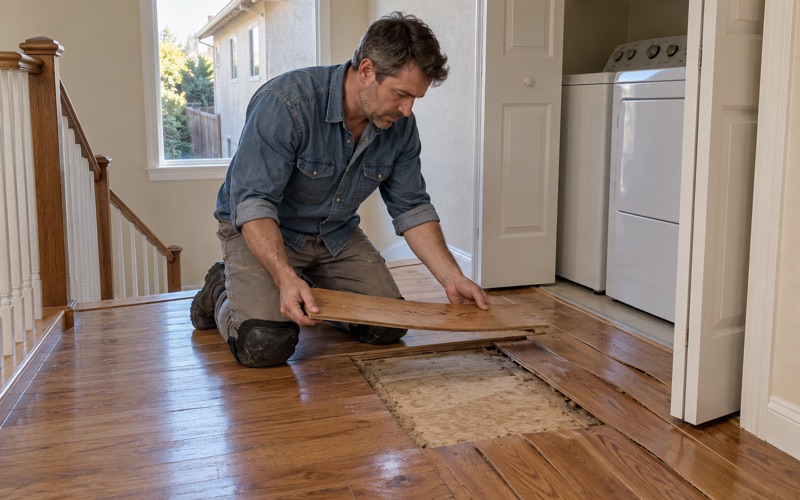
Plenty of Norco houses still have carpet over part of the floor. When it comes up, we look at what is underneath before we price anything: sometimes original oak that only needs sanding, sometimes a bare subfloor that needs new boards.
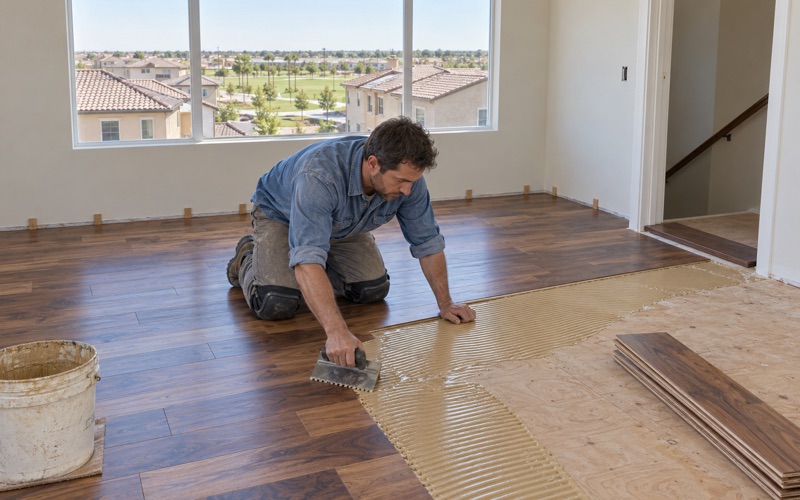
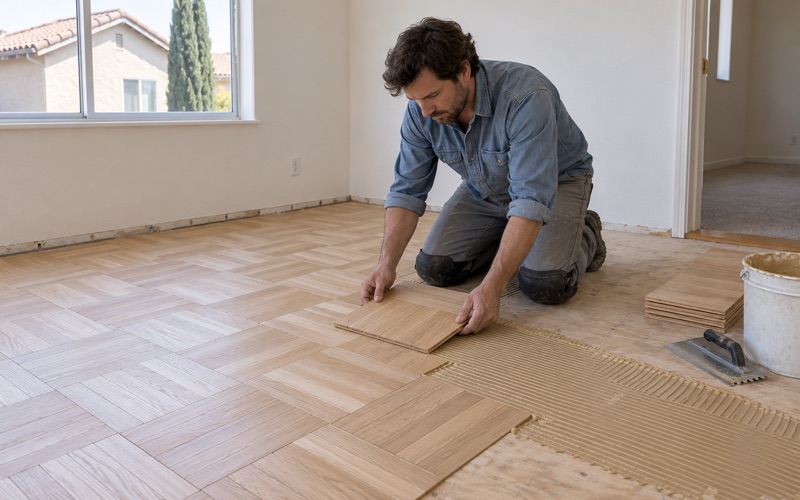
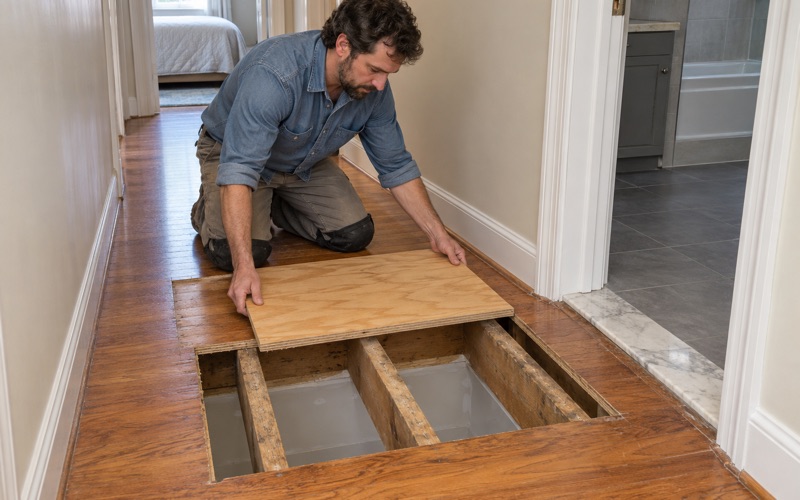
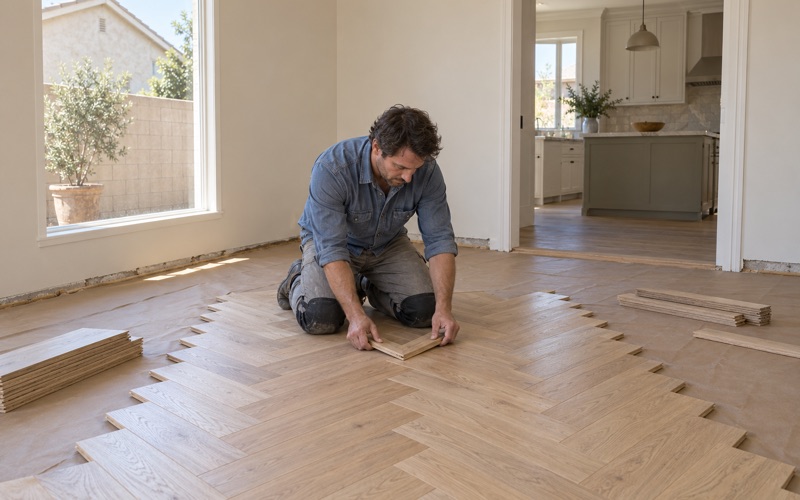
Where a house sits on a concrete slab, we test the slab for moisture and write the reading down against the NWFA guideline before any engineered floor is glued down. Over a wood subfloor, we check the floor joists and fastening for squeaks and give before a nail-down installation starts.
Looking for wood-flooring closer to Coronita? See Coronita Wood-Flooring.
Living Near the Santa Ana River Bluffs
The Santa Ana River runs along Norco’s edge, and the city’s river bluffs have their own engineering record. In 2003 the U.S. Army Corps of Engineers built the Upper Norco Bluffs project to protect homes along River Drive from bluff erosion caused by the river. After a significant storm in early 2024, the bluff behind that stabilization project began eroding from the top, threatening the project and River Drive.
The 2024 emergency repair
Riverside County reported that the Corps allocated $3 million in emergency funding and the county flood control district added $1 million. The Upper Norco Bluffs Emergency Repair Project broke ground on October 3, 2024. The first phase cleared debris from existing drainage features, and the second repairs the eroded bluff and reinforces structures that manage runoff down the slope.
The county gave December 2024 as the scheduled completion date. We mention the project because it is a local reminder that heavy rain here moves a lot of water, not because it tells us anything about a particular house. Whether water ever reaches a floor depends on grading, gutters, plumbing and the house itself, and we judge each home on what we find inside it.
After a storm: checking floors for water
When a homeowner calls after a hard rain, we start at the likely entry point, not the worst-looking board. A moisture meter reading across the stained area and the dry rooms around it tells us how far the water spread. Cupping, where board edges rise above the centers, usually means moisture came from below; crowning or buckling tells a different story.
We confirm where the water came from and that it has stopped before we replace anything. A board swapped out while the source is still active simply cups again. If the damage is going to an insurance claim, we document it room by room with photos and readings so the adjuster sees the same picture we do.
Letting a wet floor dry before deciding
A lot of floors that look ruined the morning after a leak recover once they dry. We take readings over several days rather than sanding a floor that is still wet, because sanding cupped boards flat before they dry leaves them crowned once the moisture leaves. Only once readings settle near the dry rooms do we decide between refinishing and replacing boards.
Hidden water is the other risk. Moisture that sits under a floor can show up weeks later as delamination in an engineered plank or a musty smell at a baseboard, so we check under the edges we can reach and tell you plainly what we could not see.
Refinishing Norco’s 1970s Floors
Norco’s housing is older than people often expect. Census counts show 66.8 percent of homes built before 1980, and the 1970s are the single largest decade, at 32.7 percent of all units. Many of those houses have oak floors that have been sanded once or twice, covered with carpet for years, or never touched since they went in.
Pre-1978 houses and lead paint
A house built before 1978 may have lead-based paint on baseboard, trim or door casings, and sanding a floor disturbs the paint where the two meet. The EPA RRP rule governs that kind of work in older homes. We confirm the build year before any sanding, so the right containment and cleanup practices are in place from the first pass.
In practice that means sheeting off the doorways, protecting the baseboard before the edger touches it, and cleaning thoroughly afterward rather than giving the room a quick sweep. Many 1970s floors also spent years under carpet, so we check for tack strip holes, staples and old pad adhesive along the walls before we plan the sanding.
How much wood is left to sand
A solid hardwood strip floor from the 1970s usually has sanding left in it, but a floor that has been refinished more than once may be down near the tongue. We check the thickness at a floor register or a threshold before we promise a full refinish. For an engineered floor, we measure the engineered wear layer, because a thin one cannot survive a full sand.
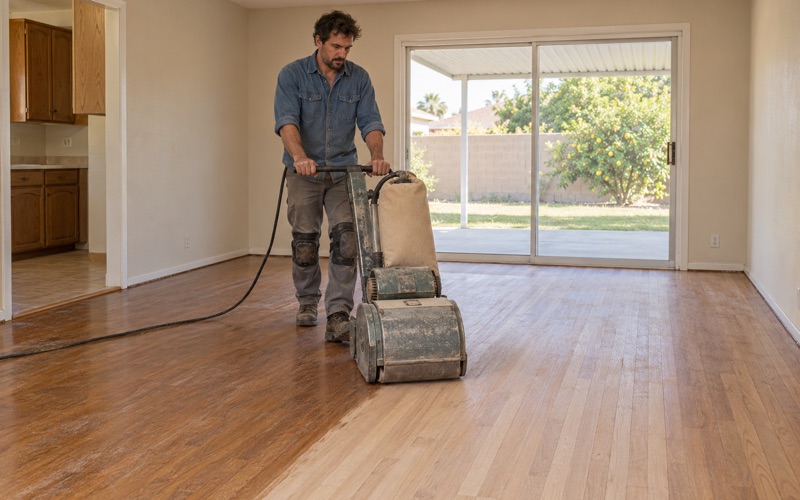
When there is enough wood, the grit sequence starts with the drum sander and finishes with an orbital sander at the edges and corners. Trowel filling closes small gaps and nail holes across the whole field, and water popping before a floor stain helps darker colors take evenly on red oak.
Finishes that suit this air basin
Norco sits within the South Coast Air Quality Management District, and SCAQMD Rule 1113 sets the limits on the wood coatings that can be used here. We choose finishes that fit that rule, usually a waterborne polyurethane, or a hardwax oil where a household wants a matte look that can be spot-repaired later. We walk you through sheen level with sample boards before the final coat.
Some owners ask for the amber tone that oil-modified polyurethane gives older oak, and we use one only where that product fits the rule. A waterborne finish dries clearer and lets rooms come back into use sooner, which matters in a house where the family stays put through the job.
Rented Norco Houses Between Tenants
About 18.9 percent of Norco’s occupied homes are rented, and most of those are detached houses. For an owner, the gap between tenants is the best chance to fix a floor, because nobody is living on it while the finish cures and the next lease can start on a clean surface.
Turnover work on a deadline
We plan turnover jobs backward from the move-in date. A screen and recoat can often be walked on within a day, while a full sand and three coats needs longer before furniture goes back. We give the owner a written cure schedule so a cleaning crew or a new tenant does not arrive while the finish is still soft.
Pet urine stains are a common find in a rental after a long tenancy. Surface marks can sometimes be sanded out, but dark stains that have soaked through a board usually mean that board comes out. We replace those pieces with matching species and width, weave them into the surrounding field, and sand the patch in with the rest so it does not read as a repair.
Choosing a floor that holds up to tenants
For a rental, the choice often comes down to durability and cost to maintain. A prefinished engineered plank with an aluminum oxide finish resists wear well between leases, while a site-finished solid floor can be sanded again years later. We lay out both options, and the tradeoffs, so an owner can pick the one that fits how long they plan to hold the house.
- 20+ Years of Wood Flooring
- Slab Moisture Tested First
- Free Written Estimates