Chino Wood Flooring has spent more than 20 years on wood flooring in Pomona and the neighboring valley, and our first question on any job here is not about stain color. It is about when the house was built. A refinish, a repair or a full replacement starts with that date, because it decides how the room is sealed, how the dust is handled and what the crew does before a sander ever touches the floor.
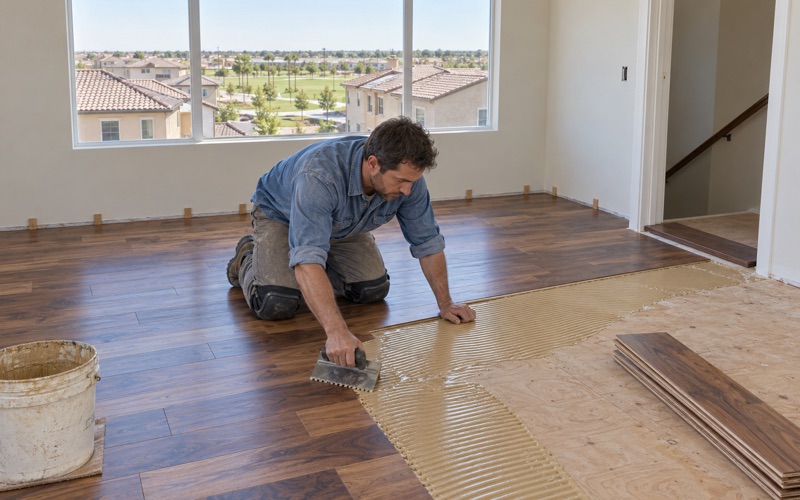
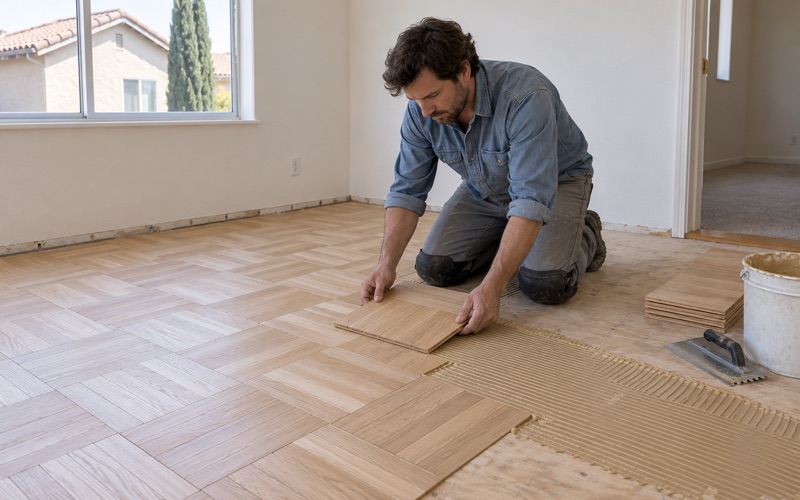
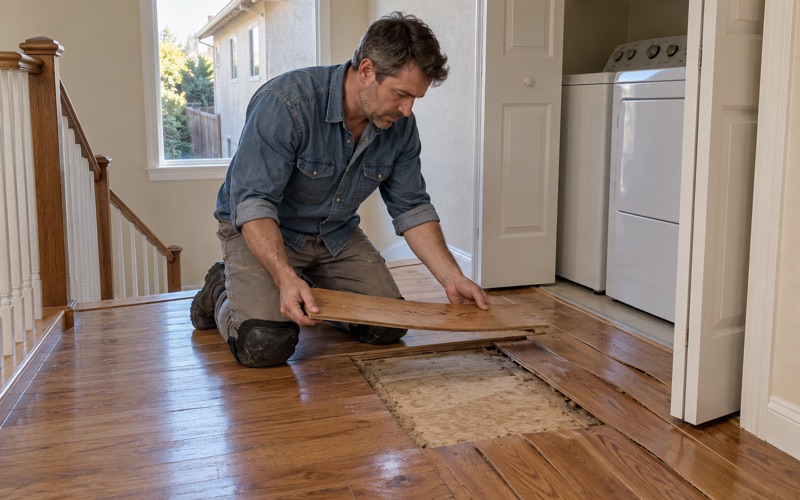
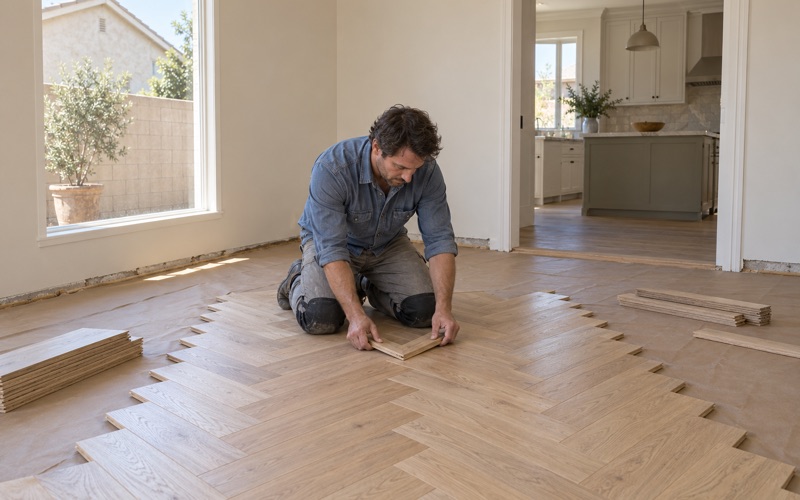
Most of the work we quote in town falls into three groups: sanding and recoating tired solid hardwood, replacing boards lost to water or pests, and installing new engineered or solid floors over slabs and wood subfloors. Each one moves dust or disturbs trim, baseboards and painted surfaces, so our approach to containment stays the same whichever service you call about.
This page explains how we plan that work in an older city, what the local numbers say about the housing stock, and how a family can keep living in a home while the floors are being done. Our aim is a finished floor and a clean house, in that order of priority, with nothing left behind in the dust.
Why lead comes first on older Pomona floors
The housing figures make the case plainly. Of 44,373 housing units counted in the ACS 2024 five-year estimates, 29,125 were built before 1980, which is 65.6 percent of the city. That share is why we treat the build year as the opening fact of every estimate here rather than a detail to confirm later.
The federal rule that governs the work
The EPA RRP rule covers renovation, repair and painting work that disturbs paint in housing built before 1978. On a flooring job that usually means baseboards, quarter round, shoe molding, door casings and stair skirts, all of which get pulled, scraped or sanded near during a refinish. We confirm the house’s build year before any sanding is scheduled, so the right work practices are in the plan from the first day rather than added once the dust is already in the air.
That does not mean every older floor carries a hazard, and we never guess at what is in the finish. It means the trim and painted surfaces around the floor are handled as if they could, until the age of the home tells us otherwise.
What changes on the job
In a pre-1978 home we plan the room differently. Painted trim comes off carefully instead of being pried and snapped, doorways are sealed, and the sanding sequence is chosen to keep fine dust inside the work area. Cleanup is part of the schedule, not a courtesy at the end, and the room is wiped and vacuumed before the first coat of finish goes down.
Layers found under older coverings
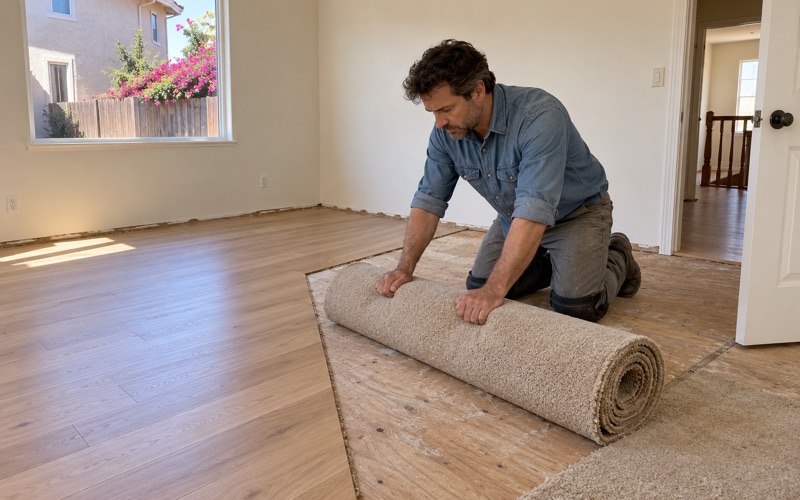
Many older houses hide a second story under the carpet. Pulling it up can expose tack strip nailed into oak, parquet set in black mastic, or a painted border along the walls where a rug once sat. Each of those changes the plan, and we would rather find them at the estimate than halfway through a sanding day.
Black mastic and painted edges are not something we grind through blindly. We stop, tell you what we see, and adjust the method or the scope before the work continues, so the containment plan matches what the floor turned out to be.
Looking for wood-flooring closer to Yorba Linda? See Wood-Flooring Services in Yorba Linda.
The city’s lead hazard grant, and what it does not say
Pomona is not waiting on anyone else to take this seriously. In the 2024 round of HUD’s Lead-Based Paint Hazard Control grants, the City of Pomona was awarded $4,947,433 to address lead and other housing hazards in 105 homes. HUD’s grantee summary says the work is aimed at low- and very-low-income families with children, and that the city will work with medical and social service providers.
How the award breaks down
The summary splits the total into $4,217,433 in lead hazard funds and $730,000 in Healthy Homes Supplement funds. The supplement is the part that reaches past lead to other housing hazards, which matters in older homes where a moisture problem, a trip hazard or poor ventilation often sits beside the paint issue. An earlier HUD award of $4.6 million for 212 units is reported for 2019, so this is not the city’s first round of the work.
What the summary leaves out
HUD’s document does not list the repairs each home receives, and it does not name flooring anywhere. We cannot tell you the grant will cover a floor, and we do not arrange enrollment or act for the program. If you think your household may qualify, the City of Pomona is the place to ask, and its contact is listed in the HUD summary.
What the grant does tell a homeowner is useful all the same. The city has put money behind the idea that dust in older homes with children is a health question first. We plan floor work in Pomona on that same footing, whether or not any public program is involved in your house.
Refinishing a pre-1978 floor without spreading dust
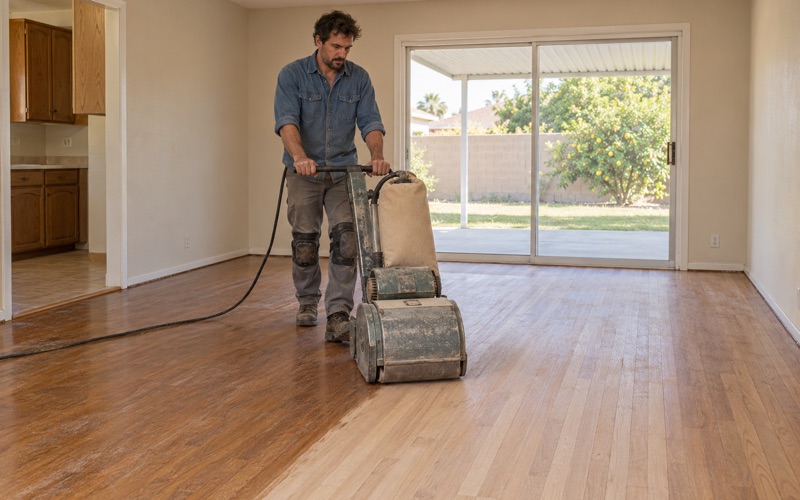
A good refinish in an older home is mostly preparation. By the time the drum sander starts, the room should already be sealed, the trim should be off or protected, and the household should know which rooms to stay out of and for how long.
Containment before the first pass
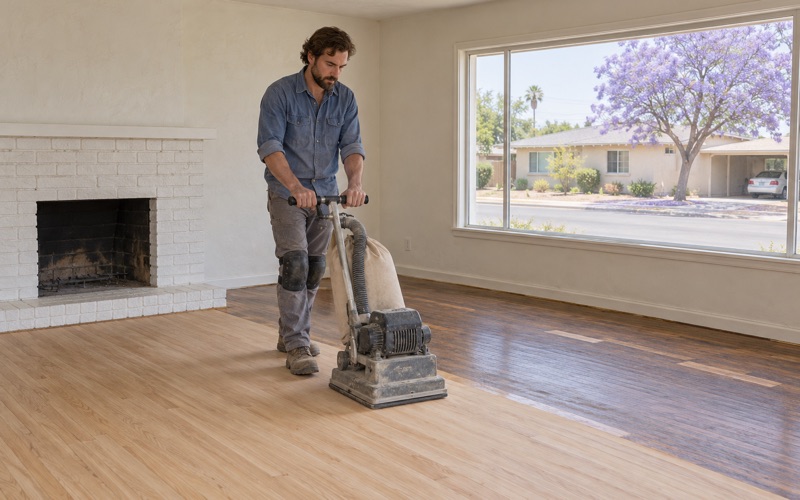
We seal doorways and returns with plastic sheeting, cover vents, and protect the next room’s floor where the crew walks. Our sanders run with dust collection, and we use dustless sanding equipment where the job allows it, which cuts down on what escapes the room. Each grit sequence stays inside the sealed area, and we vacuum between passes instead of letting dust build up under the orbital sander and buffer.
On solid red oak and white oak, the floors most common in older houses, we check board thickness and past sandings before promising a full refinish. On engineered planks we measure the engineered wear layer first, because a thin one cannot take a full sanding and a screen and recoat may be the honest answer.
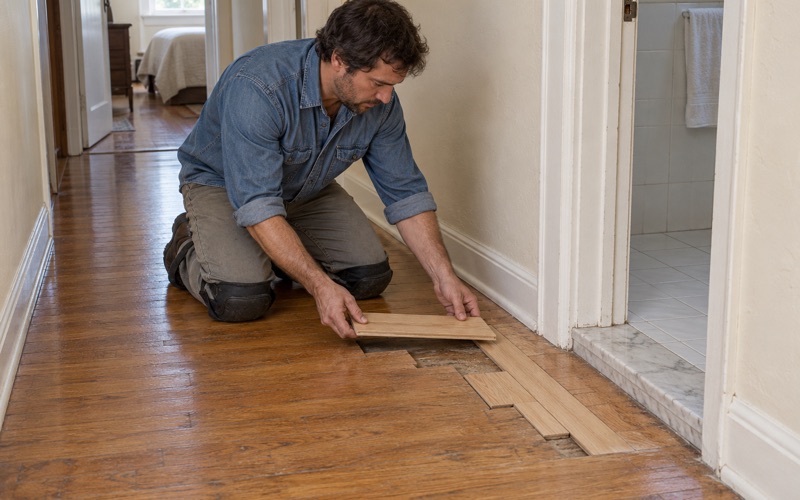
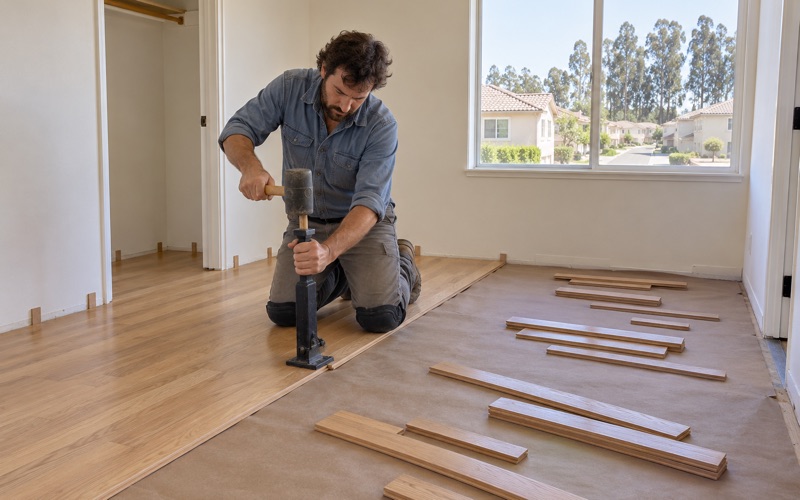
Deep pet urine stains, board gapping and old wood filler are handled inside the same sealed room. Where boards must be cut out and replaced, the saw work happens under containment too, and we match species, width and plain sawn or quartersawn grain so the patch disappears once the floor is finished.
Cleanup that is part of the schedule
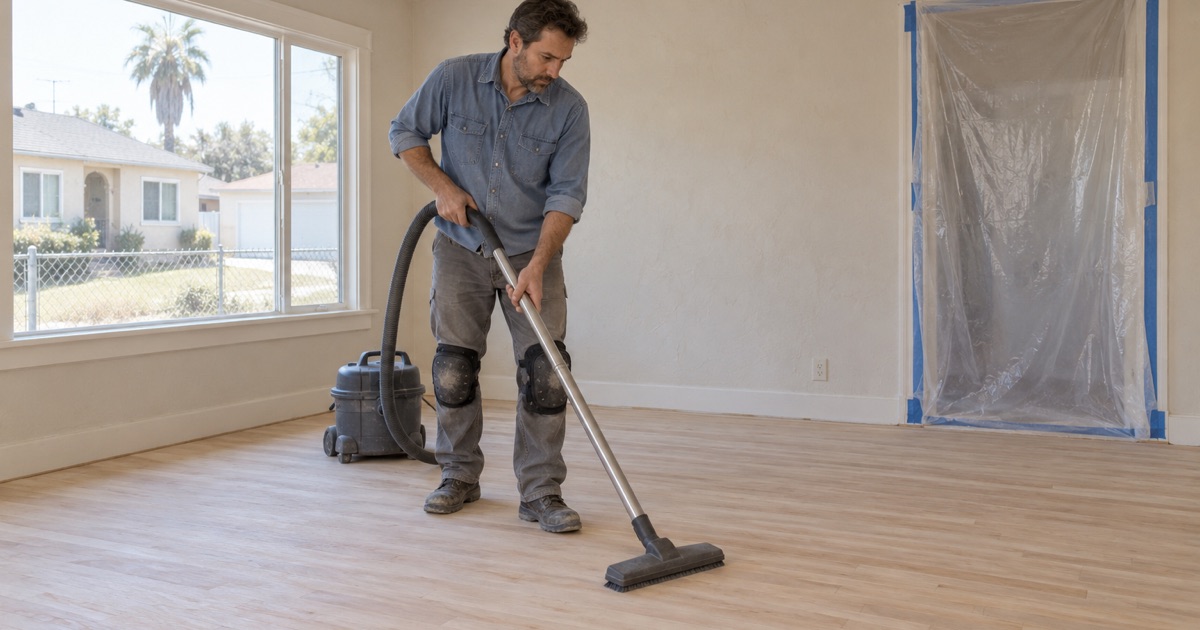
When sanding ends, the room is cleaned with HEPA vacuums and damp wiping before any stain or finish goes on. That step protects the finish from grit, and it also keeps fine dust from traveling into bedrooms and play areas once the plastic comes down. We leave the site the way we would want our own house left.
Finishes that are legal in this air basin
Pomona sits under the South Coast Air Quality Management District, and SCAQMD Rule 1113 limits the coatings that may be applied to wood floors here. We choose waterborne polyurethane, oil-modified polyurethane or hardwax oil products that meet that limit, then give you a written cure schedule showing when socks, shoes, rugs and furniture can return.
A waterborne finish usually lets a household back into the room sooner, while an oil-modified product takes longer to cure and carries more odor. We explain the tradeoff in terms of your calendar, including sheen level and how the floor will wear under kids and pets, before you choose.
Floors in homes with young children, and hazards found alongside
HUD’s grant targets families with children for a reason: young kids spend their day on the floor, crawling, playing and putting hands in their mouths. A floor project in that kind of household needs a plan the parents can actually live with.
Planning around the household
We schedule the dustiest steps for days the family can be elsewhere, and we mark which rooms stay closed until cleanup is done. A written cure schedule helps with naps, school runs and meals, because it tells you when a hallway reopens and when a bedroom is ready for furniture again. With 46.0 percent of Pomona households renting, we also coordinate timing with owners and property managers so tenants are told before work begins.
Moisture, pests and damage behind the boards
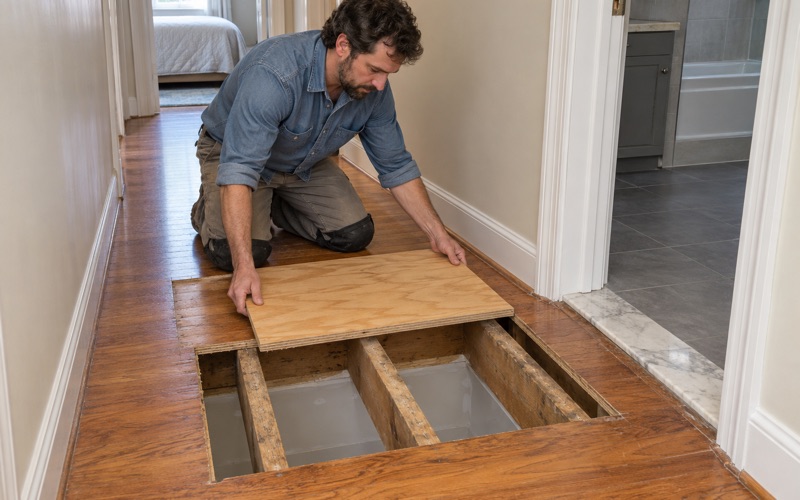
Older homes often show more than one problem once a floor is opened. Cupping, crowning and buckling usually point to moisture, and a slab leak or plumbing leak has to be confirmed and fixed before we replace any water-damaged boards. We take moisture meter readings, and on concrete we test the slab before an engineered floor is glued down, recording the reading against the NWFA guideline.
We also look for drywood termite frass or powderpost beetle damage in subfloors and floor joists when boards come up. If the damage came from a leak, we document it room by room for the adjuster so a claim does not stall on missing photos.
Sequencing floors with other repairs
When a house needs paint stabilization, window work or plumbing repairs as well as floors, order matters. Floors should usually come last, after trim is reinstalled and painted surfaces are dealt with, so a new finish is not scuffed or dusted over. If other contractors are working on the home, we talk with them early so our sanding does not land in the middle of their work.
Where to ask about permits and larger work
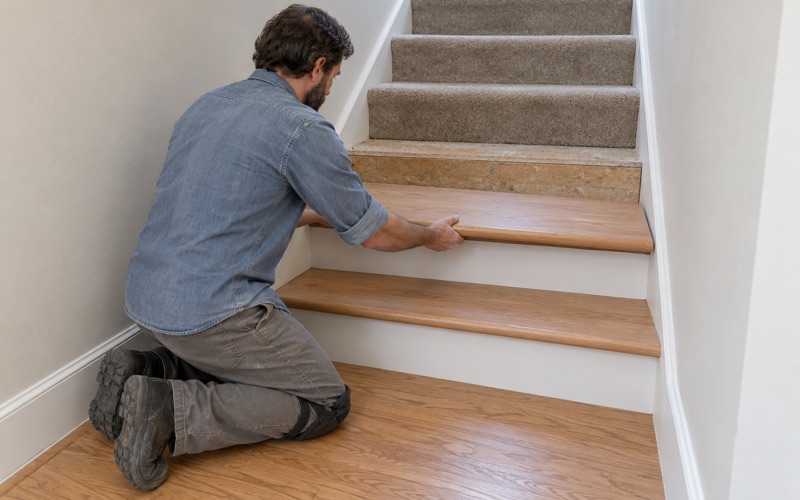
The City of Pomona Building and Safety Division at City Hall, 505 South Garey Avenue, reviews and inspects construction projects that need building permits. If your floor project is part of a larger remodel, that office is the one to ask about what your plans require. Stairs, too, are quoted by the tread and riser rather than folded into a square-foot price, so a remodel budget stays readable from the start.
- 20+ Years of Wood Flooring
- Slab Moisture Tested First
- Free Written Estimates