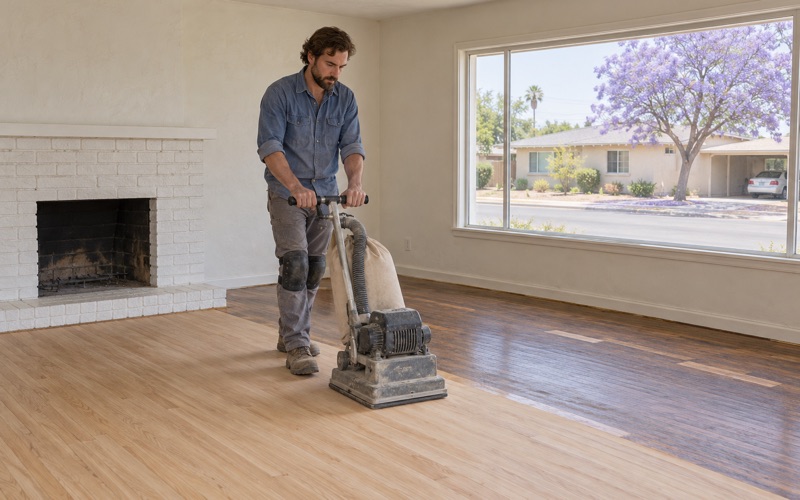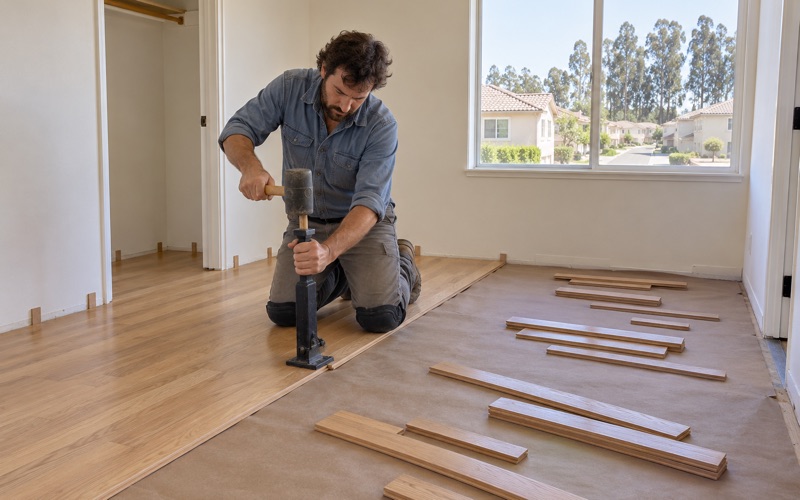
Chino Wood Flooring has spent more than 20 years on wood-flooring in San Marino and the surrounding valley, and on a house of this age the first question we ask is not about stain color. It is whether the house carries historic landmark status, because that decides who else has a say before a floor is touched. We sand, refinish, repair and install solid and engineered floors, and every job here starts with that check.
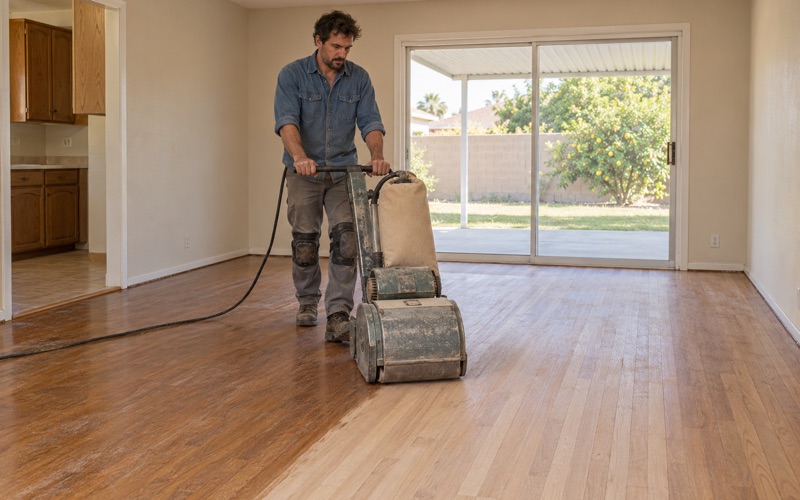
Most of our work in this city is restoration rather than replacement. Old red oak and white oak strip floors, parquet in a front hall, stair treads worn pale down the middle: these respond well to a careful grit sequence and a new finish, provided the boards are sound. We check their condition before quoting a full refinish.
This page covers the part of the job that is particular to this city, the preservation code and how its wording treats interior work, and then what the older floors here usually need. We do not tell anyone whether their floor job needs city approval. We explain what the code says and send you to the people whose answer counts.
How San Marino’s Code Defines a Landmark Alteration
An Ordinance Adopted in 2018
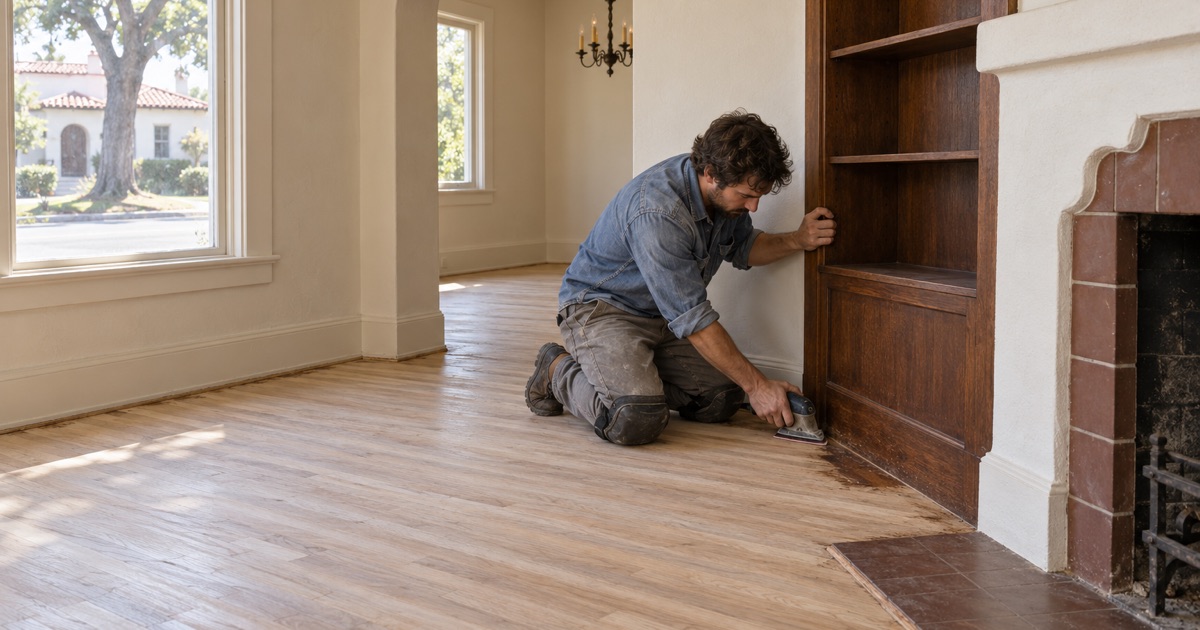
San Marino passed its current historic preservation ordinance on April 11, 2018, codified as Chapter 23.18 of the City Code, and the Planning Commission sits as the preservation commission under it. The rule at its center is short: no one may carry out an alteration, restoration, rehabilitation, construction, removal, relocation or demolition of a historic landmark until the city has issued a Certificate of Appropriateness.
That sequence matters to a flooring contractor. A certificate is something the city issues before the work, not a form filed after it, so if a house is a landmark and the job falls inside the code’s meaning of alteration, the schedule has to wait for that decision. Ordering wood, booking a crew and asking afterward is the wrong way around.
Two Tests in One Definition
The code’s definitions section, 23.18.02, sets out what counts as an alteration, and it does so with two separate tests. The first covers any act that requires a building permit and changes one or more features of a landscape or structure. The second covers any act that significantly changes a feature of a landscape or the exterior of a structure tied to its landmark status, whether or not a permit is involved.
Read side by side, the two tests are not symmetrical. The second is written about landscapes and exteriors only, and it applies regardless of permits. The first is the one that reaches the rest of the building, and it carries two conditions that both have to be true: the work needs a building permit, and it changes a feature of the structure.
Looking for wood-flooring closer to Commerce? See Wood-Flooring Services in Commerce.
Interior Floor Work Under the First Test
Why the Inside of the House Reads Differently
A floor is inside the house, so on the code’s own wording, flooring work in a designated house is weighed under the first test rather than the second. Whether a given job is an alteration turns on whether it needs a building permit and whether it changes a feature. The exterior clause, the one that ignores permits, is not the clause written for a hallway or a dining room.
That is as far as the definition takes a reader. A light screen and recoat, a full sanding of existing oak, patching a few damaged boards, and tearing out a floor to lay new wide plank over a reworked subfloor are very different jobs, and the code leaves it to the city to decide how each one fits. We have not seen that question settled for floors, and we do not settle it ourselves.
Where We Stop and the City Starts
We will describe the scope of your job in writing: which rooms, what gets sanded or replaced, whether the subfloor or floor joists are opened, and what finish goes down. That description is what the Community Development Department needs to give you an answer. What we will not do is predict the answer before the city gives it, because a wrong guess on a landmark lands on the owner.
If the city says a certificate is needed, the work waits for it. If the city says the job falls outside the definition, we put it on the calendar. Either way, the decision comes from the office that enforces Chapter 23.18, and we keep a copy of whatever the owner receives in the job file so the crew knows exactly what was cleared.
Which Houses Are Landmarks, and How to Check
Automatic Designation Through the Registers
Owners are sometimes surprised to learn that designation can arrive without a local hearing. Under Chapter 23.18, any property listed in the National Register of Historic Places or the California Register is automatically a San Marino historic landmark for the purposes of the ordinance. A house on either register sits inside the Certificate of Appropriateness rule even if the owner never applied for anything at city hall.
For exterior changes to a landmark, the ordinance points to the Secretary of the Interior’s Standards for Rehabilitation. That standard shapes porches, windows and grounds more than floors, but it signals the level of care a landmark receives. It is one more reason to learn a house’s status before any contractor offers a start date.
Surveys Are Not Designations
The city has surveyed its historic resources, and it is careful to say that a survey designates nothing. Designation is a separate process with public notice, participation and review, and the ordinance requires owner consent for it. A house described in a survey as significant is not, by that fact alone, a landmark under the code.
The city’s survey report, finalized in October 2020, listed nine formally designated landmarks at that time, among them the Edwin Hubble House from 1925, El Molino Viejo and the San Marino Woman’s Club. That list is a snapshot from one report rather than a current count, and register listings sit alongside it, so we treat it as a starting point for the conversation.
A Short Call Before the Schedule
The Building Division of the Community Development Department is at 2200 Huntington Drive, and that is where we point owners who are unsure of their house’s status. Ask whether the property is a designated landmark or listed on either register. If it is, describe the floor work and ask what the city needs to see before it starts.
We build that call into the estimate timeline for any house that might be listed. It adds a step before the start date, and it keeps a refinish from turning into a dispute over work already finished. On houses that are plainly not landmarks, the check is quick and the conversation moves straight to the floor itself.
Prewar Floors in the Rest of San Marino
What the Housing Stock Tells Us
Most San Marino houses are not landmarks, but many are old. Census estimates put 1,811 homes, or 40.8 percent of the city’s housing, in the category built in 1939 or earlier, and 82.2 percent predate 1960. The city is almost entirely detached single-family houses, and in homes of that age we often find original oak strip under decades of wax and worn finish.
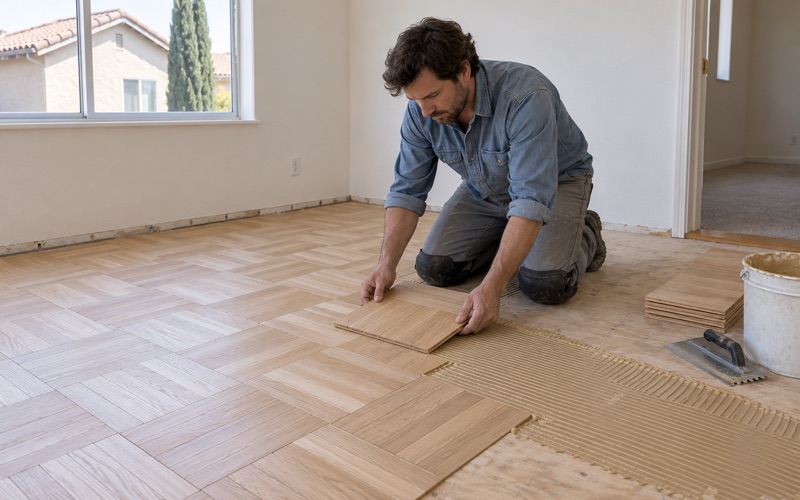
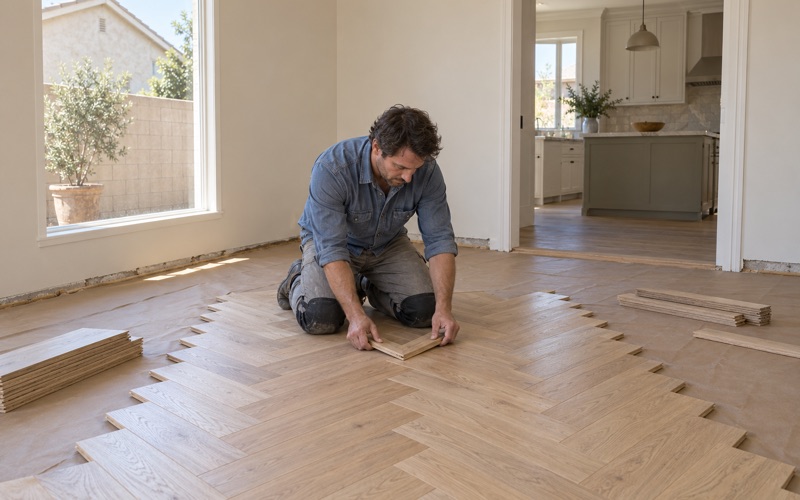
What we meet is often red oak or white oak, usually plain sawn, sometimes quartersawn in a formal room, with parquet or herringbone in an entry now and then. Before we promise a full sanding we check how much wood remains above the tongue and groove, because a floor sanded several times over the years may only tolerate a light pass with a buffer.
Gaps, Hollow Spots and Old Pests
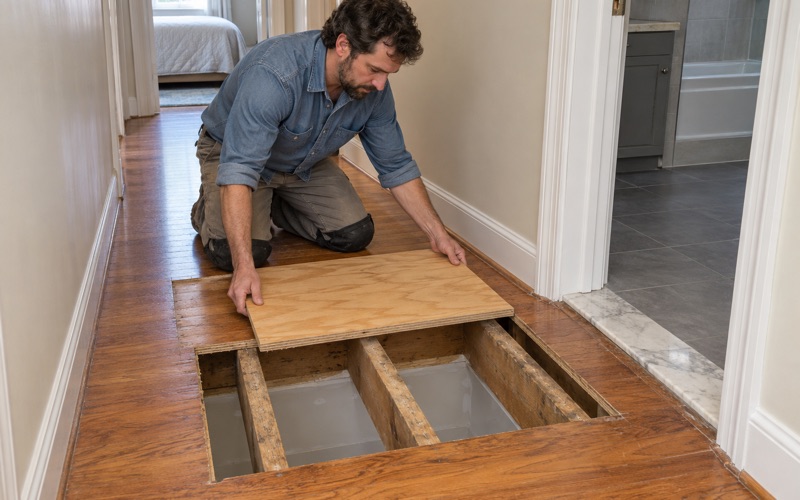
Old strip floors move with the seasons, and board gapping that opens in dry months and closes in damp ones is normal movement rather than failure. We look harder at gaps that stay open year round, hollow spots underfoot and boards that flex, since those point to loose fasteners or a subfloor problem instead of simple seasonal change.
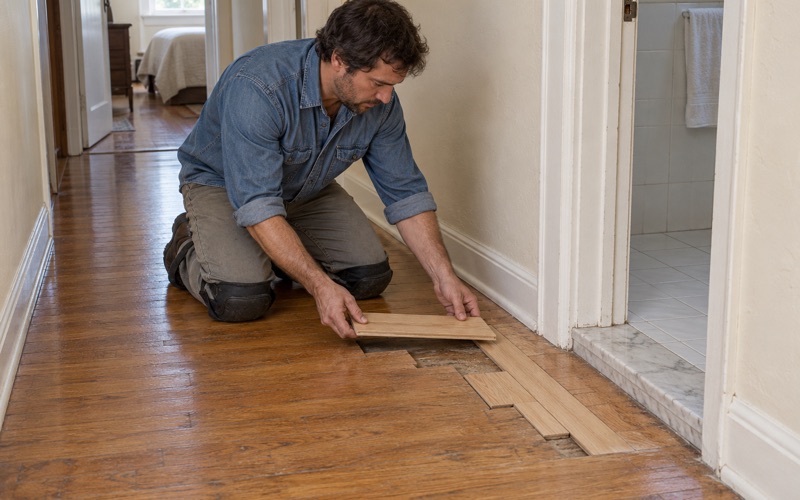
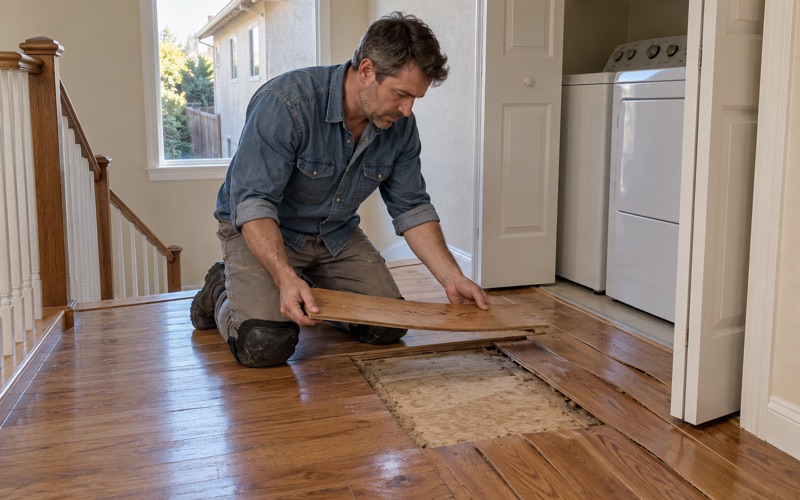
Wood in houses this old can also carry the marks of insects. Small piles of drywood termite frass near a baseboard, or the fine exit holes of powderpost beetle in a board, call for a pest inspection before we patch or refinish, so new wood is not laid next to an active problem. Once the inspector has cleared the house, damaged boards are cut out and woven in with matching species.
Lead Paint and the Build Year
A house built before 1978 falls under the EPA RRP rule when painted surfaces are disturbed, and in San Marino that describes most homes. We confirm the build year before any drum sander or orbital sander runs, since sanding along painted baseboard, quarter round and stair risers can disturb old paint at the edges of a room.
Where the rule applies, the job is set up for it from the first day, with containment around the work area and cleanup planned into the schedule rather than tacked on at the end. Owners get dust containment and a written cure schedule, so the household knows which rooms are closed, for how long, and when furniture can come back.
Replacing or Adding Wood
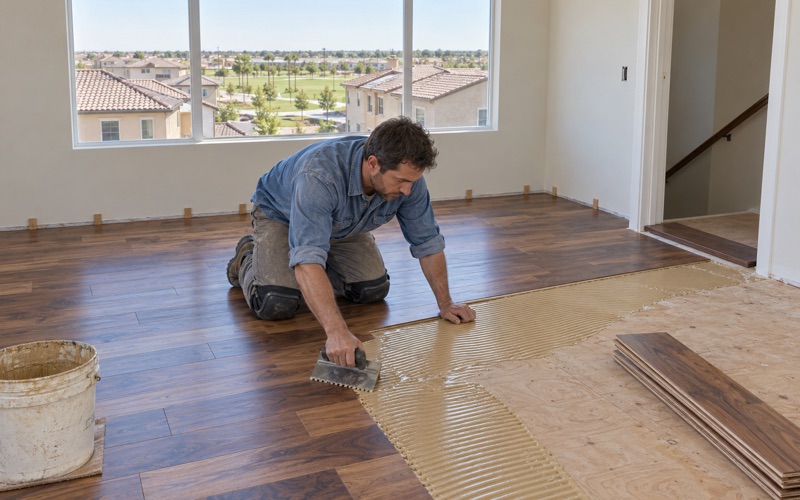
Not every job here is a restoration. When a room was carpeted decades ago or an addition has no wood at all, we match new solid hardwood to the existing floor by species, board width and cut, then weave it in so the transition does not read as a patch. Where a full weave is impractical, a reducer or T-molding at the doorway makes the change deliberate.
Engineered flooring comes up too, often where an owner wants wide plank without as much movement as solid boards. Before we sell anyone on a future refinish of an engineered floor, we note the wear layer thickness, because a thin engineered wear layer can take a screen and recoat but not a full sanding.
Finishes, Stairs and Repairs
Finish choice here is not only a matter of taste. SCAQMD Rule 1113 limits the wood coatings that can be used in this air basin, so we select a waterborne polyurethane, an oil-modified polyurethane or a hardwax oil that meets it, then settle the sheen level and floor stain with the owner. Water popping before stain helps an old oak floor take color evenly.
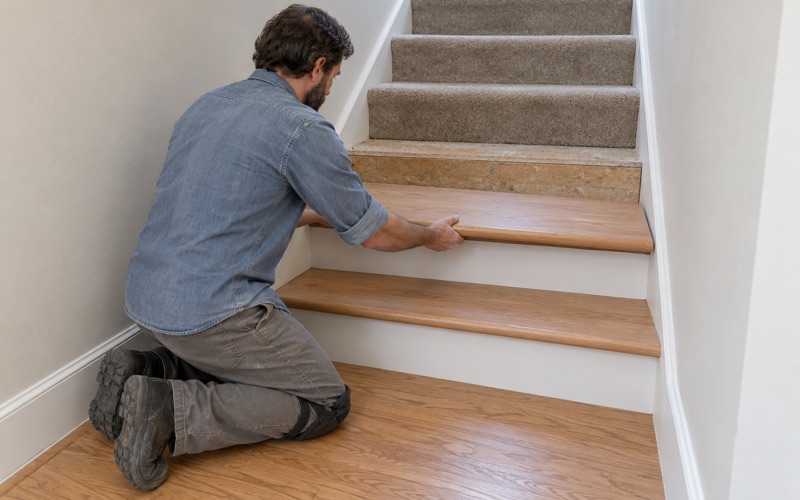
Staircases in older houses are priced by the tread and riser, since worn stair nosing and loose treads take far more hand work than open floor. Where boards show cupping, crowning or dark stains, we find the moisture source and take a moisture meter reading before replacing anything, and when a leak caused the damage we document each room for the adjuster.
- 20+ Years of Wood Flooring
- Slab Moisture Tested First
- Free Written Estimates