Chino Wood Flooring has handled wood-flooring in South El Monte and across the San Gabriel Valley for more than 20 years, and a large share of the calls we take here come from houses that someone rents. A landlord wants a tired living room brought back between tenants, or a family renting a whole house has a soft spot near the kitchen that keeps getting worse. Both are floor jobs, but they are not the same kind of job, and we treat them differently from the first visit.
Our first question is always what the floor is actually doing. A dull, scratched finish is a cosmetic problem that a screen and recoat or a full sanding can solve on the owner’s schedule. Boards that are buckling, delaminating, lifting at the edges or giving underfoot are a repair problem, and in a rental that difference carries weight well beyond appearance.
This page is written for both sides of that arrangement. Owners who lease out a house will find how we scope a repair and how we plan work around a tenancy. Renters will find what the state says about floors, where the city points them for help, and what we can and cannot do when the problem is someone else’s floor.
Rented Houses and What State Law Says About Their Floors
Renting is not a side note in this city. Census figures from the 2024 five-year American Community Survey count 2,517 renter households in South El Monte, and 1,216 of them rent a detached house rather than an apartment. Another 267 renter households live in mobile homes. That is a lot of wood, laminate and vinyl being walked on by people who did not choose it and do not own it.
No Local Rent Control, but the State Still Applies
The City of South El Monte says plainly on its Housing Resources page that it does not have rent control. The same page goes on to say that both Los Angeles County and California landlord-tenant laws still apply. For floors, that sentence matters more than the missing ordinance, because the rules that govern the condition of a rental come from the state rather than from City Hall.
So an owner here is not working under a local rent board, and a tenant here is not left without standards. The habitability rules in the Civil Code reach every rental dwelling in the state, including a single-family house leased out on a quiet residential street. We see that play out regularly when a floor problem becomes a conversation between an owner and a tenant.
Floors Are Named in Civil Code 1941.1
California Civil Code 1941.1(a) lists the basic characteristics a rental must have, and a dwelling that substantially lacks one of them is treated as untenantable. The list covers weatherproofing, plumbing and gas, hot and cold water, heating, electrical, and clean, sanitary premises. Item (8) reads “Floors, stairways, and railings maintained in good repair.”
The section was amended by AB 628, effective January 1, 2026, which added a stove and a refrigerator in good working order to that list. Floors were already there. Note what the wording asks for: good repair. It does not name a material, a finish or a schedule, and nothing in it says a landlord must install hardwood or refinish on a timetable.
Looking for wood-flooring closer to Santa Fe Springs? See Santa Fe Springs Wood-Flooring.
When a Rental Floor Needs Repair, Not Just a New Finish
The line between a worn floor and a floor in bad repair is where most of our rental work starts. We walk the rooms, test for movement, check boards with a moisture meter, and write down what we find before anyone talks about price. That record helps an owner decide and gives a tenant something concrete to point to.
Signs That Point to a Failing Floor
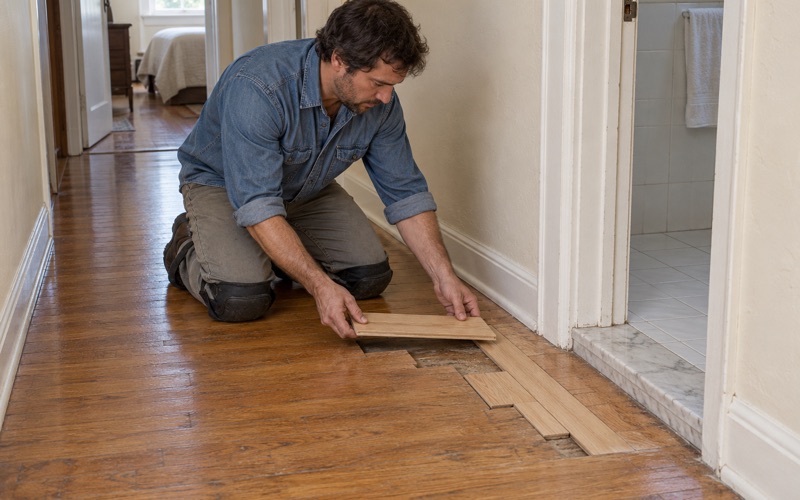
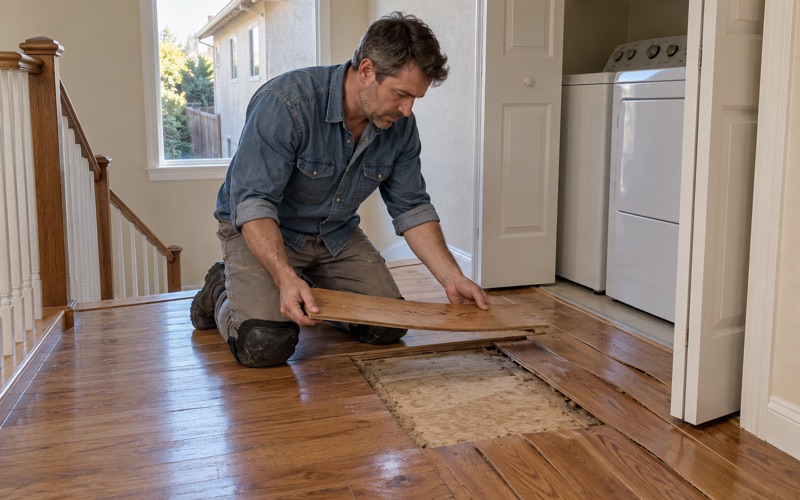
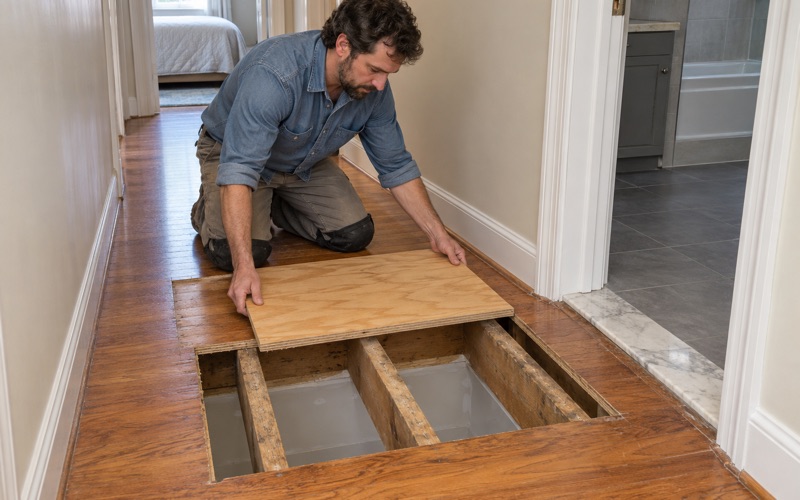
Cupping, crowning and buckling usually mean moisture is moving through the boards, and the source has to be found before any boards come out. We confirm where the water is coming from, whether a slab leak, a supply line or a failed seal at a tub, and take a moisture reading before we replace a single water-damaged board. Replacing boards over an active leak just means paying for the same repair twice.
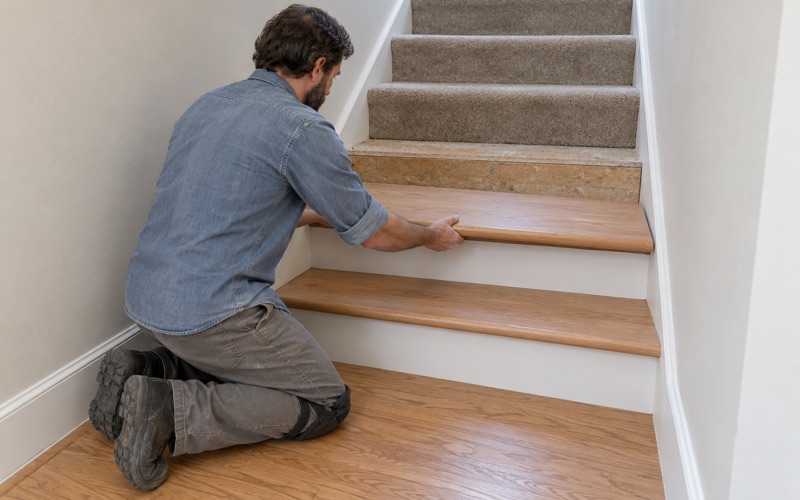
Other failures look different. Hollow spots in a glue-down engineered floor, delamination of the engineered wear layer, loose stair treads or a worn stair nosing, and boards that deflect over a weak subfloor all bear on whether the floor is in good repair. Drywood termite frass or powderpost beetle holes send us to a different conversation before any flooring decision is made.
Cosmetic Work Is a Different Decision
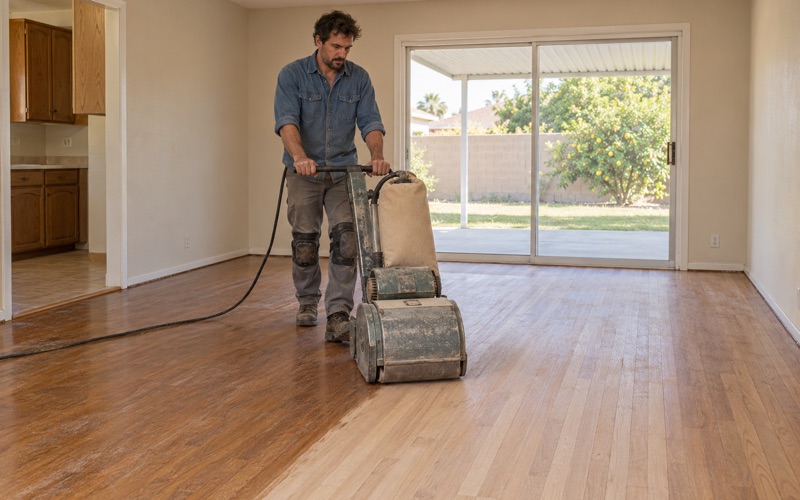
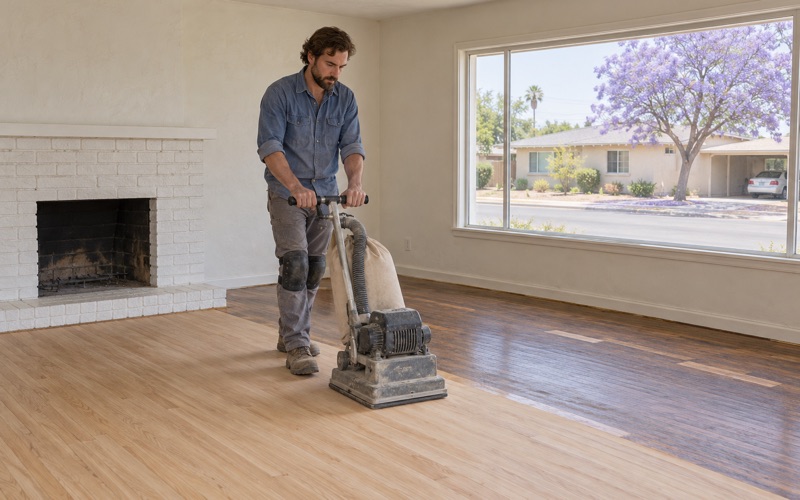
Board gapping in a dry season, a dull sheen level, light scratching and small pet urine stains are real annoyances, but they usually belong on the cosmetic side. A screen and recoat can freshen an intact floor in a day, and a full sanding with a grit sequence and new waterborne polyurethane can bring a solid hardwood floor back when the wear goes deeper. Neither is the same as fixing a floor that has failed.
The state draws a related line elsewhere in its rental rules. Under Civil Code 1946.2(b)(2)(D)(iii), cosmetic improvements alone do not qualify as a substantial remodel. We mention that because owners sometimes ask us to describe a refinish in bigger terms than it deserves, and we describe work as exactly what it is.
How We Document a Repair Request
When water is involved, we document the damage room by room with photos, readings and measurements, which is also what an insurance adjuster will want to see. For engineered floors we measure the wear layer before promising a sanding, since a thin layer cannot take a full refinish and may call for replacement instead. On stairs, we quote each tread and riser on its own rather than folding them into a square-foot price.
That written scope is a flooring assessment. It is not a legal opinion, and we do not represent tenants or owners in a dispute. What it does is give both parties the same facts about the floor.
Where South El Monte Renters Take a Repair Problem
Most repair questions start as a conversation between tenant and landlord, and many end there. When they do not, the city’s own Housing Resources page is the place to begin. It collects the contacts a renter in a whole house, a duplex or an apartment would need.
What the City’s Housing Page Points To
The page links a guide titled “How can I get my landlord to make repairs?” in PDF form, and it lists the Los Angeles County Department of Public Health at 1-888-700-9995 for health and safety problems. It also names the Housing Rights Center and Neighborhood Legal Services of Los Angeles, which keeps an office on Santa Anita Avenue in El Monte, along with California Courts self-help material on housing.
Those are the resources the city itself chose to list. We send renters to that page when they call about a floor they do not own, because the repair process runs through the landlord, and the guide explains the steps better than a flooring contractor can.
What We Can Do for a Renter
A tenant can ask us to look at a floor and describe what we see, and we will. What we cannot do is pressure an owner, take on a complaint, or authorize work on a house that belongs to someone else. Any repair we perform on a rental is contracted with the owner or the owner’s manager.
In practice, the most useful thing we offer a renter is clarity. If a soft spot near the dishwasher lines up with a moisture reading, that is worth passing to the landlord in writing. If the problem is a worn finish, knowing that early saves an argument over something the law does not treat as a failure.
Planning Floor Work Between or During a Tenancy
For owners, timing is usually the hardest part of rental floor work. A vacant house between tenants is the easiest window, while a repair that cannot wait has to fit around people living there. We plan both kinds of jobs so the house stays usable and the finish has time to cure.
Working in an Older Rental House
Census figures show 52.6 percent of South El Monte’s homes were built before 1960, long before the 1978 line that matters for lead paint. We confirm the build year before any sanding, because the EPA Renovation, Repair and Painting rule reaches painted surfaces disturbed in pre-1978 homes, and baseboard, stair risers and door casings are often painted. Pulling quarter round or trimming a painted door jamb counts as disturbance.
The finishes we use also have to fit SCAQMD Rule 1113, the South Coast rule that limits what wood coatings can legally be applied in this air basin. Waterborne polyurethane and compliant hardwax oils cover most rental needs, and they dry faster than the oil-modified products many older floors were first coated with.
Keeping a Tenancy Livable During the Work
When a tenant is in place, we set up dust containment, run dustless sanding where the floor allows it, and hand over a written cure schedule showing when rooms can be walked on in socks and when furniture can go back. Doing the work in stages, a bedroom wing one week and the living areas the next, keeps a family from having to move out for a small repair.
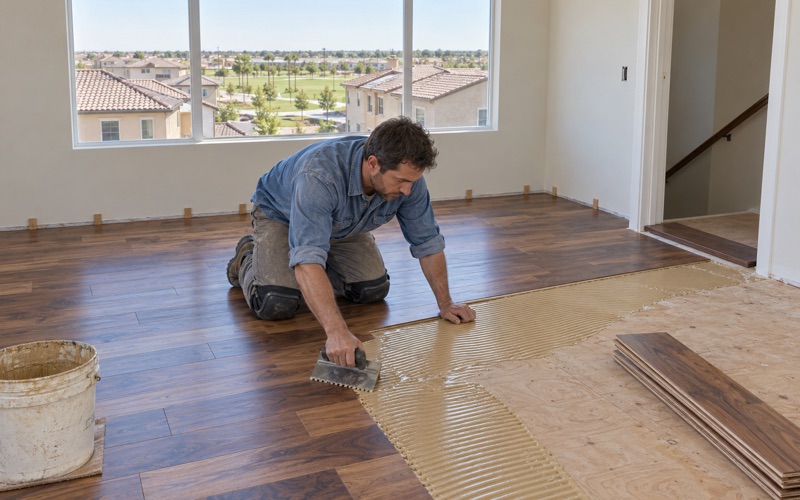
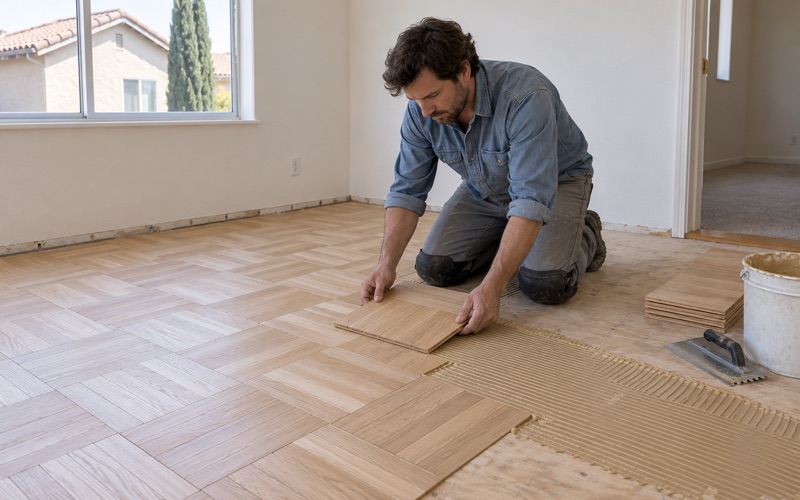
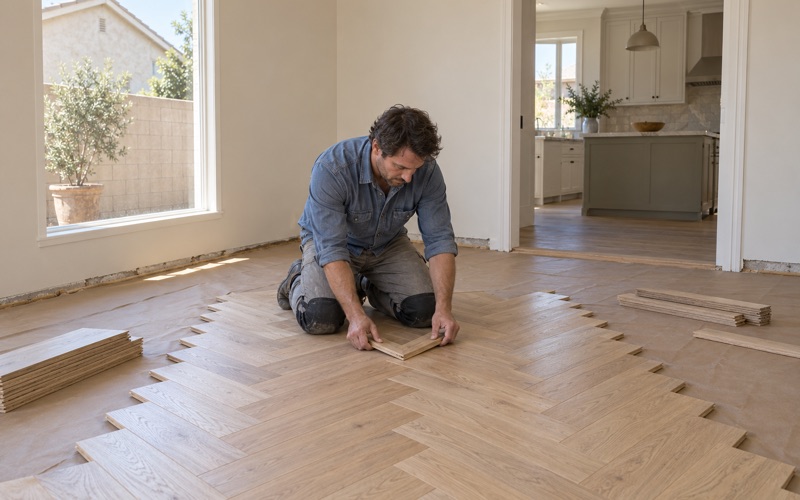
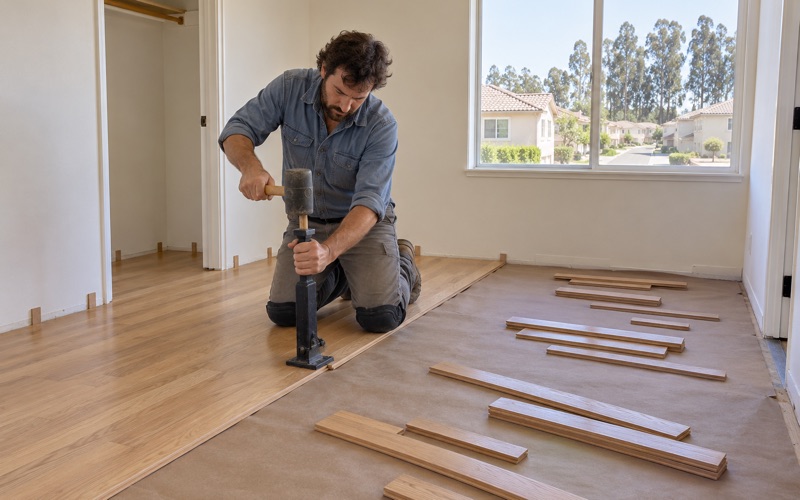
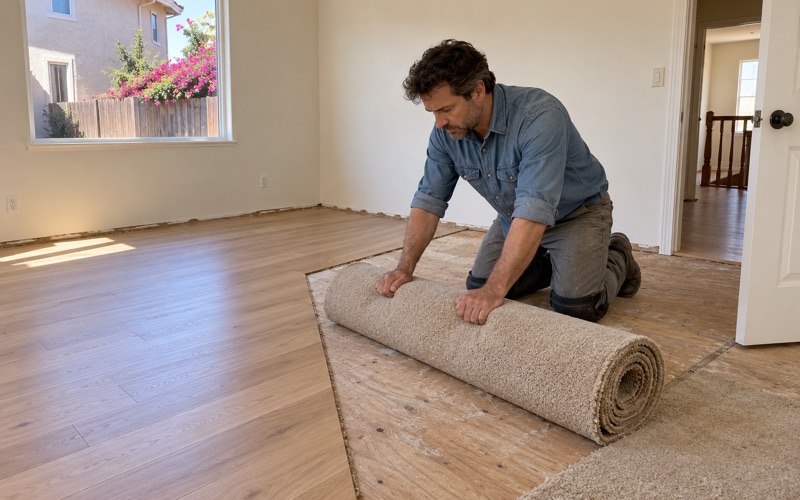
For a turnover, the whole house can be done at once. That is when replacing tired carpet or vinyl plank with engineered wood, testing a concrete slab for moisture against the NWFA guideline, or refinishing every room in one pass makes the most sense.
Choosing Materials That Hold Up to Renting
Rental floors take harder use than most, so we lean toward species and finishes that forgive it. White oak and hickory rate higher on the Janka hardness scale than many softer options, a prefinished aluminum oxide finish resists scratching, and an engineered floor with a thick wear layer leaves room for future sandings between tenants.
The right choice depends on the house, the subfloor and how long the owner plans to hold it. We lay out the options, the cure time and the maintenance each one asks for, so the decision is made on facts rather than on the lowest price per square foot.
- 20+ Years of Wood Flooring
- Slab Moisture Tested First
- Free Written Estimates