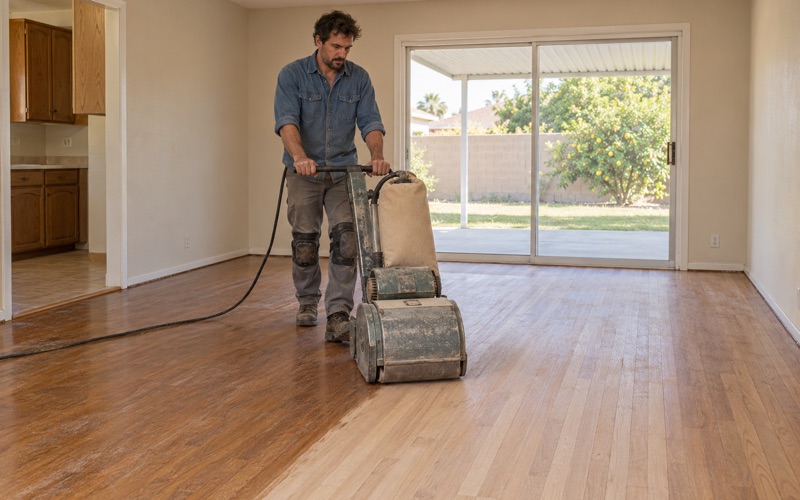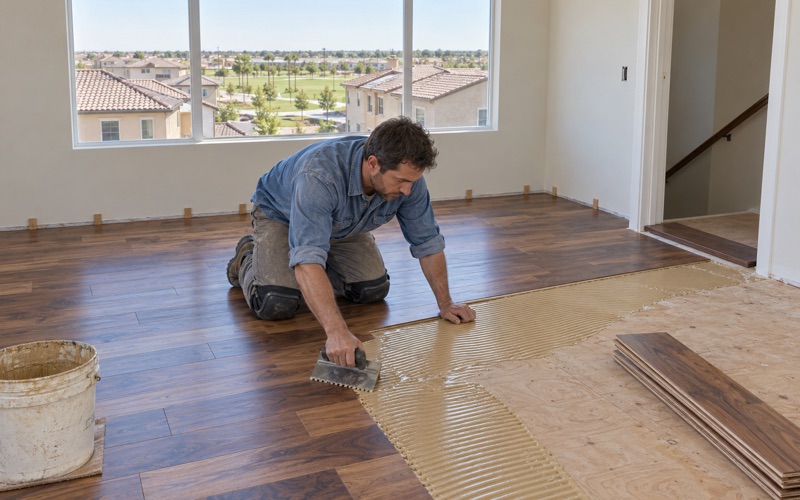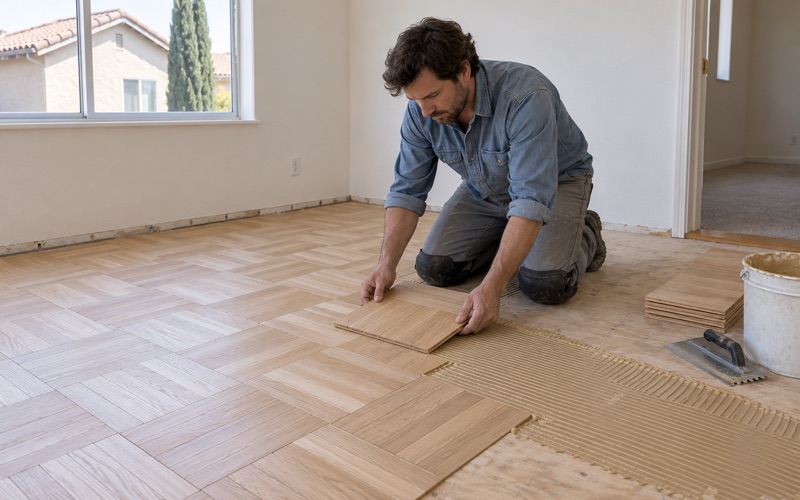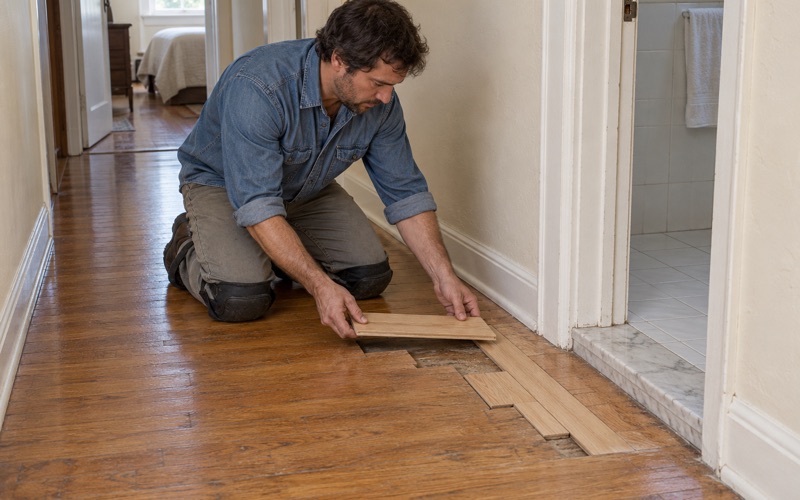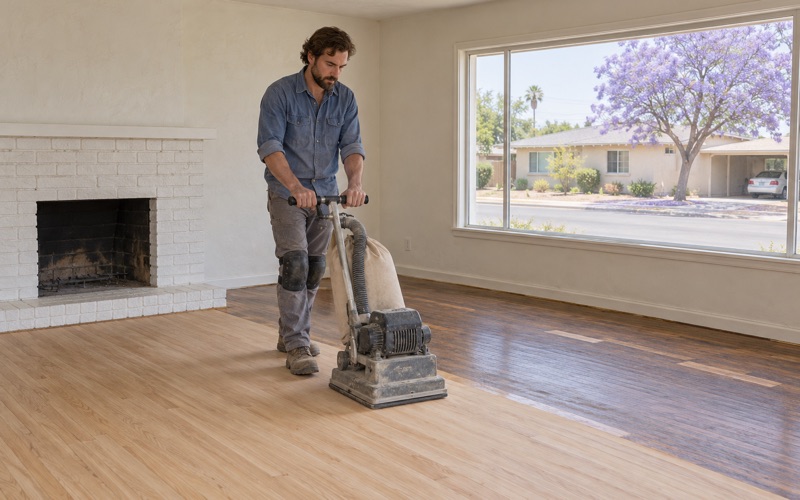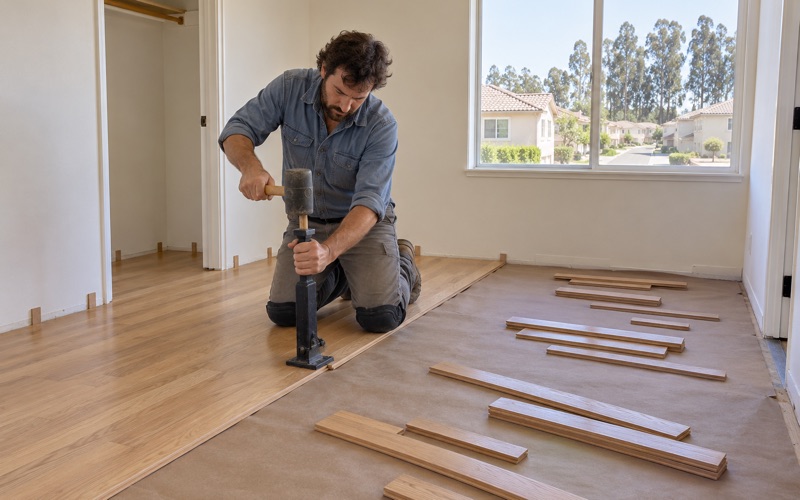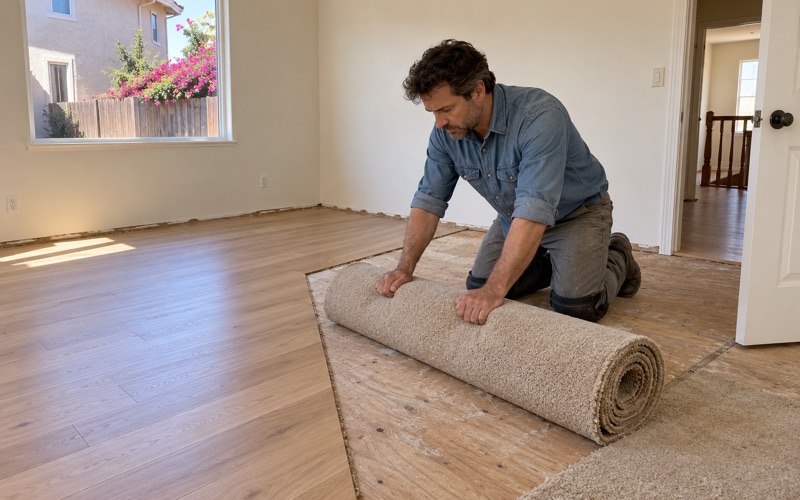
Chino Wood Flooring has handled wood flooring in Walnut and across this corner of Southern California for more than 20 years, installing solid hardwood, laying engineered planks over concrete and bringing tired floors back with a sanding and a fresh finish. Our approach is simple to describe: measure first, promise second. That means a moisture reading before glue goes down and a wear layer check before we quote a refinish.
Most of what we do here is ordinary house work, and ordinary is not the same as careless. A floor that cups six months after install usually got that way because nobody tested the slab or let the boards acclimate. We write those readings down, so the numbers behind the job are on paper rather than in anyone’s memory.
This page covers the two kinds of homes we meet in Walnut. One is a small, age-restricted group of homes with an association behind them, and the other is the detached house that makes up nearly the whole city. The questions a household should ask differ between the two, and we lay them out below.
Floors in Walnut’s Senior Affordable Homes
What the city’s Housing Authority keeps track of
Walnut runs its own Housing Authority, and one of its yearly jobs is monitoring and verifying eligibility for 115 senior affordable units at the Walnut Grove Senior Development. The same office also tracks a few single-family homes at Magnolia at Snow Creek. That oversight is about who qualifies to live there, and its current income limits took effect July 1, 2024.
None of that monitoring is about floors, and we do not treat it that way. We play no part in that program, and a floor job in one of these homes is arranged directly with the household. What the program does tell us is who we are likely working for: a household where at least one resident is 55 or older, which shapes how we plan the job from the first visit.
Residents 55 and older, with a few exceptions
These homes are set aside for residents 55 and older, with limited exceptions for eligible adult children. For flooring, the age of the household matters more than the address. A slick high-gloss finish, a proud threshold or a loose stair nosing is a small annoyance for one person and a fall risk for another, so we plan the surface around the people walking on it.
We also plan the logistics around them. A household that cannot easily leave for a week needs the work split into rooms, a clear path kept open and a written schedule that says when each area can take foot traffic again. Our dust containment and cure plan exist for exactly that reason, and we go over both before any demolition starts.
HOA fees mean an association is involved
Every unit the Housing Authority monitors is subject to HOA fees, which tells us an association sits between the resident and the floor. Associations often have their own paperwork for interior work, and we do not guess what this one asks for. We ask the household for the governing documents and read them before any material is ordered.
That step saves real money. A floor ordered, delivered and acclimated before anyone checks with the association is a floor that may have to wait, or go back. We would rather spend a week on paperwork than have a pallet of white oak sitting in a spare room while a board meets.
Looking for wood-flooring closer to San Antonio Heights? See Wood-Flooring in San Antonio Heights.
Choosing Floors for Footing and Easy Upkeep
Species, hardness and grip
For a household planning to stay put, we steer toward species with a higher Janka hardness, such as white oak, hickory or maple, because they shrug off chair legs and walkers better than softer choices. Red oak is a fine and familiar option, and its open grain hides small scuffs well. Wide plank looks handsome but moves more with the seasons, so we talk through board gapping before anyone commits.
Footing comes down to finish more than species. A satin or matte sheen level shows less glare and reads as less slippery underfoot than a glossy coat. Prefinished boards with an aluminum oxide finish wear well and need no on-site cure, while a site-finished floor lets us match an existing room and choose the exact sheen.
Finishes that clear the local air rules
Wood coatings in this air basin fall under South Coast AQMD Rule 1113, which sets limits on what a finish can release. We choose products that fit it, which usually points to a waterborne polyurethane or a hardwax oil rather than an older solvent-heavy coat. Low-odor products also make life easier for anyone staying home during the job.
Easy upkeep matters as much as the first coat. A floor that only needs a screen and recoat every few years, rather than a full sanding, saves time and dust. We explain what the maintenance cycle looks like for the finish chosen, so nobody is surprised when the first worn traffic lane appears near the kitchen.
Transitions, stairs and trip points
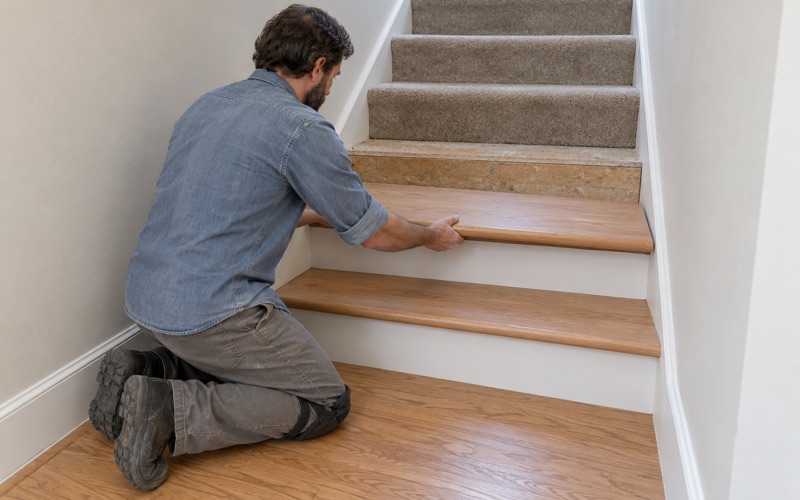
The places people trip are usually edges: a reducer where wood meets tile, a T-molding in a doorway, a stair nosing that has worked loose. We set transitions as flat as the materials allow and fasten them properly. Quarter round and baseboard get reset cleanly so nothing snags a slipper.
Stairs are quoted by the tread and the riser, not rolled into a square-foot price. Each step takes cutting, fitting and finishing by hand, and pricing it honestly keeps the quote clear. Where a household wants extra grip on stairs, we talk through finish options before any stair treads are ordered.
Walnut’s Detached Houses
Most homes stand on their own
Outside those senior homes, Walnut is overwhelmingly a city of detached houses. Census estimates count 94.7 percent of its housing units as one-unit detached, and 83.8 percent of households own their homes. That puts most flooring decisions in the hands of the owner rather than a board, which makes the job simpler to schedule.
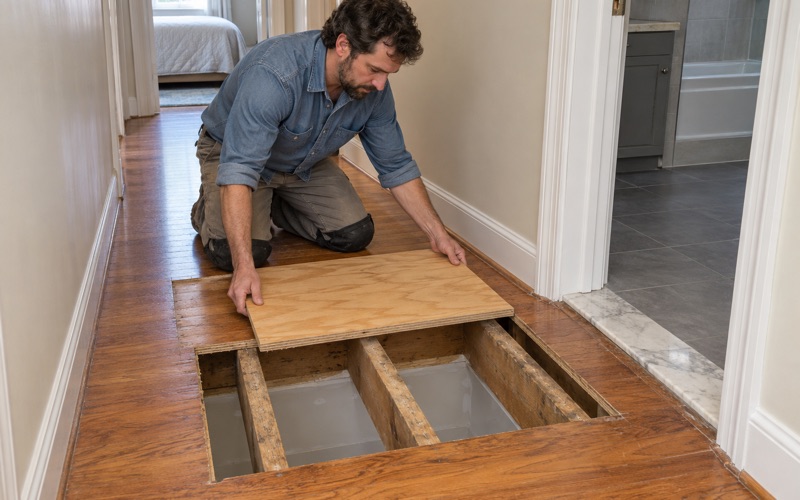
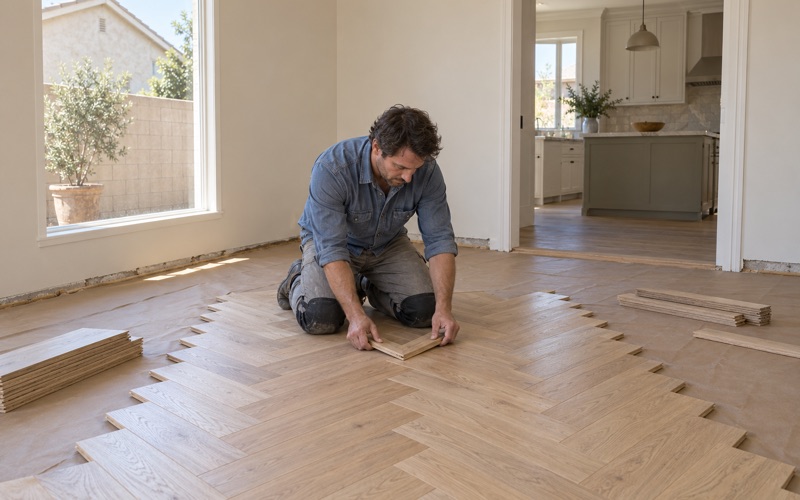
It does not make the house simpler underneath. Some homes here sit over a wood subfloor on floor joists and others over concrete, and we find out which at the walkthrough rather than assuming. A nail-down installation with flooring cleats suits one, and a glue-down installation or a floating installation suits the other.
Build year before any sanding
Census figures put 38.4 percent of Walnut’s housing units before 1980, with 1,892 built in the 1970s and 1,326 in the 1960s. That matters because the EPA RRP rule covers paint disturbed in homes built before 1978. We confirm the build year before a drum sander or an orbital sander touches a room with painted baseboard or trim.
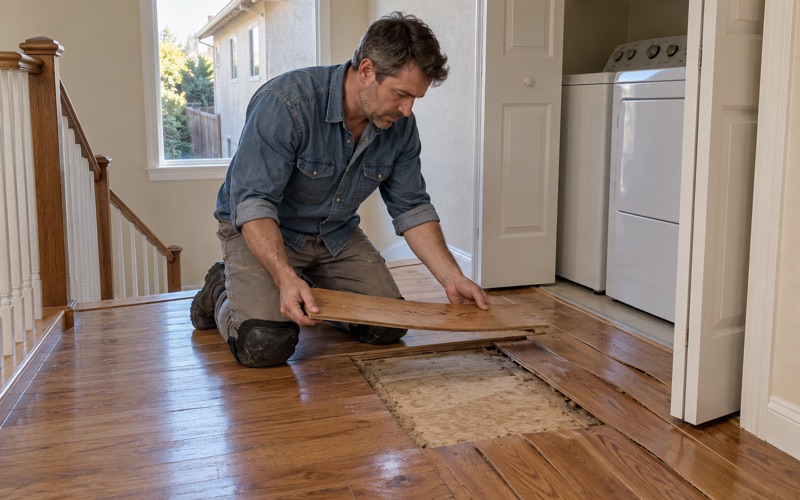
Older floors also carry their own history. Under old carpet we sometimes find tack strip, black mastic or a parquet floor someone covered decades ago. Black mastic in particular gets identified before any grinding, and we explain what we found and what it means for the plan before work moves ahead.
Pulling up an old floor sometimes turns up drywood termite frass or the pinholes of a powderpost beetle in the boards below. When it does, we stop, show the household what we found and recommend having it looked at before new wood goes over it. Laying fresh oak over active insects only moves the problem up a layer.
Concrete, moisture and engineered floors
Where a room sits on concrete, we test before gluing an engineered floor down. In-situ relative humidity testing or a calcium chloride test tells us whether the slab is dry enough, and we write the reading down against the NWFA Installation Guidelines. If it runs high, a moisture membrane or a urethane flooring adhesive rated for the condition goes on the list.
On an existing engineered floor, we measure the engineered wear layer before we promise a refinish. A thin layer on a plywood core or HDF core may take only a screen and recoat, not a full grit sequence. Telling a household that at the start is better than sanding through the veneer and finding delamination.
Solid hardwood and engineered boards both need time to acclimate before they go down. We bring the material in, let it settle to the home’s conditions and check it with a moisture meter against the subfloor or slab reading. Rushing that step is a common reason a new floor shows cupping or gaps within its first year.
Questions to Settle With the HOA First
Before anything is ordered
For a home with an association behind it, the first questions are paperwork, not wood. Does the association ask for an application before interior work? Are there set work hours, a required notice to neighbors or a rule about underlayment? We do not know those answers in advance, so we ask the household to get them in writing.
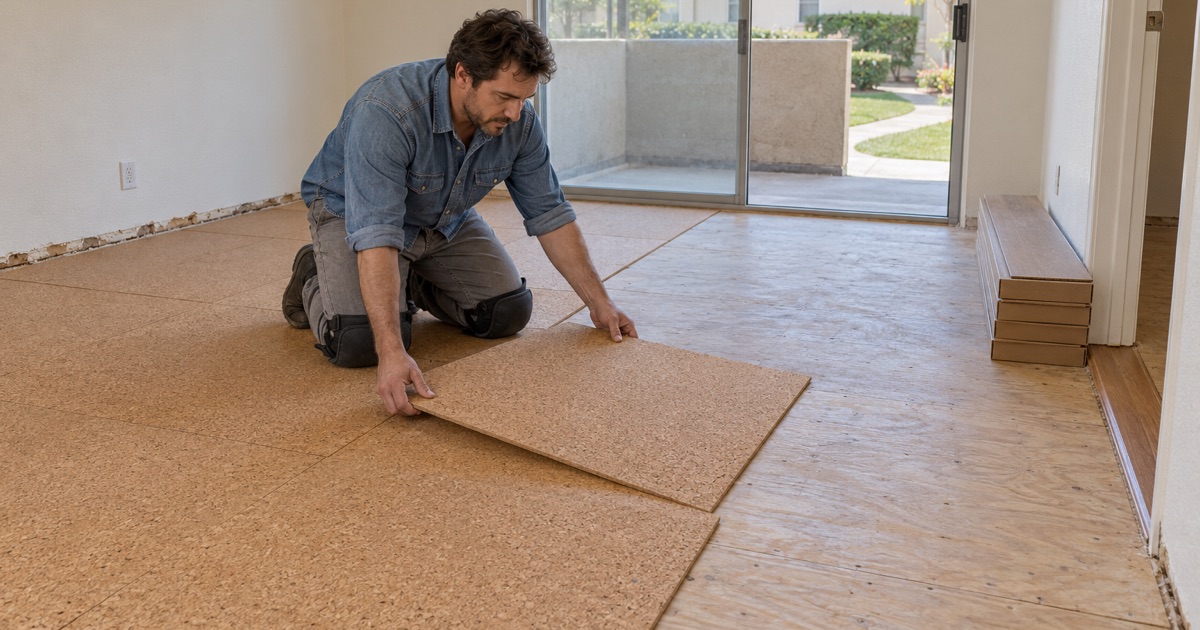
Once we have the documents, we match the floor to them. If an acoustic underlayment is expected, it goes into the quote from the start rather than as a surprise change. If the association wants a certificate of insurance or a contractor form, the household knows early and nothing sits waiting on a missing page.
Scheduling, dust and cure time
We hand every household a written schedule that says when each room will be sanded, finished and ready for socks, then shoes, then furniture. With dustless sanding and plastic containment, most of the mess stays in the room being worked. That matters in any home, and more so where neighbors share a hallway or an entry.
Cure times depend on the finish. A waterborne polyurethane usually allows light foot traffic sooner than an oil-modified polyurethane, while rugs wait longer. We write those windows down so a household can plan meals, visitors and medication routines around the work rather than guessing.
When the problem is water
If the question is a damaged floor rather than a new one, we start with the source. Cupping, crowning, buckling or hollow spots usually trace back to moisture, and in a slab home that can mean a slab leak. We confirm the leak is fixed and take a moisture meter reading before any boards are replaced.
When insurance is involved, we document the damage room by room for the adjuster, with photos and readings. In a home tied to an association, the same record helps settle which party handles which repair. A clear file shortens the wait and keeps the new floor from going down over a problem that is still active.
- 20+ Years of Wood Flooring
- Slab Moisture Tested First
- Free Written Estimates